This paper demonstrates how deep reinforcement learning (DRL) enables adaptive locomotion of snake-like robots in dynamically changing viscous environments, overcoming the inherent performance limitations of classical predefined control methods. The lack of direct onboard sensors for fluid properties necessitates formulating this task as a partially observable Markov decision process. By employing an asymmetric actor-critic framework, a teacher policy trained using privileged information available only in the physics simulator distills its knowledge into a student policy that relies solely on proprioceptive sensor information. Simulation results across a wide range of dynamic viscosity changes ($10^{-7}$ to $10^{-2} m^2/s$) reveal that the DRL agent autonomously acquires non-sinusoidal adaptive gaits. These gaits improve propulsion velocity and transport efficiency, breaking the inherent limits of conventional sinusoidal and kinematic control. The findings establish that implicit environment inference via privileged information distillation is an effective approach to bypass the constraints of classical models under unpredictable fluid dynamics.
Insect locomotion exhibits remarkable adaptability and flexibility despite the limited scale of its nervous system. However, the underlying principles that govern leg coordination remain difficult to extract and model computationally. Understanding how insects achieve stable and adaptive locomotion has long provided im...
Yuchen Wang, Thirawat Chuthong, M. Hayashibe et al.· Bioinspiration & Biomimetics· 0 citations
A refined actuator model explicitly captures high-speed voltage coupling and magnetic saturation, enabling a more accurate representation of the torque–speed envelope and a reinforcement learning framework incorporating a two-stage curriculum and adaptive command scheduling (ACS) ensures stable training.
Yu-Cheng Tao, Shao-Wen Cheng, Guo-Rong Lan et al.· IEEE Robotics and Automation...· 0 citations
A fully computational framework focusing on the modeling and simulation of a spatio-temporal sensory system to autonomously generate the Kármán gait is proposed, providing a robust algorithmic blueprint for future physical deployments in complex aquatic environments.
Xin-Qi Wang, Ming Wang, Xin-Yan Liu et al.· Bioinspiration & Biomimetics· 1 citation
This paper presents the development and implementation of an end-to-end control framework for a quadruped walking robot based on deep reinforcement learning. The primary objective of the study is to design and verify a control system capable of autonomously generating locomotion strategies. A model of the walking robot...
Filip Połatyński, Paweł Skruch· International Conference on...· 0 citations
Context—Snake-like robots are biomimetic systems that can move effectively in narrow, complex, and restricted environments thanks to their modular and flexible body structures composed of numerous serially connected joints. These characteristics offer significant advantages, particularly in areas such as pipeline inspe...
Furkan Mezgil, M. Bingöl· Pamukkale Üniversitesi Mühen...· 0 citations
A deep reinforcement learning approach for fault-tolerant locomotion under actuator power loss that employs an asymmetric actor-critic architecture in which the critic has access to privileged information during training, while the actor learns to reconstruct a corresponding latent representation from proprioceptive ob...
Giovanbattista Gravina, Luca Rossini, Carlo Rizzardo et al.· 1 citation
Related blog posts
MIT News · Artificial Intelligence· news.mit.eduOct 2, 2026
Martin Trust Center Managing Director Bill Aulet introduces Dear Dreamer, a free platform for middle and high school students who want to learn about entrepreneurship.
Microsoft Research Blog· microsoft.comSep 30, 2026
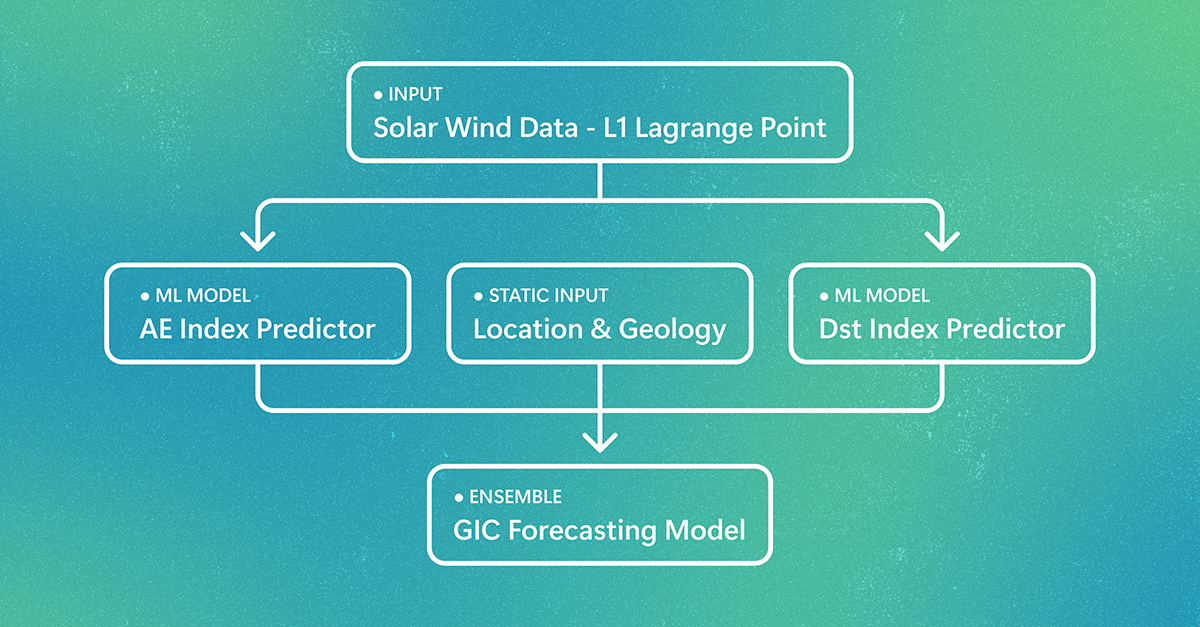
Extreme space-weather events can damage power systems on Earth and degrade GPS accuracy and satellite operations. A new machine learning system can predict where damage is likely to occur 30-60 minutes before a storm arrives. The post Forecasting space weather risks on power grids appeared first on Microsoft Research.
We use cookies to run the site and, with your consent, for analytics and to show ads.
See our Cookie Policy.