Skip to content
#human-computer interaction Preprint Open access

Magic Pen: Automatic Pen Mode Switching for Document Annotation

Kevin Desousa Adam Bradley Nathalie Henry Riche Ken Hinckley Christopher Collins
Oct 2026
Human-computer Interaction

Abstract

Traditional digital pen interfaces use menu buttons to change the pen mode, which results in time and cognitive load spent on round-trip interactions and mode errors from tapping small mode selection buttons. This work presents the Magic Pen, a technique which uses machine learning to automatically switch between digital pen modes without requiring explicit mode changes. Magic Pen is driven by an LSTM model trained on pen data collected from 27 participants across two studies and uses transfer learning to iteratively tune the model towards how a specific user annotates. Error mitigation techniques using a flick gesture or on-screen tap are incorporated to correct mode errors or remove a stroke quickly. We evaluated Magic Pen in a comparative study with 18 participants, followed by iterative improvements and a deployment study with 8 participants. Magic Pen was preferred compared to a conventional menu-based approach, and transfer learning allowed for greater model predictability and stability.


View source

Similar papers

#computer vision Review Sep 2017

Agile Software Development Methods: Review and Analysis

This publication proposes a definition and a classification of agile software development approaches and analyses ten software development methods that can be characterized as being "agile" against the defined criterion.

P. Abrahamsson, O. Salo, Jussi Ronkainen et al. · 727 citations · ⚡54
#computer vision Jun 2008

The impact of agile practices on communication in software development

The study shows that agile practices improve both informal and formal communication, but indicates that, in larger development situations involving multiple external stakeholders, a mismatch of adequate communication mechanisms can sometimes even hinder the communication.

M. Pikkarainen, Jukka Haikara, O. Salo et al. · 401 citations · ⚡48
#machine learning Review Open access Oct 2014

Software development in startup companies: A systematic mapping study

The results indicate that software engineering work practices are chosen opportunistically, adapted and configured to provide value under the constrains imposed by the startup context.

Nicolò Paternoster, Carmine Giardino, M. Unterkalmsteiner et al. · 394 citations · ⚡54

Related blog posts

Microsoft Research Blog Nov 5, 2026

Formally verifying agent-written full-stack web apps with PDD Kit

AI agents can generate code at a scale that’s hard for humans to review line-by-line. PDD Kit helps ensure the code is doing what the developer intended by creating formal specifications and testing against them. It converts developer intent into a Verus specification, proves AI-generated code meets it for every input, and uses tests where proofs aren't practical. Developers review intent, not every line. The post Formally verifying agent-written full-stack web apps with PDD Kit appeared first o…

MIT News · Artificial Intelligence Oct 28, 2026

Making machines that can listen

Professor Paris Smaragdis develops computers with superhuman hearing for applications like speech recognition, music understanding, and environmental monitoring.

MIT News · Artificial Intelligence Oct 23, 2026

Reinforcing the value of human understanding at MIT

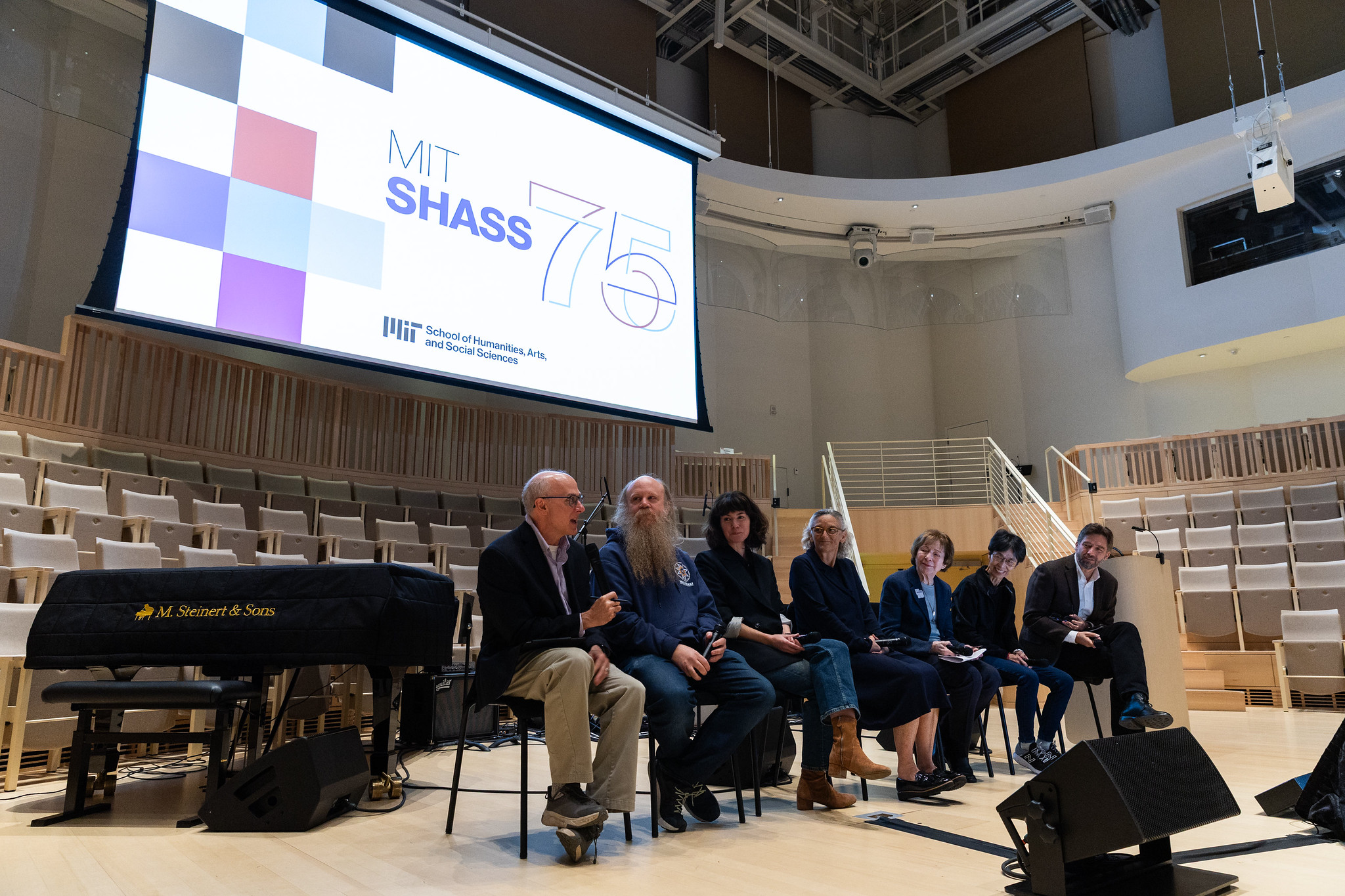
During the School of Humanities, Arts, and Social Sciences’ 75th Anniversary Symposium, President Sally Kornbluth said “MIT has never needed your particular insight and guidance more than we do now.”

We use cookies to run the site and, with your consent, for analytics and to show ads. See our Cookie Policy.