Experiments on real deformable-object manipulation sequences show that PhysCoRe outperforms state-of-the-art baselines in prediction accuracy, and that its predicted confidence forms a reliable distribution across the object's geometry, providing a natural signal for future confidence-guided exploration.
Abstract
Predicting how deformable objects evolve under robotic manipulation is a longstanding challenge. Existing approaches typically rely on per-object optimization to fit material parameters, which can be slow and cannot generalize, while end-to-end learned alternatives extrapolate poorly and often violate basic physical structure. We present PhysCoRe, a physics-corrected residual world model that couples a differentiable Material Point Method (MPM) simulator with two feed-forward neural networks. A material refinement module, Material from Motion (MfM), infers per-particle elasticity from visual observations, grounding the simulator in object-specific physics. A residual correction module, Residual from Dynamics (RfD), learns the discrepancy and predicts corrections to the simulator's internal dynamics, absorbing systematic biases that the analytical model cannot capture. This design also supports online material identification on novel objects. MfM adapts from limited interactions, and its predictive uncertainty steers further exploration toward the regions where its estimate is least confident. Experiments on real deformable-object manipulation sequences show that PhysCoRe outperforms state-of-the-art baselines in prediction accuracy, and that its predicted confidence forms a reliable distribution across the object's geometry, providing a natural signal for future confidence-guided exploration.
This work proposes KnockGS, an interaction-response PhysicalGS framework that estimates the elasticity and density scales of a 3D Gaussian object from its dynamics under a known applied force, and recovers the scales substantially more accurately than response retrieval, global regression, or a fixed default material.
Chenchen Ge, Hanwen Shen, Bowen Jing et al.· 0 citations
The PhysDiff-VTON framework establishes a new paradigm for synthesizing photorealistic try-on images that adhere to physical constraints while maintaining intricate garment details, advancing the practical applicability of diffusion models in fashion technology.
Shibin Mei, Bingbing Ni· Neural Information Processin...· 4 citations
Plasolver, a physics-informed neural operator framework that combines the efficiency of operator learning with the accuracy and robustness of classical numerical solvers, provides an efficient, accurate, and discretization-invariant computational framework for nonlinear, path-dependent elastoplastic problems.
Yi-Zheng Wang, M. Eshaghi, Hua-Dong Zhang et al.· 0 citations
PhysConvex, a physics-informed dynamic convex field for video-based reconstruction, physical system identification, and simulation, and a mesh-free reduced-order convex simulator in which neural skinning modes define physics-based deformation bases directly over deformable convex supports are introduced.
Dan Wang, Xinrui Cui, S. Belongie et al.· 0 citations
This course provides a unified journey from classical formulations to modern neural techniques, grounding the audience in the fundamentals of elastostatics and dynamics, and showcases how traditional simulation knowledge translates directly into machine learning loss functions and neural architectures.
Davide Corigliano, Otman Benchekroun, J. Barbič· Proceedings of the Special I...· 0 citations
Exploring how generative AI could make machine vision more accessible to businesses. The post GenEye in a Box: Making Machine Vision Something You Can Just Ask For appeared first on GPT-Lab.
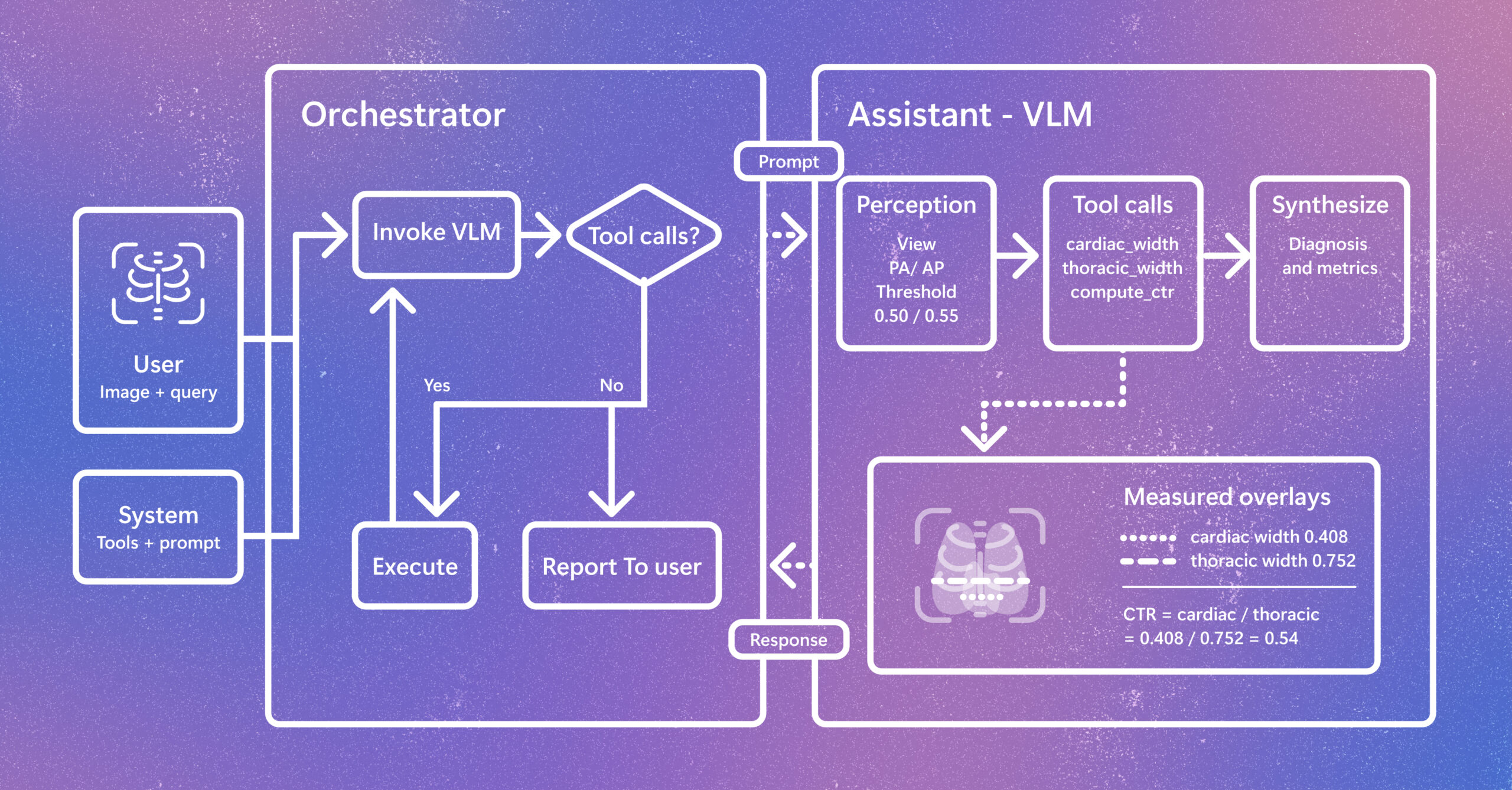
Radiology AI is evolving beyond report generation. CARE-X explores a unified approach that combines flexible reasoning, calibrated predictions, and measurement-based tools for chest X-ray interpretation. The post Introducing CARE-X: Towards Clinically Useful Radiology VLMs with Auxiliary Supervision, Reward-Aligned Learning, and Tool-Augmented Measurement appeared first on Microsoft Research.
