Skip to content
#robotics #human-computer interaction Conference Open access

Building Rapport with Self-Disclosure in Human-Robot Interaction

Aug 2026 · IEEE International Symposium on Robot and Human Interactive Communication · pp. 2355-2362 · 0 citations · 36 references
Computer Science

TL;DR

The results show that robot self-disclosure significantly influences conversational dynamics and enhances users' perceived rapport with the robot, suggesting that self-disclosure is a valuable social behavior for long-term and socially engaging human-robot interaction.

Abstract

As social robots become increasingly present in everyday environments, establishing rapport with users is critical for enabling sustained and meaningful human-robot interaction. In human-human communication, self-disclosure is a well-established mechanism for building rapport; however, its role and impact in human-robot interaction (HRI) are not yet well understood. Although recent advances in large language models (LLMs) have improved the linguistic competence of conversational robots, such systems are typically deployed as reactive information providers, offering limited social reciprocity and relational depth. In this article, we investigate the role of robot self-disclosure in fostering rapport during face-toface human-robot interaction. We propose a dialogue system, called RADIA that leverages retrieval-augmented generation (RAG) to enable a robot to retrieve and reference simulated autobiographical memories, allowing first-person self-disclosure to be incorporated naturally into ongoing conversations. We evaluate the proposed approach through an in-person user study, comparing interactions with a self-disclosing robot against a baseline non-self-disclosing robot. Our results show that robot self-disclosure significantly influences conversational dynamics and enhances users' perceived rapport with the robot, suggesting that self-disclosure is a valuable social behavior for long-term and socially engaging human-robot interaction.

Read PDF

Similar papers

#artificial intelligence Conference Open access Jun 2018

Gibson Env: Real-World Perception for Embodied Agents

This paper investigates developing real-world perception for active agents, proposes Gibson Environment for this purpose, and showcases a set of perceptual tasks learned therein.

F. Xia, Amir Zamir, Zhi-Yang He et al. · 1,069 citations · ⚡112
#computer vision Review Sep 2017

Agile Software Development Methods: Review and Analysis

This publication proposes a definition and a classification of agile software development approaches and analyses ten software development methods that can be characterized as being "agile" against the defined criterion.

P. Abrahamsson, O. Salo, Jussi Ronkainen et al. · 727 citations · ⚡54
#computer vision Jun 2008

The impact of agile practices on communication in software development

The study shows that agile practices improve both informal and formal communication, but indicates that, in larger development situations involving multiple external stakeholders, a mismatch of adequate communication mechanisms can sometimes even hinder the communication.

M. Pikkarainen, Jukka Haikara, O. Salo et al. · 401 citations · ⚡48
#machine learning Review Open access Oct 2014

Software development in startup companies: A systematic mapping study

The results indicate that software engineering work practices are chosen opportunistically, adapted and configured to provide value under the constrains imposed by the startup context.

Nicolò Paternoster, Carmine Giardino, M. Unterkalmsteiner et al. · 394 citations · ⚡54

Related blog posts

MIT News · Artificial Intelligence Nov 13, 2026

Helping robots fit into the human workplace

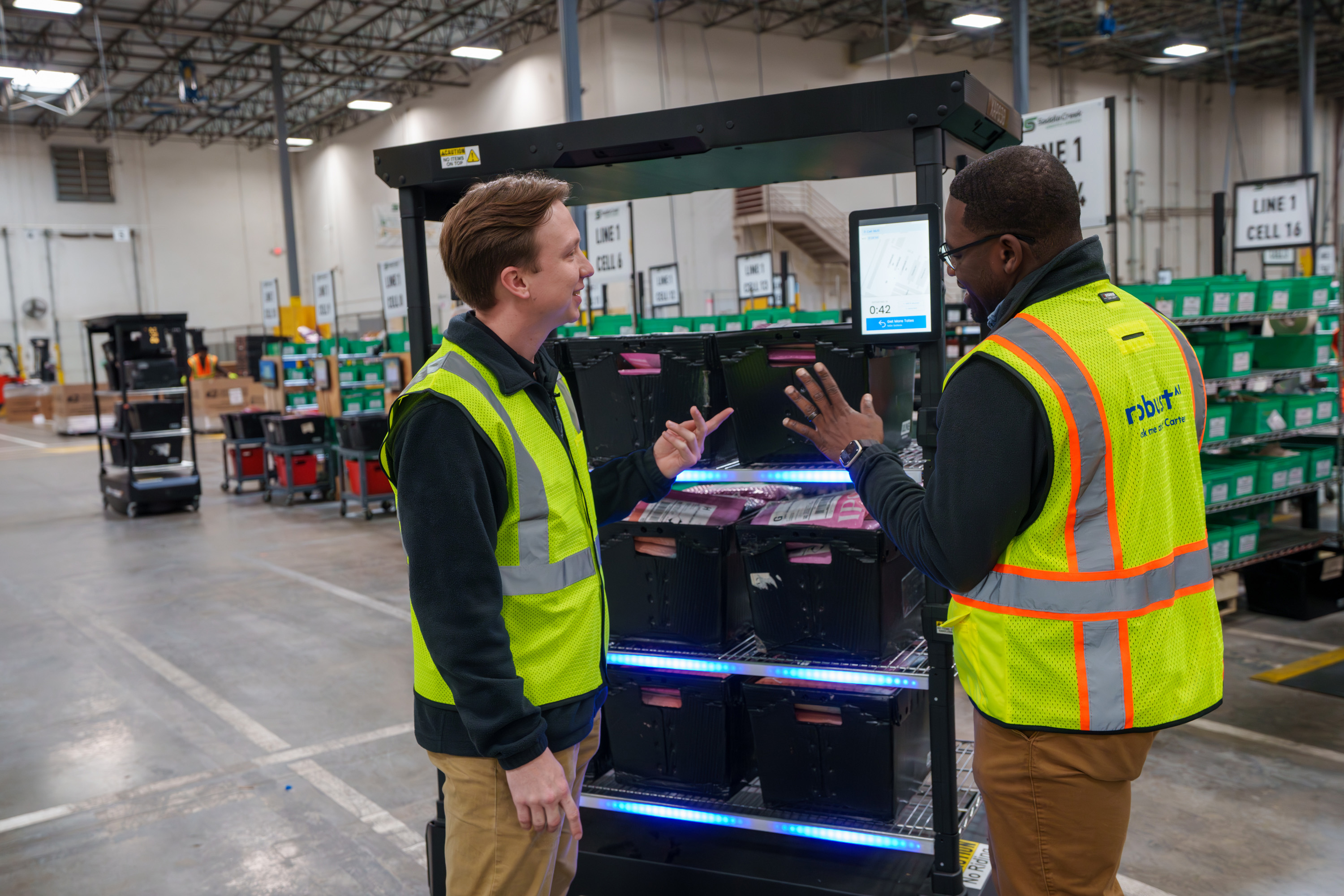
Founded by Anthony Jules ’92, SM ’92 and Professor Emeritus Rodney Brooks, Robust AI’s robots are designed to collaborate with humans in factories and warehouses.

We use cookies to run the site and, with your consent, for analytics and to show ads. See our Cookie Policy.