Skip to content

Eikonal Regularisation in Physics-Informed Neural Networks for Three-Dimensional Level-Set Advection: Transferability of Two-Dimensional Design Principles

Aug 2026 · 0 citations
Physics Computer Science

Abstract

Physics-informed neural networks applied to the level-set formulation of interface advection commonly augment the residual and initial-condition losses with an eikonal regulariser, penalising the deviation of $\|\nabla\phi\|$ from unity. A previous two-dimensional study identified this weight as the dominant hyperparameter and found its optimum shifts by four orders of magnitude between rigid-body and deforming flows, but left open whether these principles transfer to three dimensions and whether single-seed results survive run-to-run variability. We answer both by repeating the weight selection across four 3D benchmarks (translating sphere, rotating sphere, slotted sphere, reversed vortex), sweeping six weights with three seeds at full training budget under a pre-registered selection rule. The ordering transfers: the selected weight tracks how far the exact solution departs from the signed-distance property, spanning four decades from $10^{-1}$ where it holds exactly to $10^{-5}$ where the interface is stretched. Values transfer only benchmark by benchmark; two of four carry over unchanged and two do not, so inheritance must be verified. The multi-seed protocol reveals that at small weights the seed-to-seed standard deviation equals the error itself, and the regulariser reduces it by more than an order of magnitude, buying reproducibility as well as accuracy. We benchmark against a fifth-order WENO solver on identical grids and error measures; the classical scheme is more accurate on all four problems, by two orders of magnitude on smooth rigid advection, with a margin that narrows with geometric difficulty and is smaller in volume conservation than in the field norm. Finally, we show that the relative $L_2$ error cannot certify the preservation of thin features, and report a feature-restricted measure that can.
View source

Similar papers

#artificial intelligence Preprint Aug 2026

SS-ESOAP: Self-Scaled Adaptive Preconditioning for Physics-Informed Learning

Method is introduced, which augments SOAP-style preconditioning with a scalar secant-energy correction adapted to Kronecker geometry and an adaptive basis update followed by variance-state downscaling, and is positioned as a scalable option for stiff, high-accuracy physics-informed training, rather than a uniform repla...

Guang-Yuan Wang, Mads Toftrup, Sebastian Loeschcke et al. · 0 citations
Open access Aug 2026

Spatiotemporal Compositional Active Sampling for Physics-Informed Neural Networks

Physics-informed neural networks (PINNs) approximate partial differential equations (PDEs) by enforcing governing equations and boundary conditions during training, but their accuracy depends on how collocation points are distributed and updated. We propose spatiotemporal compositional active sampling (STCAS), a refere...

Ju-Zheng Zhang, Shi-Yang Li, Tao Zhu et al. · 0 citations
Open access Sep 2026

Collocation geometry creates structural blind spots in physics-informed neural networks

Physics-informed neural networks (PINNs) minimize empirical residuals of governing equations, but a small sampled residual need not certify the structural properties of the underlying partial differential equation (PDE). We examine this issue from a discrete least-squares viewpoint using sampled-residual observability...

Eliezer Keinan, Elishai Ezra Tsur · 0 citations
Preprint Aug 2026

Neither Precision Nor Architecture Alone: Controlled Tests of Failure Remedies for Physics-Informed Neural Networks

Physics-Informed Neural Networks (PINNs) frequently fail on stiff or advection-dominated PDEs, and two recent accounts offer competing remedies: switching from FP32 to FP64 to repair an L-BFGS stopping artifact, or replacing the MLP with a state-space-model (SSM) backbone plus sub-sequence alignment to counter architec...

Jin-Yuan Zhang, Peng-Ji He, He-Long Hu et al. · 0 citations
Open access Sep 2026

Physics-Informed Neural Networks for Coupled Non-Isothermal Two-Phase Flow in Porous Media: Training Pathologies, Remedies, and the Role of Gradient Conflict

Physics-informed neural networks (PINNs) are difficult to train on strongly coupled, multi-objective systems: with fixed loss weights an otherwise identical run succeeds or diverges with the random seed, and a leading explanation attributes the failures to conflict between the loss-term gradients. We test that explanat...

Y. Kenzhebek, T. Imankulov, S. D. Bekele et al. · 0 citations
Preprint Aug 2026

Physics-Informed Foresight Pruning for Sparse PINN Solvers of Nonlinear PDEs

Physics-informed neural networks (PINNs) often rely on over-parameterized models to optimize coupled solution and differential-residual objectives, leaving unclear how much capacity is necessary and what pruning should preserve. We study foresight pruning at initialization for sparse PirateNet PDE solvers. Standard neu...

A. Karimi, Uvini Balasuriya Mudiyanselage, Kookjin Lee · 0 citations

Related blog posts

Microsoft Research Blog Sep 30, 2026

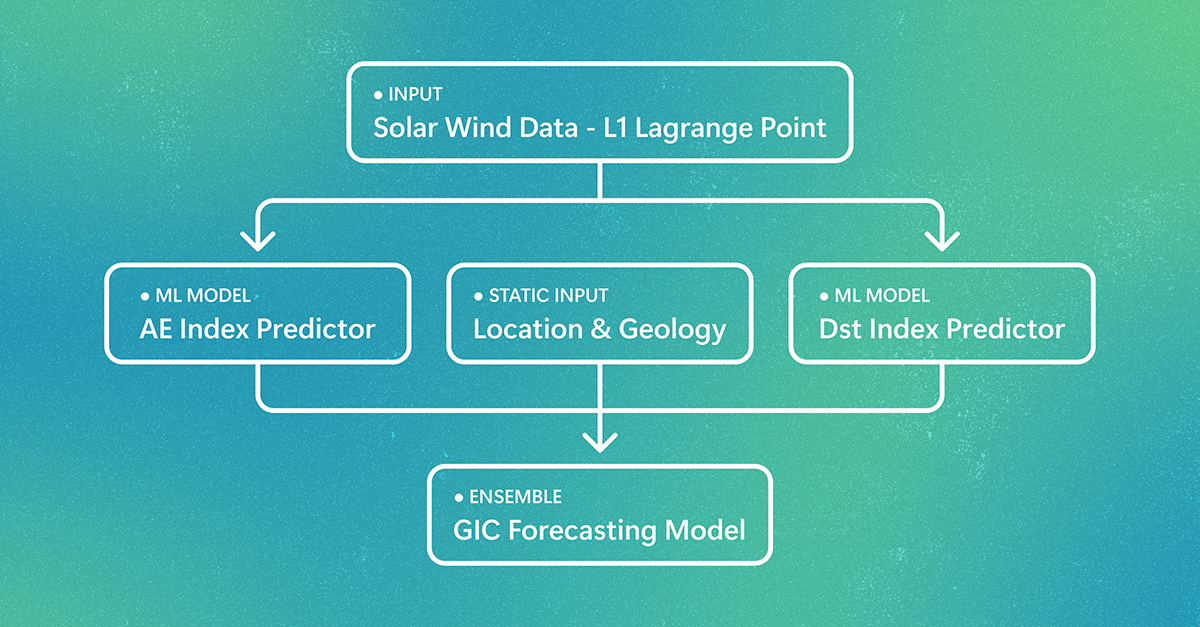
Forecasting space weather risks on power grids

Extreme space-weather events can damage power systems on Earth and degrade GPS accuracy and satellite operations. A new machine learning system can predict where damage is likely to occur 30-60 minutes before a storm arrives. The post Forecasting space weather risks on power grids appeared first on Microsoft Research.

We use cookies to run the site and, with your consent, for analytics and to show ads. See our Cookie Policy.