NeuroVLA is introduced, a brain-inspired architecture that couples a cortical vision-language planner to recurrent cerebellar modulation and a stateful spiking spinal controller that translates semantic intent into actions while incorporating high-frequency proprioceptive and force feedback, maintaining short-term motor memory, and enabling local responses to unexpected contact.
Abstract
Vision-language-action (VLA) models inherit powerful semantic representations from large language models, but carrying over their design priorities can leave the demands of physical control under-specified. Stable manipulation requires high-frequency proprioceptive feedback and persistent motor state, in addition to instruction understanding. Here we introduce Neuromorphic Vision-Language-Action (NeuroVLA), a brain-inspired architecture that couples a cortical vision-language planner to recurrent cerebellar modulation and a stateful spiking spinal controller. These components translate semantic intent into actions while incorporating high-frequency proprioceptive and force feedback, maintaining short-term motor memory, and enabling local responses to unexpected contact. In simulated and physical manipulation tasks, the cerebellar module reduces mean commanded jerk by 75.6%, and NeuroVLA achieves a 54.8% collision-recovery rate compared with 0.0% for the evaluated VLA baselines. The spinal controller implemented on an FPGA-based neuromorphic processor achieves 2.19 ms inference latency and 0.87 mJ per inference, corresponding to approximately 0.4 W during inference. These results motivate moving beyond inherited language-model design priorities toward embodied architectures that explicitly integrate semantic planning, high-frequency bodily feedback, motor memory, and local correction.
DS-VLA is introduced, a dendritic-inspired action architecture that incorporates dendritic spiking dynamics into VLA control to enable modularized feature processing and temporal information integration and demonstrate that integrating brain-inspired computational mechanisms offers a promising architectural prior for r...
Vision-language-action (VLA) models have demonstrated strong capabilities in robotic manipulation, yet their reliance on dense, continuous-valued computation presents a fundamental challenge for energy-constrained deployment. Inspired by the sparse, event-driven signaling and temporal integration mechanisms of biologic...
Ru-Meng Liu, He-Hao Lv, Zi-Yao Zhang et al.· 0 citations
We present spiking-neural-network (SNN) reinforcement learning for autonomous locomotion control of a starfish-inspired multi-legged soft robot driven by shape memory alloy (SMA) actuators. Such robots are usually driven open loop by pre-designed periodic signals, because coordinated motion is hard to hand-design at...
Foundation models are becoming remarkably reliable at high-level reasoning, yet they remain too slow and costly to serve as fine-grained controllers. Conversely, fast policies like VLAs and whole-body controllers offer more efficient reflexes, but struggle to generalize. While pairing a deliberative brain (foundation m...
P. Zhou, Yi-Xin Ma, Zhengfeiyang Zhang et al.· 0 citations
We investigate humanoid locomotion with a fly-inspired recurrent controller and identify the pathways supporting its deployed behavior. The controller couples 3,609 continuous neural states to a simulated Unitree G1 through body-observation projections, a motor-neuron-labelled readout, and joint servos. We formulate th...
Isabel Guan, Yun-Tian Zhao, Ding-Yuan Zhang et al.· 0 citations
Opt2VLA is presented, a force-aware VLA framework that introduces explicit force commands at the VLA-to-control interface for humanoid whole-body manipulation and shows that explicit force conditioning enables more accurate and consistent force regulation than motion-only control, while physically grounded torque super...
Fu-Kang Liu, Yipu Chen, Jaehwi Jang et al.· 1 citation
Related blog posts
MIT News · Artificial Intelligence· news.mit.eduJul 30, 2026
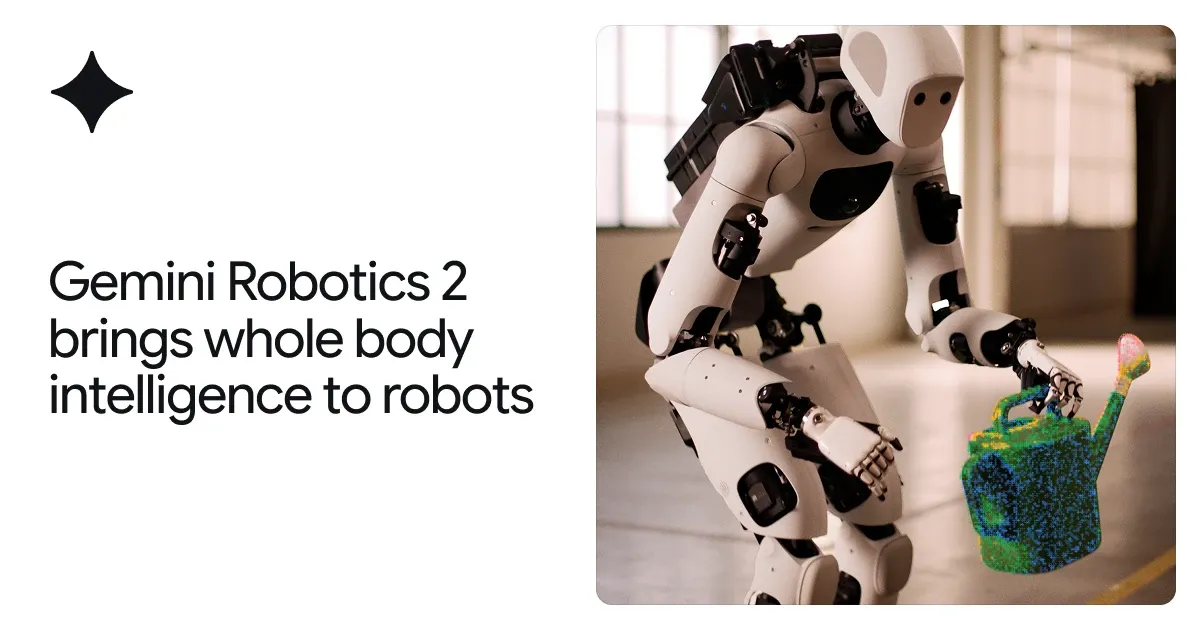
From feet to fingertips — we are teaching robots intelligent whole-body control, fine dexterity, and teamwork to complete a broad range of complex tasks.