Augmented reality (AR) changes how users perceive and attend to their surroundings. Prior work suggests AR can reduce attention to the physical world, but it remains unclear whether this holds in environments dense with both virtual and physical objects, and which factors most affect object recall. This study examines recall in a mixed-reality office scene after an object-selection task, testing object-level factors (virtuality, size), context-level factors (semantic congruency, saliency), and user-level factors (cueing, dual tasking). Cueing informed participants of a later recall test, while dual tasking added cognitive load through a secondary audio task. Virtual objects were recalled more accurately than physical ones. Cueing produced a modest improvement in recall of present objects. Using playback software to reconstruct each participant's view throughout the trials, we computed object-level saliency and found a weak positive correlation with recall, slightly stronger than the effects of virtuality, but not reaching statistical significance. These findings have implications for AR interface design and for building mixed-reality environments that better support cognition during real-world tasks.

This publication proposes a definition and a classification of agile software development approaches and analyses ten software development methods that can be characterized as being "agile" against the defined criterion.
P. Abrahamsson, O. Salo, Jussi Ronkainen et al.· arXiv.org· 727 citations· ⚡54
The study shows that agile practices improve both informal and formal communication, but indicates that, in larger development situations involving multiple external stakeholders, a mismatch of adequate communication mechanisms can sometimes even hinder the communication.
M. Pikkarainen, Jukka Haikara, O. Salo et al.· Empirical Software Engineeri...· 401 citations· ⚡48
The results indicate that software engineering work practices are chosen opportunistically, adapted and configured to provide value under the constrains imposed by the startup context.
Nicolò Paternoster, Carmine Giardino, M. Unterkalmsteiner et al.· Information and Software Tec...· 394 citations· ⚡54
The perception of the impact of agile methods is predominantly positive, and several challenge areas were discovered, but based on this study, agile methods are here to stay.
M. Laanti, O. Salo, P. Abrahamsson· Information and Software Tec...· 260 citations· ⚡20
AI is making software generation faster, but speed does not remove the need for expertise. As more work is delegated to AI, tacit knowledge may become one of the most important human advantages in software engineering. The post Beyond Prompt Engineering: The Role of Tacit Knowledge in Software Engineering appeared first on GPT-Lab.
Microsoft Research Blog· microsoft.comJul 30, 2026
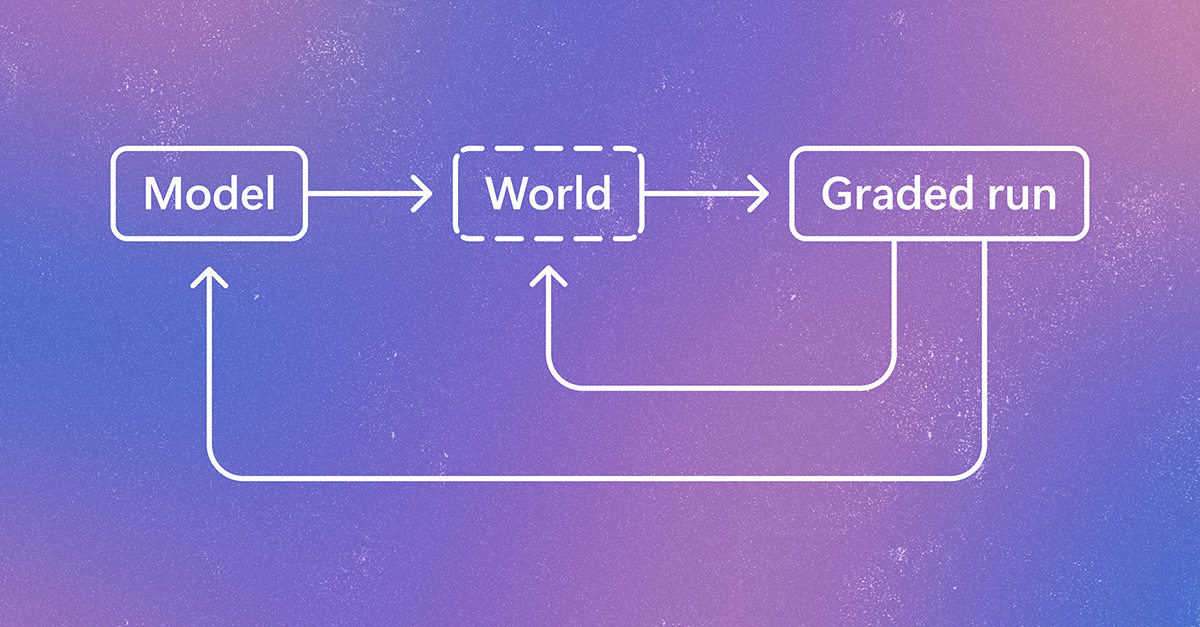
Computer-use AI agents struggle with multi-step workflows like email and customer support. Echoverse trains agents in realistic environments rather than simply providing more training tasks, helping them improve as the tasks, tests, and environments evolve. The post Echoverse: Deep, evolving environments for computer-use agents appeared first on Microsoft Research.