This work replaces the costly convex relaxation step required by nominal GCS with a single forward pass through a Graph Attention Network that predicts a set of highly probable candidate paths through the graph, and generates a lightweight ranking network that orders these candidates by their estimated trajectory cost.
Abstract
Motion planning problems such as collision-free navigation and contact-rich manipulation can be naturally formulated as optimization problems that couple discrete decisions with continuous trajectories. The Graphs of Convex Sets (GCS) framework offers a practical solution to these problems. It represents discrete decisions as nodes of a graph and encodes continuous trajectories in the edges connecting them. However, the resulting optimization subproblems can become computationally prohibitive for online replanning. In this work, we propose a learning-based strategy to mitigate this limitation. Specifically, we replace the costly convex relaxation step required by nominal GCS with a single forward pass through a Graph Attention Network that predicts a set of highly probable candidate paths through the graph. A lightweight ranking network then orders these candidates by their estimated trajectory cost. Evaluating them in this order, we terminate our search early while still recovering a near-optimal motion plan. We validate the resulting pipeline across diverse robotic tasks, including collision-free motion planning for a 3D quadrotor and a 7-DoF manipulator, and planning through contact for planar pushing. Across both convex and non-convex cost and constraint settings, our approach yields up to two orders of magnitude speedup over nominal GCS while maintaining a 100% success rate, at the cost of some suboptimality in the recovered solutions. Code implementations and video demonstrations can be found at https://neural-gcs.github.io/.
This report adopts a two-piece MINCO parameterization, trading time for smoothness without altering the trajectory's spatial profile, and replaces score regression with a ranking loss, preventing small score errors from reordering the candidate set.
Extensive simulations and real-world experiments demonstrate that the proposed framework can efficiently generate and iteratively improve motion plans for different planning objectives, robotic platforms, and swarm configurations, highlighting its effectiveness, computational efficiency, and scalability as a general pl...
Shu-Li Lv, Pengda Mao, Chen Min et al.· 0 citations
Underactuated systems pose a challenge for convex motion planning because their dynamically feasible motions lie on a manifold of trajectories in function space. Building on our earlier formulation of polytopic action sets (PAS), this letter presents a method for rapidly generating, online, trusted convex sets of short...
A. Jaitly, Siavash Farzan· IEEE Control Systems Letters· 0 citations
World models let robots imagine possible futures, but exploiting this capability for real-time planning is bottlenecked by a representation misalignment: generative models and planners operate on decoupled manifolds, requiring computationally expensive decoding of every candidate back to the high-dimensional observatio...
Mohammad Nazeri, Alexandyr Card, S. Huber et al.· 0 citations
Autonomous robot navigation requires the rapid generation of obstacle-free regions for trajectory planning. However, existing corridor generators struggle to meet real-time, sensor-rate computational constraints. To resolve this bottleneck, we introduce PathCover, a framework driven by RISP; a novel randomized algorith...
K. S. Narkhede, A. M. Kulkarni, Guoquan Huang et al.· 0 citations
This follow-up work tests the feasibility of the neuro-inspired self-supervised learning framework for trajectory planning that leverages forward and inverse models as the internal supervisory mechanism in an environment that contains an obstacle, and demonstrates the tendency of the planner to exploit the learning sig...
M. Krupa, Miroslav Cibula, Kristína Malinovská· arXiv.org· 0 citations
Related blog posts
MIT News · Artificial Intelligence· news.mit.eduJul 15, 2026
Assistant Professor Pat Pataranutaporn describes a new interface that lets everyday users glimpse inside an AI's neural network before their chatbot ever says a word.
Microsoft Research Blog· microsoft.comJul 13, 2026
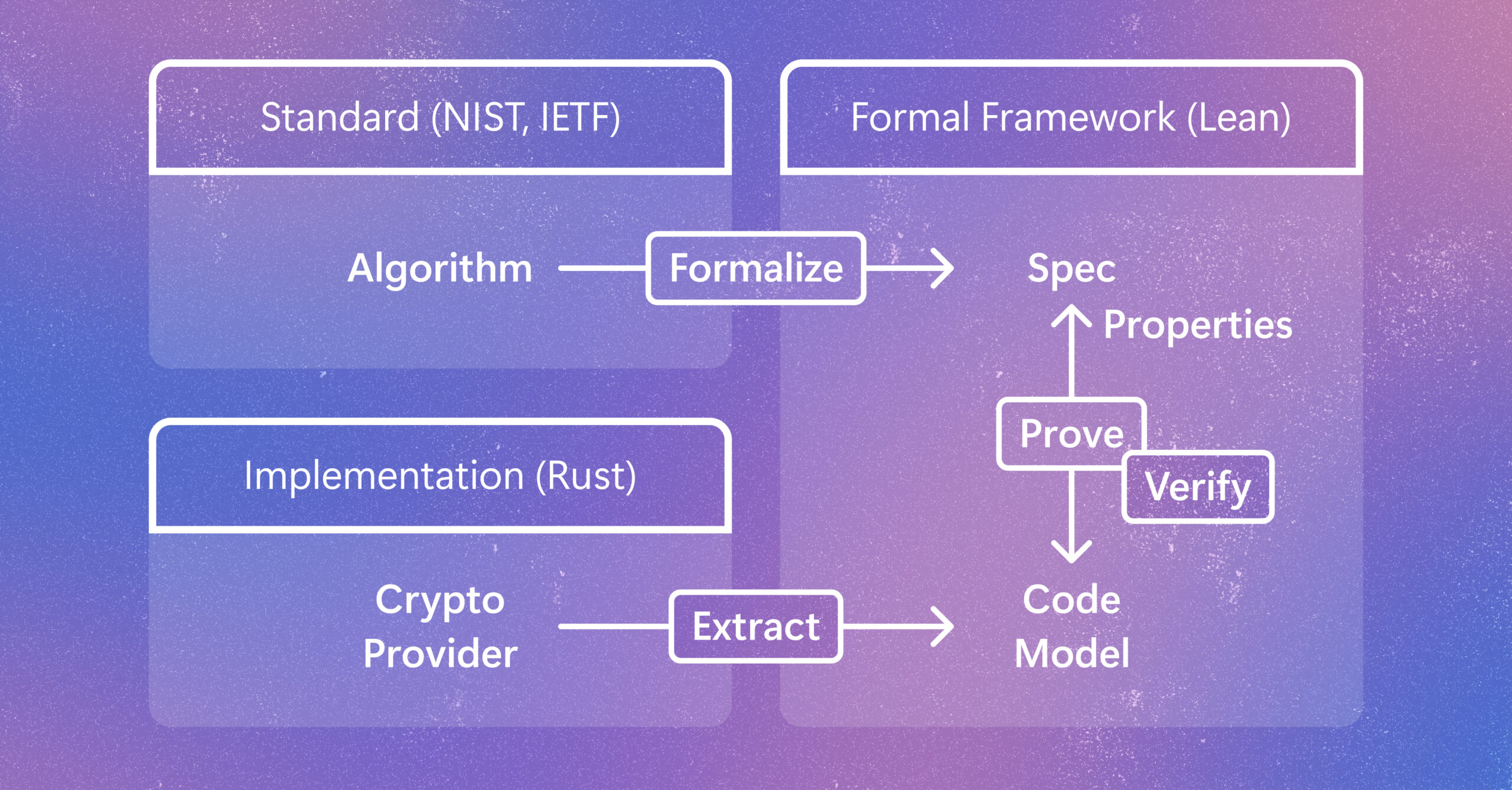
Cryptographic code supports vital protections in modern computing systems. Learn how a new method helps verify code as developers write it while preserving speed and adaptability as it gets implemented and evolves. The post Verifying Rust cryptography in SymCrypt, from standards to code appeared first on Microsoft Research.
MIT News · Artificial Intelligence· news.mit.eduJul 6, 2026
PhD student Rachel Sava, winner of the Envisioning the Future of Computing Prize, explores transformative improvements and dystopian risks of neural technology.