This work introduces CoDA, a framework in which a simulation data engine and an action policy co-evolve through a shared heterogeneous memory of environment construction, policy failures, and learning progress, and proposes Text2potential to convert these diagnoses into staged potentials for action-chunk value learning.
Abstract
Generative simulation can automate robot environment construction, but physically valid environments are not necessarily useful for training. The challenge is to identify environments that address a policy's failures and supervision that helps it overcome them. We introduce CoDA, a framework in which a simulation data engine and an action policy co-evolve through a shared heterogeneous memory of environment construction, policy failures, and learning progress. The memory compiles validated diagnoses from a vision-language critic into generation programs that recreate difficulties and training programs that help the policy overcome them. We further propose Text2potential to convert these diagnoses into staged potentials for action-chunk value learning, providing dense supervision for policy updates while preserving the task's optimal policy under standard shaping assumptions. Measured learning progress guides further generation and program refinement. Across four manipulation task families, CoDA improves out-of-distribution success from 5.3% after supervised fine-tuning to 27.6%, exceeding the strongest closed-loop baseline by 9.5 percentage points with the same generation budget. On LIBERO-Pro, 15 rounds of generation and training raise success from 25% to 84% under position perturbations and from 1% to 76% under instruction perturbations.
Vision-language-action (VLA) policies trained on large datasets are capable within their training domains, yet they still fail to generalize to the variety of situations a robot meets in real-world deployment. Agentic robot systems complement the policy with a vision-language model (VLM) orchestrator that learns when t...
Xi-Lun Zhang, M. Wang, Erik Bauer et al.· 1 citation· ⚡1
RACaP is introduced, an agentic framework that moves coding to evolution and uses a Reasoning-and-Acting loop to call frozen, typed Policy APIs at deployment and shows that separating reusable code from runtime decisions supports continued evolution, effective transfer, and efficient long-horizon control.
AdaHVLA is introduced, an adaptive harness that refines code-based coordination policies through robot experience to better align agent reasoning and memory with VLA execution.
Jun-Yi Tang, Jie Peng, Ze-Zhen Ding et al.· 1 citation
Generalist robot policies and language-model agents provide complementary capabilities, but completing a task also requires adapting their use to the consequences of physical interaction. We study execution as a locus of adaptation: feedback guides the current action and supplies evidence for revising subsequent decisi...
He-Yang Yu, Hao-Min Li, Si-Hang Li et al.· 0 citations
Supervised fine-tuning of Model Context Protocol (MCP) agents is typically conducted on a static data distribution, which fails to adapt to the student's evolving capabilities and leaves newly exposed weaknesses insufficiently addressed. To address these challenges, we propose \method, an agent--data mutual evolution f...
Xuan-Ang Gao, Ke-Peng Lin, Xin-Yan Shi et al.· 0 citations
Agentic robot systems combine language-model reasoning with robot policies to monitor execution and recover from failures. However, reviewing every action chunk incurs substantial overhead, even in familiar situations. We introduce FastHarness, an experience-driven execution harness that adaptively schedules GPT-6 Astr...
Tao Lin, Yu-Xin Du, Hao-Xiao Wang et al.· 0 citations
Related blog posts
MIT News · Artificial Intelligence· news.mit.eduJul 30, 2026
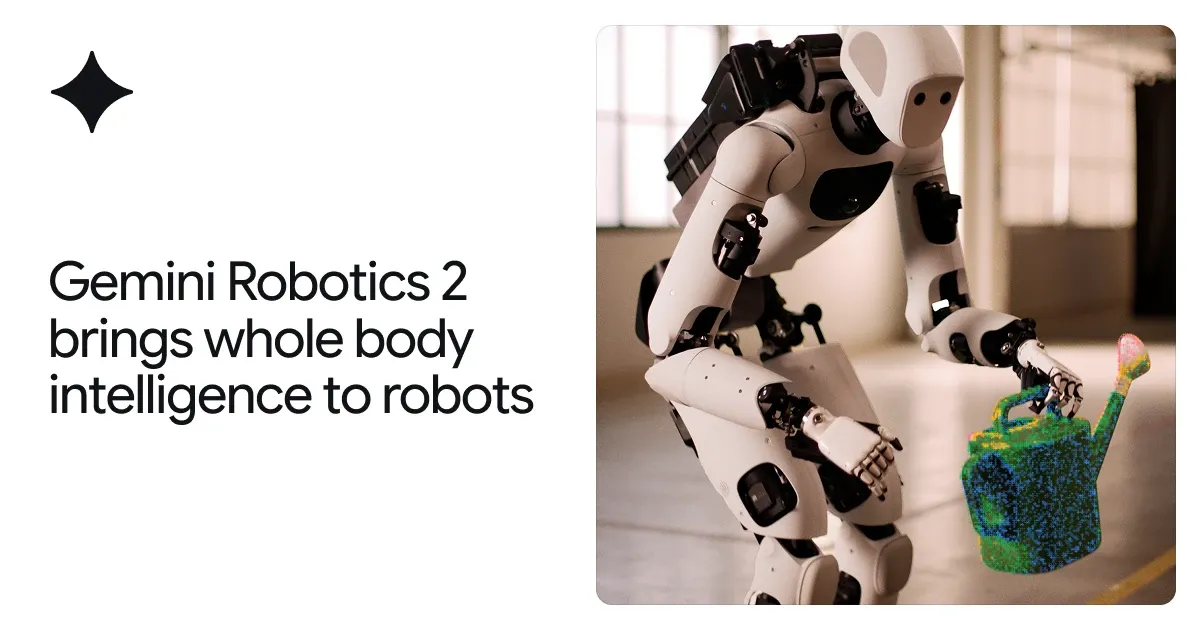
From feet to fingertips — we are teaching robots intelligent whole-body control, fine dexterity, and teamwork to complete a broad range of complex tasks.