Significant efforts are currently being directed toward the implementation of large-scale quantum information processors, but realizing useful quantum advantage also requires the development of efficient quantum algorithms. While for many practical problems the dominant resource costs are associated with a small set of computational primitives, optimizing them in the quantum setting presents unique challenges, including a reversibility constraint absent from ordinary classical computation. Here we introduce an evolutionary framework in which large language models (LLMs) propose circuit designs and an independent evaluator verifies and scores them. We apply this framework to tasks spanning numerical computation, chemistry, optimization, quantum simulation, and number theory. In seven of the eight tasks, the discovered circuits significantly reduce both Toffoli and qubit counts relative to the state of the art. In the eighth, the search discovers a new reversible architecture for prime-field modular inversion. By handling reversibility differently, the architecture makes divsteps -- a classical algorithm previously impractical for reversible integer arithmetic -- viable and substantially improves the Toffoli-qubit trade-off for modular inversion. These results open the door for evaluator-guided LLM co-design of new algorithmic structures for quantum computation.

This publication proposes a definition and a classification of agile software development approaches and analyses ten software development methods that can be characterized as being "agile" against the defined criterion.
P. Abrahamsson, O. Salo, Jussi Ronkainen et al.· arXiv.org· 727 citations· ⚡54
Supporting data, adapters, predictions and code for the article *Low-Cost LoRA Fine-Tuning of Small Language Models for Multi-Step Arithmetic Reasoning* by Jake O'Grady, Asena Isik Gürhan, Chee Fong Ting and Effirul Ramlan (University of Galway). We generated 20,000 GSM8K-derived arithmetic problems with step-by-step s...
O'Grady, Jake, Gürhan, Asena Isik, Chee, Fong Ting et al.· Zenodo (CERN European Organi...· 465 citations
The study shows that agile practices improve both informal and formal communication, but indicates that, in larger development situations involving multiple external stakeholders, a mismatch of adequate communication mechanisms can sometimes even hinder the communication.
M. Pikkarainen, Jukka Haikara, O. Salo et al.· Empirical Software Engineeri...· 401 citations· ⚡48
The results indicate that software engineering work practices are chosen opportunistically, adapted and configured to provide value under the constrains imposed by the startup context.
Nicolò Paternoster, Carmine Giardino, M. Unterkalmsteiner et al.· Information and Software Tec...· 394 citations· ⚡54
A new computational approach reveals how cells communicate to assemble into tissues. This could accelerate stem cell engineering, improve disease models, and inform therapies.
Microsoft Research Blog· microsoft.comOct 15, 2026
Zero-knowledge proofs can verify computing results without rerunning workloads or exposing sensitive data. Magnetar helps bring them into the mainstream with support for standard programming languages, major speed gains, and quantum-resistant security. The post Proof-based general-purpose computing with Magnetar appeared first on Microsoft Research.
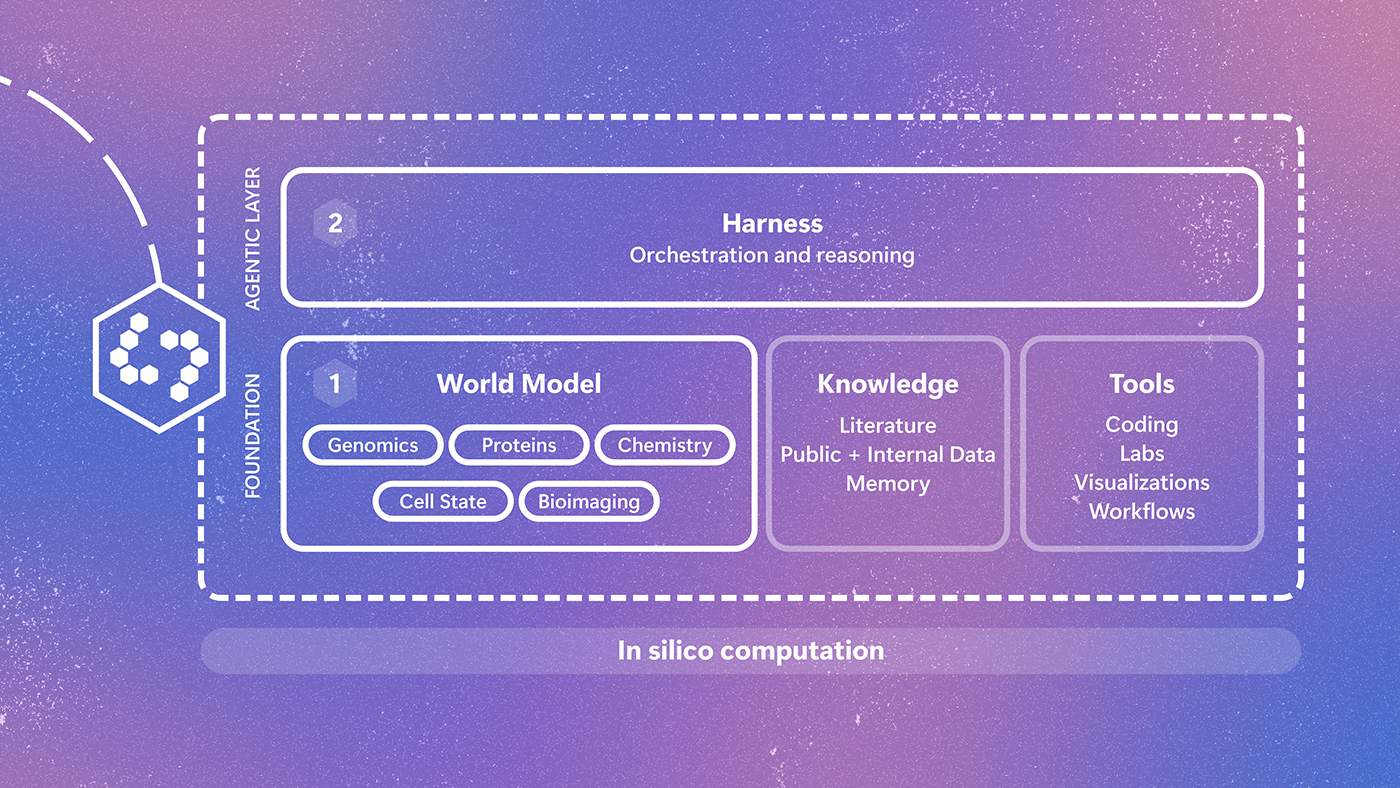
Biology doesn't operate in silos, and neither should the AI representation of it. Quine is an early-stage research effort to create a multimodal world model of biology. By connecting insights across biological scales and modalities, Quine helps scientists computationally search a space far larger than intuition allows and prioritize hypotheses before they reach the lab. Experimental results provide important feedback, helping researchers sharpen future research directions. The post Introducing Q…
We use cookies to run the site and, with your consent, for analytics and to show ads.
See our Cookie Policy.