Today's healthcare systems represent complex adaptive systems that involve stochastic demand, tight coupling between subsystems, and nonlinearity of resource constraints. This paper proposes the Autonomous Healthcare Control System (AHCS), which brings together such approaches as stochastic state space models, Markov Decision Process, queuing theory, epidemic forecasting, and optimization through reinforcement learning. AHCS treats hospital operations as a high dimensional stochastic system and leverages the digital twin framework to simulate numerous scenarios of hospital operations. AHCS allows optimizing clinical performance, ensuring sustainable labor force, increasing supply chain resilience, and improving efficiency. In addition, the proposed approach incorporates elements of explainable AI, fairness aware learning, and human in the loop approach. Simulation results for the case of pandemic-related surge show that the proposed system is capable of decreasing the probability of ICU overload by approximately 40% and reducing the recovery period by 50%.
The results indicate that software engineering work practices are chosen opportunistically, adapted and configured to provide value under the constrains imposed by the startup context.
Nicolò Paternoster, Carmine Giardino, M. Unterkalmsteiner et al.· Information and Software Tec...· 394 citations· ⚡54
This state-of-practice investigation was performed using a literature review followed by a multiple-case study approach and presents how inconsistency between managerial strategies and execution can lead to failure by means of a behavioral framework.
Carmine Giardino, Xiaofeng Wang, P. Abrahamsson· International Conference on...· 175 citations· ⚡19
This study conducts a case survey study based on the secondary data of the major pivots happened in 49 software startups, and demonstrates that customer need pivot is the most common among all pivot types.
Sohaib Shahid Bajwa, Xiaofeng Wang, Anh Nguyen-Duc et al.· Empirical Software Engineeri...· 127 citations· ⚡15
It is found that roles of MVPs in startups were not fully aware by entrepreneurs, and entrepreneurs should consider a systematic approach to fully explore the value of MVP, as a multiple facet product (MFP).
Anh Nguyen-Duc, P. Abrahamsson· International Conference on...· 93 citations· ⚡9
The method, ECCOLA, is presented, which aims at making the high-level AI ethics principles more practical, making it possible for developers to more easily implement them in practice.
Ville Vakkuri, Kai-Kristian Kemell, P. Abrahamsson· EUROMICRO Conference on Soft...· 64 citations· ⚡6
It is found that what perceived as biggest challenges by software startups do vary across different life cycle stages, even though its significance decreases when the learning focuses of the startups move from problem to solution and their products mature.
Xiaofeng Wang, Henry Edison, Sohaib Shahid Bajwa et al.· International Conference on...· 62 citations· ⚡6
Learn how Google DeepMind and GovTech Singapore uses lightweight on-device Gemma models to intercept conversational scams in private chats with zero cloud data egress.
Microsoft Research Blog· microsoft.comOct 12, 2026
StudentSim is a research system for evaluating and improving AI tutoring tools before they are tested with learners. It models how individuals may engage with tutors, giving feedback to improve tutor performance across subjects like chess, writing, and mathematics. The post Simulating student learning for better AI tutoring appeared first on Microsoft Research.
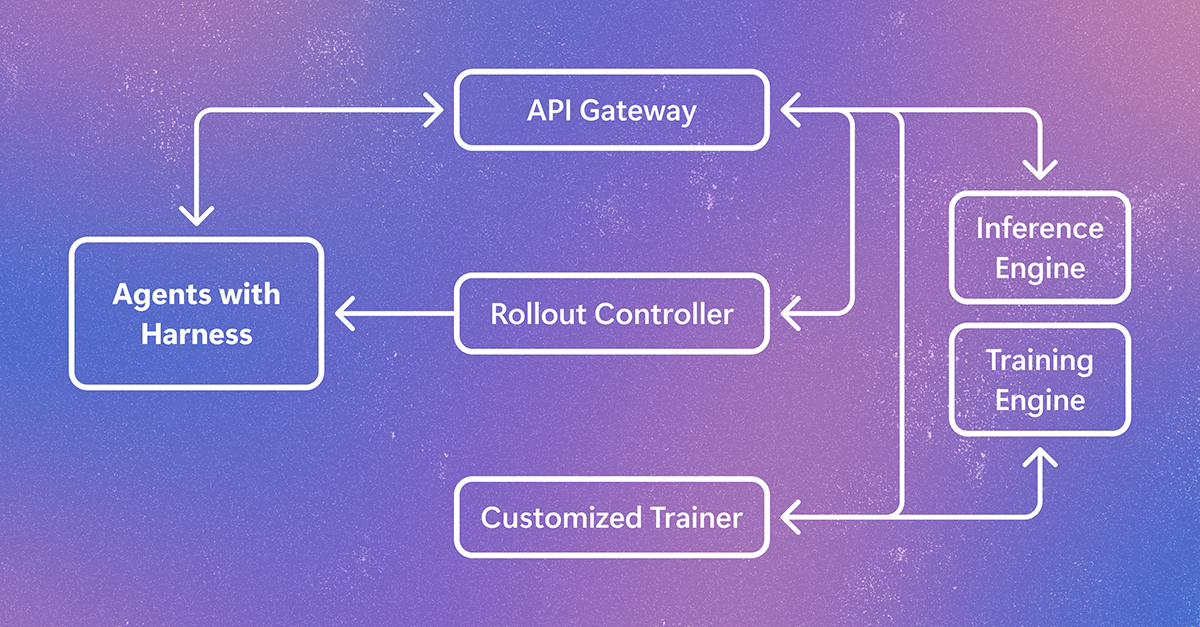
Training AI agents with reinforcement learning can be challenging because their tools, context, and decision-making are managed by complex frameworks. Agent Lightning connects existing agents to RL training, making it easier to improve them without rebuilding them. The post Agent Lightning v1.0: A 3,500-Line Lightweight Agentic RL Framework for Training Agents with Real Harnesses appeared first on Microsoft Research.
MIT News · Artificial Intelligence· news.mit.eduOct 6, 2026