Skip to content

THE EL-RAKHAWI FRAMEWORK FOR COGNITIVE TOPOLOGICAL METAMATERIALS: AI-DRIVEN PROGRAMMABLE MATTER FOR ZERO-LOSS ENERGY AUTONOMY AND EXTREME ENVIRONMENT ADAPTATION

Oct 2026 · Zenodo (CERN European Organization for Nuclear Research)
Topological Materials and Phenomena Advanced Materials and Mechanics

Abstract

The El-Rakhawi Framework for Cognitive Topological Metamaterials (CTM) introduces a revolutionary paradigm transforming passive matter into intelligent, adaptive systems. Addressing the fundamental limitation of static materials in extreme environments, CTM integrates higher-order topological insulators (HOTIs) with phase-change meta-atoms, enabling real-time reconfiguration of thermal, mechanical, and electromagnetic properties. The framework leverages protected topological surface, edge, and hinge states to guarantee zero-loss energy transport, mathematically enforced by Chern numbers and Z2 invariants immune to defects. The AI-driven control engine employs deep reinforcement learning with analog neuromorphic computing to minimize cognitive energy overhead while enforcing topological continuity constraints during phase transitions. The dimensionally consistent El-Rakhawi Dynamic Adaptability Metric (EDAM) provides dual formulations: EDAM_energy (Property Units per Joule) and EDAM_performance (Property Units per Second per Watt), explicitly accounting for reconfiguration, maintenance, and AI inference costs. Applications span adaptive spacecraft hulls, fusion reactor blankets, and perpetual battery-free IoT networks. By fusing topological physics, AI-driven programmable matter, and autonomous energy harvesting with enhanced thermoelectric figures of merit, CTM establishes the mathematical and physical foundation for matter that computes its own survival, achieving unprecedented energy autonomy in humanity's most hostile frontiers.

View source

Similar papers

#computer vision Review Sep 2017

Agile Software Development Methods: Review and Analysis

This publication proposes a definition and a classification of agile software development approaches and analyses ten software development methods that can be characterized as being "agile" against the defined criterion.

P. Abrahamsson, O. Salo, Jussi Ronkainen et al. · 727 citations · ⚡54
#computer vision Jun 2008

The impact of agile practices on communication in software development

The study shows that agile practices improve both informal and formal communication, but indicates that, in larger development situations involving multiple external stakeholders, a mismatch of adequate communication mechanisms can sometimes even hinder the communication.

M. Pikkarainen, Jukka Haikara, O. Salo et al. · 401 citations · ⚡48
#machine learning Review Open access Oct 2014

Software development in startup companies: A systematic mapping study

The results indicate that software engineering work practices are chosen opportunistically, adapted and configured to provide value under the constrains imposed by the startup context.

Nicolò Paternoster, Carmine Giardino, M. Unterkalmsteiner et al. · 394 citations · ⚡54

Related blog posts

MIT News · Artificial Intelligence Aug 27, 2026

Looking beyond natural sequences

A new machine-learning framework aims to improve the success rate of computational protein design while moving away from results that reproduce sequences found in nature.

Microsoft Research Blog Aug 20, 2026

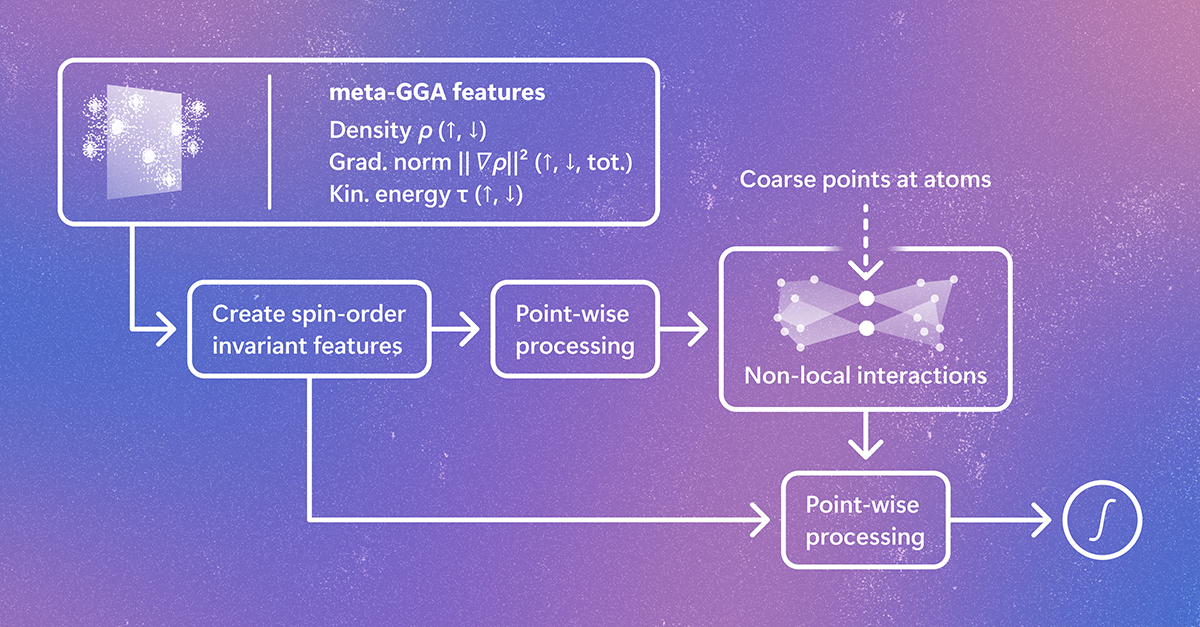
Broadening access to Skala creates a faster path to predictive DFT 

Skala 1.1, the updated deep-learning exchange-correlation functional from Microsoft Research, provides greater accuracy, expanded accessibility across the computational chemistry ecosystem, and a living benchmark to track computational performance. The post Broadening access to Skala creates a faster path to predictive DFT  appeared first on Microsoft Research.

We use cookies to run the site and, with your consent, for analytics and to show ads. See our Cookie Policy.