Abstract Identifying which candidate sites on a solid-state sample are single-photon emitters requires a Hanbury Brown–Twiss (HBT) measurement of the second-order correlation function g(2)(τ), which is slow because photon coincidences accumulate at a rate proportional to the square of the detected count rate. We examine how much of this time can be saved by deciding while the coincidences are still accumulating and by adapting the exposure of each site. A spiking neural network reads the coincidence record in short time slices and updates, after every slice, its estimate of the probability that the site hosts a single emitter; a reinforcement-learning controller decides, site by site, whether to expose longer, certify, or reject; and a graph that encodes the electronic level structure of each emitter class conditions one estimator on the class being measured. All components are trained on simulated data from a standard three-level photon-counting model, which we validate against the exact master-equation solution before use. In simulation, the event-driven estimator reaches 90% balanced accuracy with 6 times less acquisition time than a multistart least-squares fit, typically committing to a decision 312 ms into a 1 s exposure, and adaptive exposure screens simulated 48-site fields 1.7 times faster than fixed-dwell scanning at matched precision and recall. Applied without retraining to published experimental HBT data from an InGaAs/GaAs quantum dot, a network trained only on simulated pulsed-excitation histograms estimates g(2)(0) from 30 s records with half the error of peak-area analysis of the same records. The closed-loop results are obtained in simulation only. The code, data, and trained models are openly available.

The results indicate that software engineering work practices are chosen opportunistically, adapted and configured to provide value under the constrains imposed by the startup context.
Nicolò Paternoster, Carmine Giardino, M. Unterkalmsteiner et al.· Information and Software Tec...· 394 citations· ⚡54
This state-of-practice investigation was performed using a literature review followed by a multiple-case study approach and presents how inconsistency between managerial strategies and execution can lead to failure by means of a behavioral framework.
Carmine Giardino, Xiaofeng Wang, P. Abrahamsson· International Conference on...· 175 citations· ⚡19
This study conducts a case survey study based on the secondary data of the major pivots happened in 49 software startups, and demonstrates that customer need pivot is the most common among all pivot types.
Sohaib Shahid Bajwa, Xiaofeng Wang, Anh Nguyen-Duc et al.· Empirical Software Engineeri...· 127 citations· ⚡15
It is found that roles of MVPs in startups were not fully aware by entrepreneurs, and entrepreneurs should consider a systematic approach to fully explore the value of MVP, as a multiple facet product (MFP).
Anh Nguyen-Duc, P. Abrahamsson· International Conference on...· 93 citations· ⚡9
It is found that what perceived as biggest challenges by software startups do vary across different life cycle stages, even though its significance decreases when the learning focuses of the startups move from problem to solution and their products mature.
Xiaofeng Wang, Henry Edison, Sohaib Shahid Bajwa et al.· International Conference on...· 62 citations· ⚡6
Agile methods continue to gain popularity. In particular, the Scrum method appears to be on the verge of becoming a de-facto standard in the industry, leading the so called Agile movement. While there are success stories and recommendations, there is little scientifically valid evidence of the challenges in the adoptio...
A. Marchenko, P. Abrahamsson· Agile Conference· 59 citations· ⚡11
Related blog posts
MIT News · Artificial Intelligence· news.mit.eduOct 13, 2026
Machine-learning networks can learn without detailed instructions from a designer. Those that do may offer insight into how the brain reorganizes itself during learning.
Microsoft Research Blog· microsoft.comJul 13, 2026
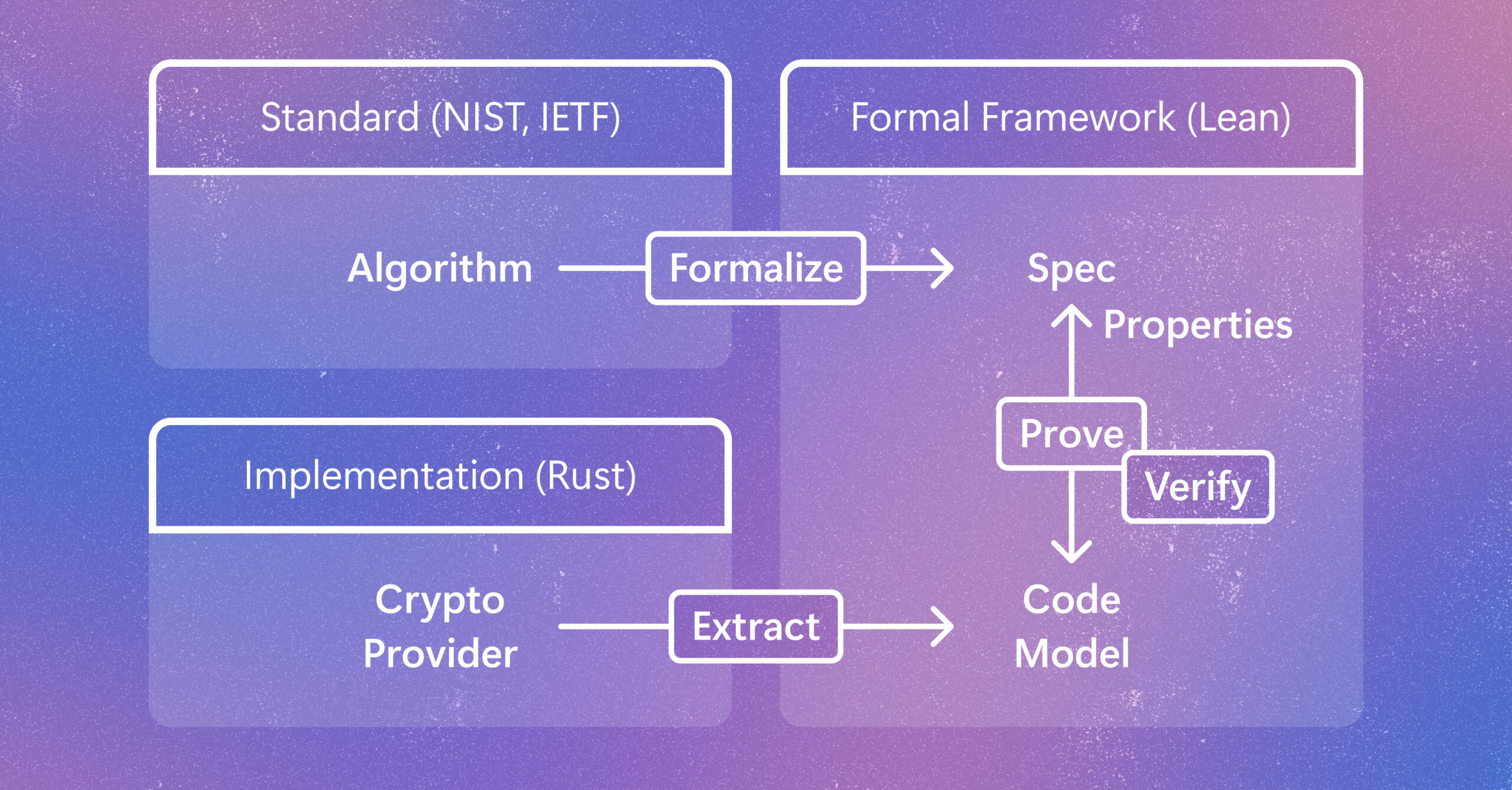
Cryptographic code supports vital protections in modern computing systems. Learn how a new method helps verify code as developers write it while preserving speed and adaptability as it gets implemented and evolves. The post Verifying Rust cryptography in SymCrypt, from standards to code appeared first on Microsoft Research.