Aug 2026· International Journal of Advanced Technology and Engineering Exploration· 0 citations
Emotion and Mood Recognition
TL;DR
A non-exclusive learning search-Fossa optimization algorithm integrated with a convolutional neural network (NELS-FOA-CNN) is proposed to select the most relevant features for accurate FER, demonstrating improved performance compared with the baseline GCN.
Abstract
Facial expression recognition (FER) is the process of detecting and identifying human emotions based on facial movements and visual cues. It analyzes facial regions, particularly the eyes and mouth, to recognize expressions such as fear, anger, and joy. However, recognizing facial expressions from images remains challenging due to variations in illumination, head orientation, and individual facial characteristics. In this research, a non-exclusive learning search-Fossa optimization algorithm integrated with a convolutional neural network (NELS-FOA-CNN) is proposed to select the most relevant features for accurate FER. In the conventional FOA, NELS is incorporated to enhance the exploration of the solution space, thereby facilitating the identification of optimal solutions and reducing the likelihood of becoming trapped in local optima. A CNN is employed for FER to learn spatial hierarchies of facial features and capture local patterns, such as textures and edges, that are useful for distinguishing among different facial expressions. A baseline graph convolutional network (GCN) is used to compare and validate the performance of the proposed NELS-FOA-CNN. The proposed NELS-FOA-CNN achieves accuracies of 95.80%, 71.23%, and 69.36% on the Real-world Affective Faces Database (RAF-DB), AffectNet-7, and AffectNet-8, respectively, demonstrating improved performance compared with the baseline GCN.
Facial Expression Recognition (FER) plays an important role in affective computing and human–computer interaction by enabling automated interpretation of human emotional states from facial images. Despite recent advances in deep learning, reliable FER remains challenging because of variations in facial appearance, illu...
Manisha B. Thombare, S. Gumaste· European Journal of Prosthod...· 0 citations
Facial expression and micro-expression recognition have become essential research topics in affective computing, computer vision, and intelligent human–computer interaction. Despite recent advances, accurately recognizing subtle facial movements remains challenging because of their short duration, low intensity, and th...
V. Shtino· International journal of re...· 0 citations
In the context of affective computing, real-time facial analysis plays an important role in human–computer interaction and personalized applications. This study presents a controlled comparative evaluation of five widely used deep neural network architectures EfficientNetB0, VGG16, MobileNetV2, InceptionV3, and ResNet5...
Sirwan Younis Abdullah, Mayyadah Ramiz Mahmood· Dasinya Journal for Engineer...· 0 citations
A comparative analysis of two Convolutional Neural Network architectures for real-time facial emotion classification using the RAF-DB dataset indicates that EfficientNetB4 is more suitable for systems requiring high classification accuracy, while Mini-Xception is more appropriate for real-time applications operating un...
Gede Pradistya Evan Aryaputra, C. A. Sari, Eko Hari Rachmawanto· JOURNAL OF APPLIED INFORMATI...· 0 citations
Human communication involves emotion as an important issue. Because of emotion, people express and understand feelings, attitudes, and actions. However, effective automatic emotion recognition is still difficult to achieve when based on one single cue, as for instance facial expressions or voice may both present weak o...
S. G., N. S· International Journal of Sci...· 0 citations
Related blog posts
MIT News · Artificial Intelligence· news.mit.eduJul 15, 2026
Assistant Professor Pat Pataranutaporn describes a new interface that lets everyday users glimpse inside an AI's neural network before their chatbot ever says a word.
Microsoft Research Blog· microsoft.comJul 13, 2026
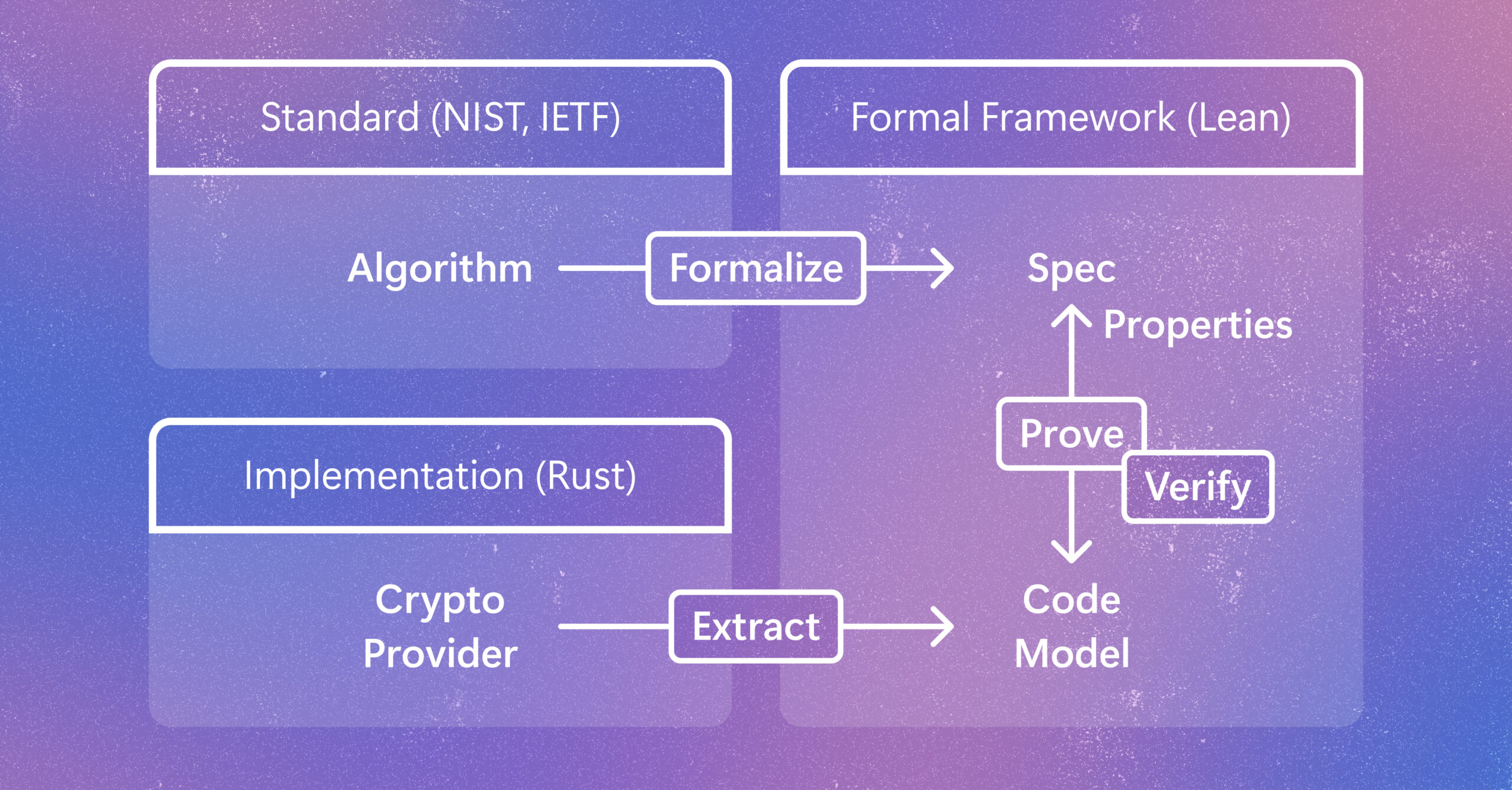
Cryptographic code supports vital protections in modern computing systems. Learn how a new method helps verify code as developers write it while preserving speed and adaptability as it gets implemented and evolves. The post Verifying Rust cryptography in SymCrypt, from standards to code appeared first on Microsoft Research.
MIT News · Artificial Intelligence· news.mit.eduJul 6, 2026
PhD student Rachel Sava, winner of the Envisioning the Future of Computing Prize, explores transformative improvements and dystopian risks of neural technology.