Oct 2026· International Journal of Automation and Digital Transformation
Explainable Artificial Intelligence (XAI)
Abstract
Can a robot's ethical reasoning be transparent without slowing it down? That is the question we set out to answer. Autonomous robots now make decisions that affect people's lives, and if we cannot understand how they decide, trust becomes a serious problem. We built a unified architecture that couples Explainable AI (XAI) with Reinforcement Learning (RL) through three connected components: a Perception Layer for situational awareness, a Decision Reasoning Layer that breaks agent utility down into measurable ethical sub-rewards (safety, fairness, and well-being), and a contrastive Explainability Engine grounded in a real-time Ethical Ledger. We tested it against Black-Box RL and two post-hoc XRL baselines (LIME and SHAP) across two simulation environments and a physical robot pilot on a TurtleBot3 platform. Our system reached 92±3% ethical alignment in simulation and 89±4% on the physical platform, beating every baseline (p < 0.01 throughout). In a controlled, IRB-approved user study (N=128), participants rated it higher on trust (4.5±0.4), understandability (4.6±0.3), and perceived safety (4.4±0.5) than the alternatives. Explanations were also fast: 4.2±0.6 ms on average, versus 18.3±2.1 ms for SHAP and 12.7±1.8 ms for LIME on the same hardware—well within real-time limits. An ablation study and sensitivity analysis back up these architectural choices.

The results indicate that software engineering work practices are chosen opportunistically, adapted and configured to provide value under the constrains imposed by the startup context.
Nicolò Paternoster, Carmine Giardino, M. Unterkalmsteiner et al.· Information and Software Tec...· 394 citations· ⚡54
This state-of-practice investigation was performed using a literature review followed by a multiple-case study approach and presents how inconsistency between managerial strategies and execution can lead to failure by means of a behavioral framework.
Carmine Giardino, Xiaofeng Wang, P. Abrahamsson· International Conference on...· 175 citations· ⚡19
This study conducts a case survey study based on the secondary data of the major pivots happened in 49 software startups, and demonstrates that customer need pivot is the most common among all pivot types.
Sohaib Shahid Bajwa, Xiaofeng Wang, Anh Nguyen-Duc et al.· Empirical Software Engineeri...· 127 citations· ⚡15
It is found that roles of MVPs in startups were not fully aware by entrepreneurs, and entrepreneurs should consider a systematic approach to fully explore the value of MVP, as a multiple facet product (MFP).
Anh Nguyen-Duc, P. Abrahamsson· International Conference on...· 93 citations· ⚡9
The method, ECCOLA, is presented, which aims at making the high-level AI ethics principles more practical, making it possible for developers to more easily implement them in practice.
Ville Vakkuri, Kai-Kristian Kemell, P. Abrahamsson· EUROMICRO Conference on Soft...· 64 citations· ⚡6
It is found that what perceived as biggest challenges by software startups do vary across different life cycle stages, even though its significance decreases when the learning focuses of the startups move from problem to solution and their products mature.
Xiaofeng Wang, Henry Edison, Sohaib Shahid Bajwa et al.· International Conference on...· 62 citations· ⚡6
Learn how Google DeepMind and GovTech Singapore uses lightweight on-device Gemma models to intercept conversational scams in private chats with zero cloud data egress.
Microsoft Research Blog· microsoft.comOct 12, 2026
StudentSim is a research system for evaluating and improving AI tutoring tools before they are tested with learners. It models how individuals may engage with tutors, giving feedback to improve tutor performance across subjects like chess, writing, and mathematics. The post Simulating student learning for better AI tutoring appeared first on Microsoft Research.
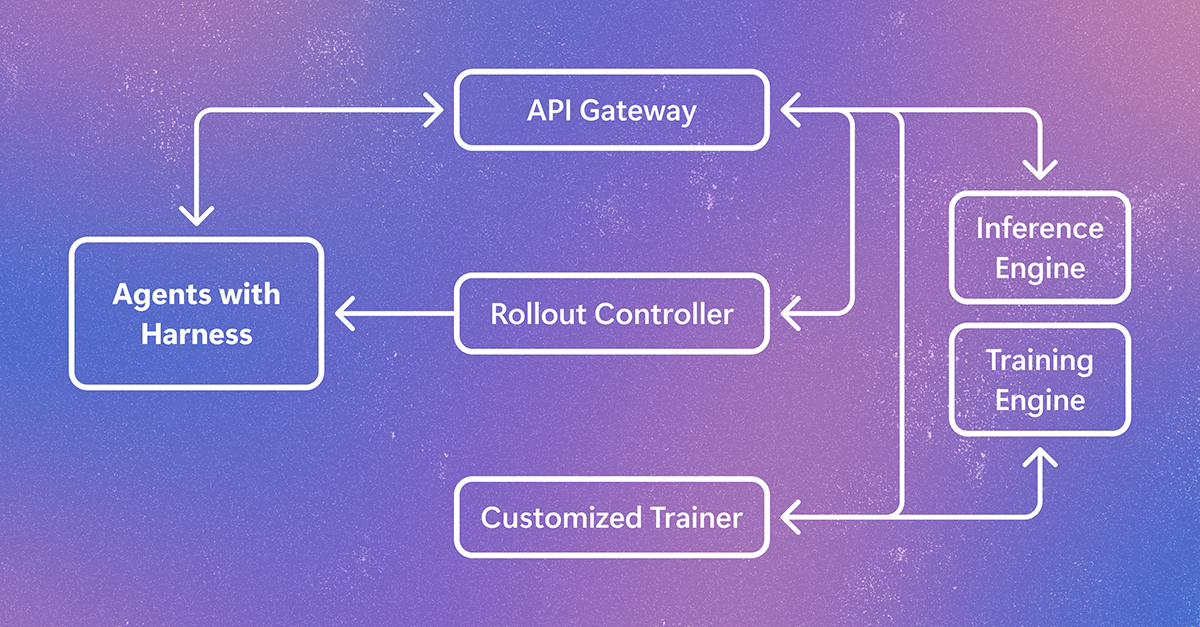
Training AI agents with reinforcement learning can be challenging because their tools, context, and decision-making are managed by complex frameworks. Agent Lightning connects existing agents to RL training, making it easier to improve them without rebuilding them. The post Agent Lightning v1.0: A 3,500-Line Lightweight Agentic RL Framework for Training Agents with Real Harnesses appeared first on Microsoft Research.
MIT News · Artificial Intelligence· news.mit.eduOct 6, 2026