Recently, with the rapid growth of Point of Interest (POIs) and increasing of social activities, more and more individuals tend to join parties or trips with groups formed randomly (named random groups, RGs). Although some works have proposed wonderful POI recommendation methods for RGs, they failed to consider how to recommend service packages for RGs after they accept the recommended POIs, which significantly degrades user experience. To address this issue, this work proposes a POI location-aware service package recommendation model for random groups (termed PLSPR-RG). First of all, PLSPR-RG generates fitted feature representations of random groups with an enhanced feature learning method. Then, it selects users with similar characteristics to the random group and utilizes service usage data of similar users as the training dataset for PLSPR-RG. Subsequently, PLSPR-RG constructs a service labeled bipartite graph of similar users, then it employs an edge-enhanced bipartite graph neural network with multi-view contrastive learning (EBGNN-CL) to learn service feature representations that capturing both positive and negative interaction preferences of similar users. Furthermore, PLSPR-RG builds a directed service transition graph based on the service interaction records of similar users and adopts the SRGNN network to learn service feature representations containing latent user preferences, as well as user preference representations. Finally, based on the learned service representations and the fitted features of random groups, PLSPR-RG generates a ranked list of recommended services, thereby completing POI location-aware service package recommendation for random groups. Extensive experiments have been conducted on three public datasets (Foursquare, Gowalla and Yelp dataset), which have proved that our proposed model outperforms the state-of-the-art models.

BackgroundThe prevalence of overweight and obesity is increasing in Bangladesh. It is higher among Bangladeshi women than among men. This study was conducted to assess a host of demographic and socioeconomic correlates of overweight and obesity, separately for the urban and rural women of Bangladesh.MethodsWe used data...
Haribondhu Sarma, N. Saquib, M. Hasan et al.· BMC Obesity· 75 citations· ⚡5
Purpose Overall health status indicators have improved significantly over the past three decades in Indonesia. However, the country’s maternal mortality ratio remains high with a stark inequality by region. Fewer studies have explored access inequity in maternal health care service over time using multiple inequality m...
Herfina Y. Nababan, M. Hasan, Tiara Marthias et al.· International Journal of Wom...· 64 citations· ⚡2
Agile methods continue to gain popularity. In particular, the Scrum method appears to be on the verge of becoming a de-facto standard in the industry, leading the so called Agile movement. While there are success stories and recommendations, there is little scientifically valid evidence of the challenges in the adoptio...
A. Marchenko, P. Abrahamsson· Agile Conference· 59 citations· ⚡11
The association between mother’s education and the World Health Organization’s (WHO’s) eight Infant and Young Child Feeding (IYCF) core indicators has yet to be explored in South Asia (SA). This study aimed to explore the association between mother’s education and the WHO’s eight IYCF core indicators in SA. We analyzed...
M. Tariqujjaman, M. Hasan, M. Mahfuz et al.· Nutrients· 45 citations· ⚡4
A comprehensive taxonomy of the challenges faced when a medium-scale organization decided to adopt software platforms is provided, namely: business challenges, organizational challenges, technical challenges, and people challenges.
Yaser Ghanam, F. Maurer, P. Abrahamsson· Information and Software Tec...· 41 citations· ⚡3
INTRODUCTION Exclusive breastfeeding is balanced nutrition for growth and development of the infant, prevents stunting as well as protects from infectious and chronic diseases and has also potential to reduce infant mortality. Thus, the study aimed to assess maternal knowledge, attitudes and other factors associated wi...
M. Hasan, M. Hassan, M. Khan et al.· Population Medicine· 32 citations· ⚡6
Related blog posts
MIT News · Artificial Intelligence· news.mit.eduOct 26, 2026
Machine-learning networks can learn without detailed instructions from a designer. Those that do may offer insight into how the brain reorganizes itself during learning.
MIT News · Artificial Intelligence· news.mit.eduJul 15, 2026
Assistant Professor Pat Pataranutaporn describes a new interface that lets everyday users glimpse inside an AI's neural network before their chatbot ever says a word.
Microsoft Research Blog· microsoft.comJul 13, 2026
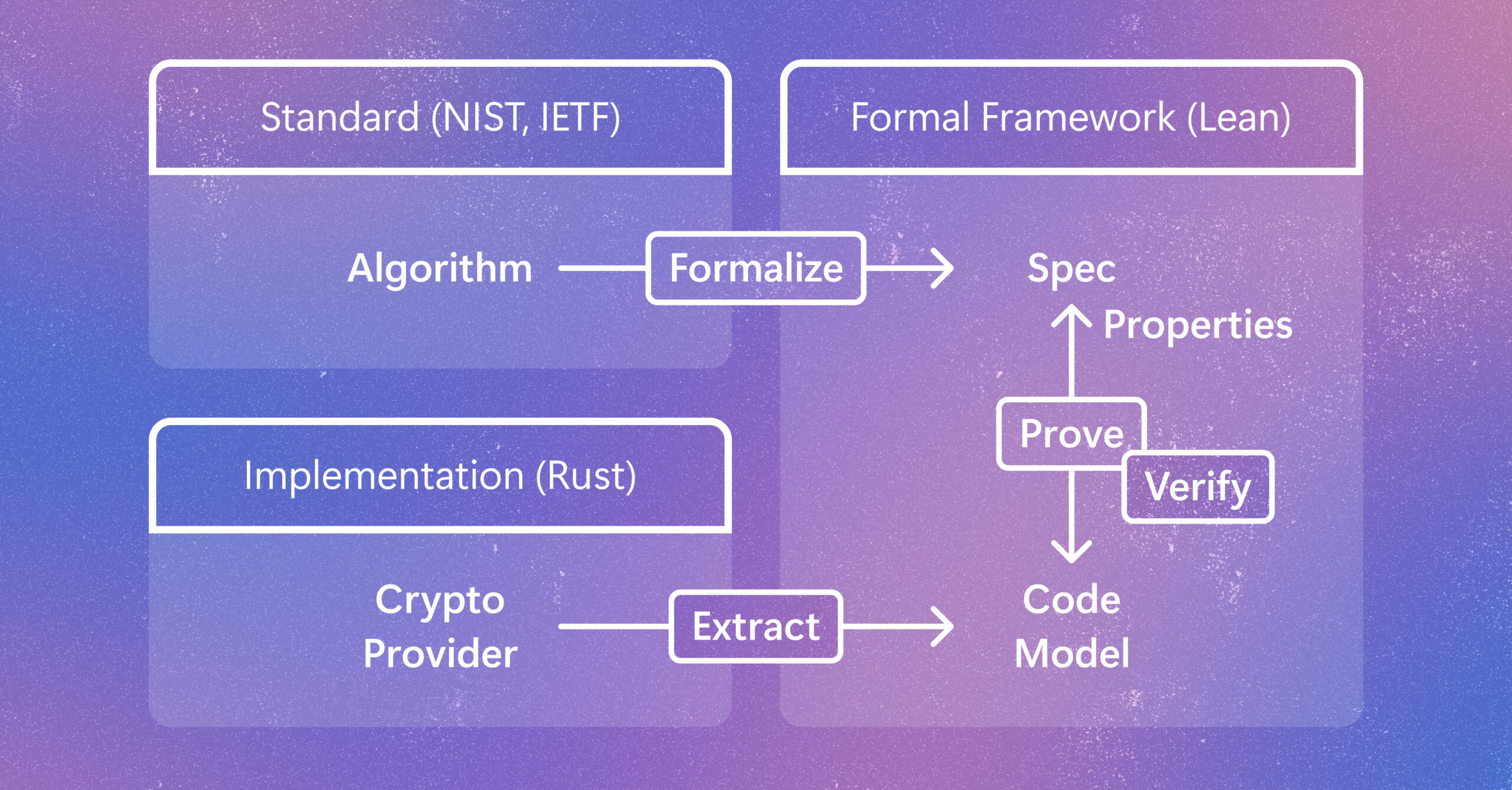
Cryptographic code supports vital protections in modern computing systems. Learn how a new method helps verify code as developers write it while preserving speed and adaptability as it gets implemented and evolves. The post Verifying Rust cryptography in SymCrypt, from standards to code appeared first on Microsoft Research.
We use cookies to run the site and, with your consent, for analytics and to show ads.
See our Cookie Policy.