Future sixth-generation (6G)-oriented networks require programmable control that can adapt routing to latency and congestion without unsafe online exploration. This study evaluates offline multi-agent deep deterministic policy gradient (MADDPG) with behavior-adjusted training rewards for latency-aware path control in s...
A. Kyzyrkanov, Y. Nurakhov, Zhenis Otarbay et al.· Technologies· 0 citations
Simulation results show that MoReSP achieves the lowest admission-adjusted system cost across all evaluated scenarios, and demonstrate that MoReSP provides a reliable and balanced scheduling solution for dynamic V-IoT environments.
Muhammad Faisal Siddiqui, Adeel Iqbal· Mathematics· 0 citations
A predictive multi-agent Reinforcement Learning (RL) framework that proactively maintains SLA stability in UAV-enabled MEC through coordinated trajectory control and computation resource allocation and designs an SLA-aware reward function that explicitly penalizes both violation probability and duration across slices.
M. Farhoudi, Zeinab Sasan, Masoud Shokrnezhad et al.· 0 citations
This paper proposes a multi-agent reinforcement learning (MARL) framework for TSN scheduling, where each TSN queue is modeled as an autonomous agent and the Heterogeneous-Agent Proximal Policy Optimization (HAPPO) algorithm is employed to explicitly model inter-agent dependencies and jointly optimize service delivery a...
Marcos Carvalho, Fatih Temiz, Shavbo Salehi et al.· 0 citations
This work addresses the challenges of energy efficiency and Quality of Service (QoS) in dynamic Internet of Things (IoT) networks, where traditional routing protocols fail to adapt to changing conditions. To overcome these limitations, a Stochastically Enhanced Multi-Agent Federated Reinforcement Learning (SE-MA-FRL) f...
P. R, Debasis De, Sheetal Belaldavar· 2026 5th International Confe...· 0 citations
A constraint-aware multi-agent edge collaborative offloading algorithm (CARE-CTDE) that achieves better scheduling performance, resource utilization, and constraint satisfaction than baseline methods in dynamic heterogeneous MEC scenarios, demonstrating its effectiveness and robustness for constrained edge computing sy...
Yuxuan Yang, Hexing Wang, Yang Zhou· Mathematics· 0 citations
Related blog posts
MIT News · Artificial Intelligence· news.mit.eduOct 15, 2026
A new computational approach reveals how cells communicate to assemble into tissues. This could accelerate stem cell engineering, improve disease models, and inform therapies.
Microsoft Research Blog· microsoft.comOct 15, 2026
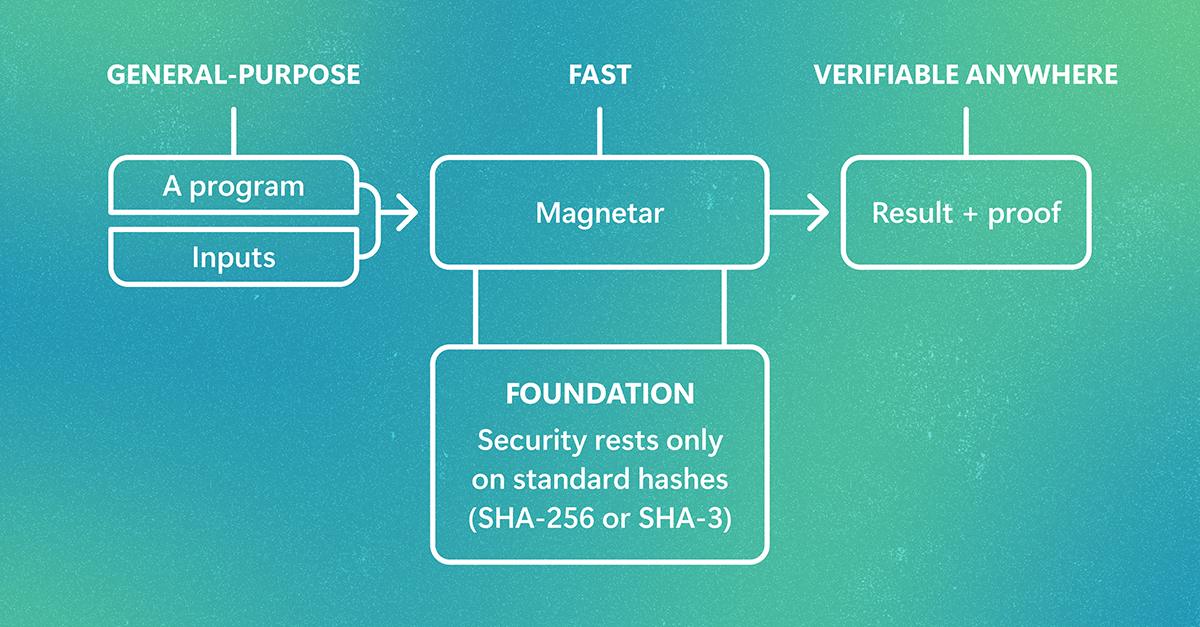
Zero-knowledge proofs can verify computing results without rerunning workloads or exposing sensitive data. Magnetar helps bring them into the mainstream with support for standard programming languages, major speed gains, and quantum-resistant security. The post Proof-based general-purpose computing with Magnetar appeared first on Microsoft Research.
MIT News · Artificial Intelligence· news.mit.eduOct 8, 2026