Oct 2026· Journal of Signal Processing Systems· Vol 98· 0 citations· 14 references
Network Security and Intrusion Detection
TL;DR
This work introduces persistent node evidence as an investigation-oriented representation boundary for provenance streams, and supports persistent node evidence as a bounded bridge from event prediction to precision-oriented offline investigation.
Controlled evidence-level and end-to-end comparisons show improved overall IoC recovery and attack-stage attribution over state-of-the-art provenance-based baselines over state-of-the-art provenance-based baselines in ANCHOR.
Li-Jie Zheng, Ji He, Ying Wang et al.· 0 citations
: Advanced Persistent Threats (APTs) are low-frequency, stealthy, and multi-stage attacks whose activities are embedded in massive volumes of benign host audit events, making both accurate detection and post-alert investigation challenging. Provenance graphs provide unified representations of interactions among process...
Xin-Ping Tang, Sanfeng Zhang· Computers, Materials & C...· 0 citations
Results show that CSCProv achieves up to 30× provenance graph reduction while preserving attack-critical dependencies, and improves the efficiency of downstream attack detection, reducing detection time by 32.7–48.3% across different datasets and detection frameworks.
Ning An, Yan Zhu, Wen-Hao Yan et al.· Cybersecurity· 0 citations
RECAL is presented, an unsupervised framework using relation-balanced masked graph learning to better capture rare interaction patterns and calibrates reconstruction errors against each relation's benign error distribution to produce comparable anomaly evidence, helping distinguish attacks from benign behavior and redu...
Li-Jie Zheng, Ji He, Zhi-Wei Zhang et al.· 0 citations
LLM agents rely on long-term memory to retain and reuse information when performing tasks over long horizons. Existing methods provide limited support for handling memories that become outdated as new observations or domain evidence arrive. Such outdated memories may remain semantically relevant, continue to affect dep...
Yi-Qi Wang, Jia-Qi Liu, Jia-Qi Zhang et al.· 1 citation
Reproducing a provenance-based intrusion detector's score does not establish what that score says about its emitted alarms or the information its encoder uses. We audit nine released implementations, execute four detectors using their own code, and isolate three measurement effects. First, a fixed-alert comparison sepa...
Jih-Wan Moon, Gunhee Kim, Myeongjang Pyeon· 0 citations
Related blog posts
MIT News · Artificial Intelligence· news.mit.eduOct 26, 2026
Machine-learning networks can learn without detailed instructions from a designer. Those that do may offer insight into how the brain reorganizes itself during learning.
MIT News · Artificial Intelligence· news.mit.eduJul 15, 2026
Assistant Professor Pat Pataranutaporn describes a new interface that lets everyday users glimpse inside an AI's neural network before their chatbot ever says a word.
Microsoft Research Blog· microsoft.comJul 13, 2026
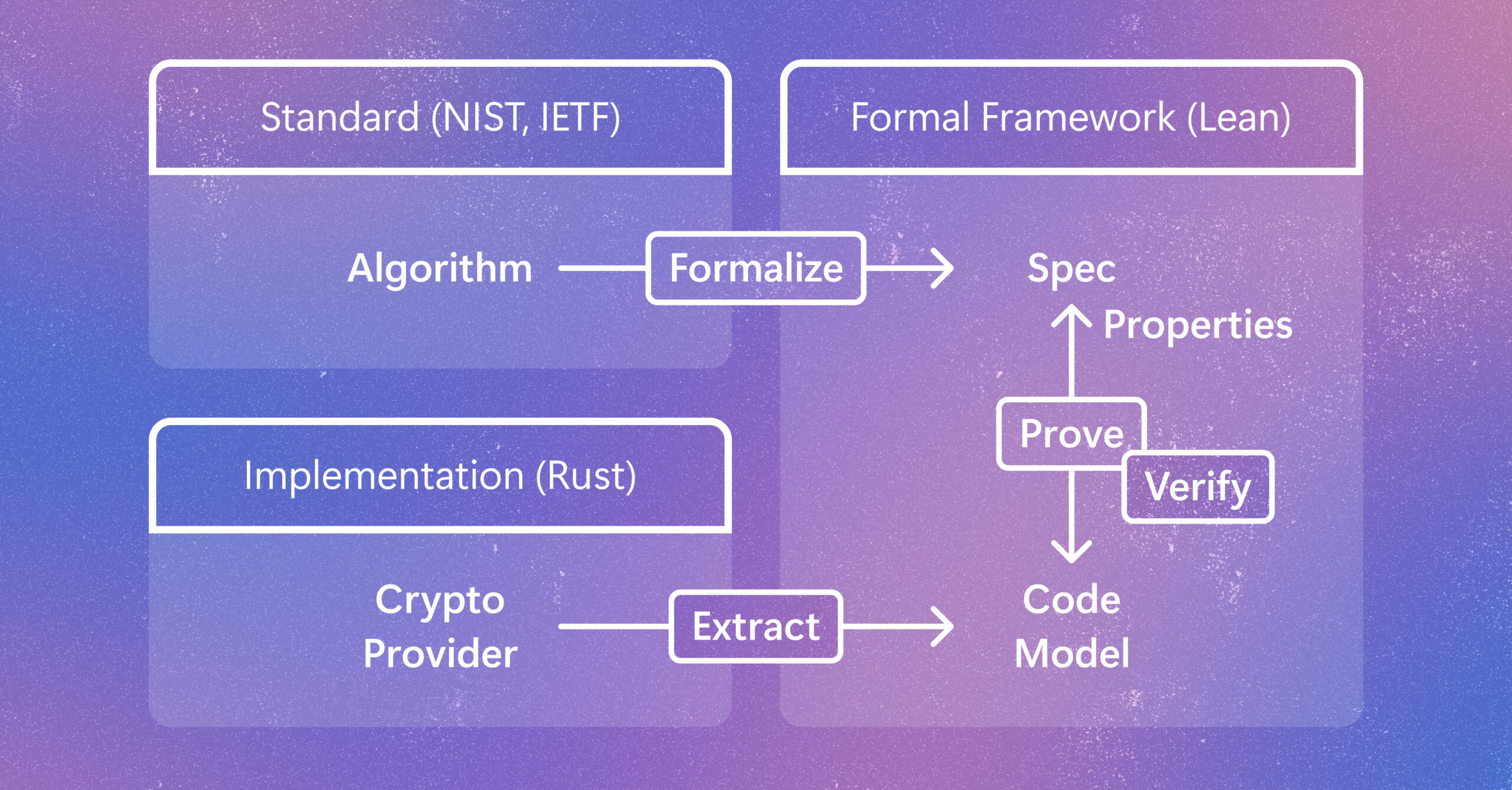
Cryptographic code supports vital protections in modern computing systems. Learn how a new method helps verify code as developers write it while preserving speed and adaptability as it gets implemented and evolves. The post Verifying Rust cryptography in SymCrypt, from standards to code appeared first on Microsoft Research.
We use cookies to run the site and, with your consent, for analytics and to show ads.
See our Cookie Policy.