Jan 2027· Journal of Transportation Engineering Part A Systems· 0 citations· 18 references
TL;DR
A graph transformer reinforcement learning (GTRL) framework, which aims to make reasonable lane-changing decisions on highways by modeling multiagent interactions, and demonstrates GTRL’s effectiveness in enhancing intelligent driving, leading to safer and more efficient driving outcomes.

Abstract
The decision-making process for autonomous highway driving encounters several significant challenges. First, the complex interactions among traffic participants play a crucial role, yet these interactions are often overlooked during decision-making. Second, while graph neural networks are widely used for graph representation learning, most of them fail to generate metapath graph representations without domain-specific graph preprocessing and can only handle homogeneous graphs. This limits their ability to work with mis-specified or heterogeneous graphs that include diverse types of nodes and edges. To address these issues, this work proposes a graph transformer reinforcement learning (GTRL) framework, which aims to make reasonable lane-changing decisions on highways by modeling multiagent interactions. GTRL has three core components: a highway traffic scene graph representation that covers topology and interaction information; graph transformer networks (GTNs) to create metapath graphs and enhance heterogeneous graph representations; and a deep reinforcement learning method that uses GTRL to extract state information and make driving decisions. Experiments demonstrate GTRL’s effectiveness in enhancing intelligent driving, leading to safer and more efficient driving outcomes.
Graphs are widely used to describe objects and their interactions in physically-informed real-world networking scenario including transportation, networking and energy, etc. Graph neural network (GNN) is the latest deep learning (DL) model for processing graph-structured data, widely applied in various tasks, e.g., p...
Yu-Feng Wang, Xin-Ying-Jian-Gan-Zhi-De-Shen-Jing-Jia-Gou-Sou-Suo Wang, Jian-Hua Ma et al.· Artificial Intelligence Revi...· 0 citations
Existing multi-agent reinforcement learning (MARL) approaches for traffic signal control often fail to capture two critical characteristics of real-world urban traffic: the dynamic spatio-temporal propagation of congestion across intersections and the frequent imperfection of sensor data. To address these fundamental g...
Mohita, Sidak Deep Singh, D. Subitha et al.· Frontiers in Artificial Inte...· 0 citations
A multi-agent agentic graph learning framework that partitions the graph into communities and assigns an independent agent to each community for region-specific specialization and shows that MAAGL outperforms SOTA AGL methods.
In Continual Multi-Agent Reinforcement Learning (CMARL), agents learn cooperative policies across sequences of tasks, aiming to adapt effectively to new tasks while preserving the ability to solve previously encountered ones. In many applications, tasks differ in their underlying structure, which can represent, for exa...
Tommaso Marzi, Ahmed Hendawy, Jan Peters et al.· 0 citations
The State Extraction Graph (SEG) is proposed, which provides a significantly more concise structural representation than Petri nets for modeling multi-wafer fabrication processes and a Graph Deep Reinforcement Learning (G-DRL) method for scheduling cluster tools.
Bi-Feng Zhu, Bin Li, Jing-Hui Zhong· International Journal of Mac...· 0 citations
A novel Transformer-guided Meta-learning and Graph-enhanced Multi-Agent Deep Reinforcement Learning (TMG-MADRL) framework for intelligent robot navigation to achieve robust path optimization, adaptive decision-making, and proactive collision avoidance in dynamic scenarios.
Shu-Lin Song, Lan Wu· Journal of engineering and a...· 0 citations
Related blog posts
MIT News · Artificial Intelligence· news.mit.eduOct 13, 2026
Machine-learning networks can learn without detailed instructions from a designer. Those that do may offer insight into how the brain reorganizes itself during learning.
Microsoft Research Blog· microsoft.comJul 13, 2026
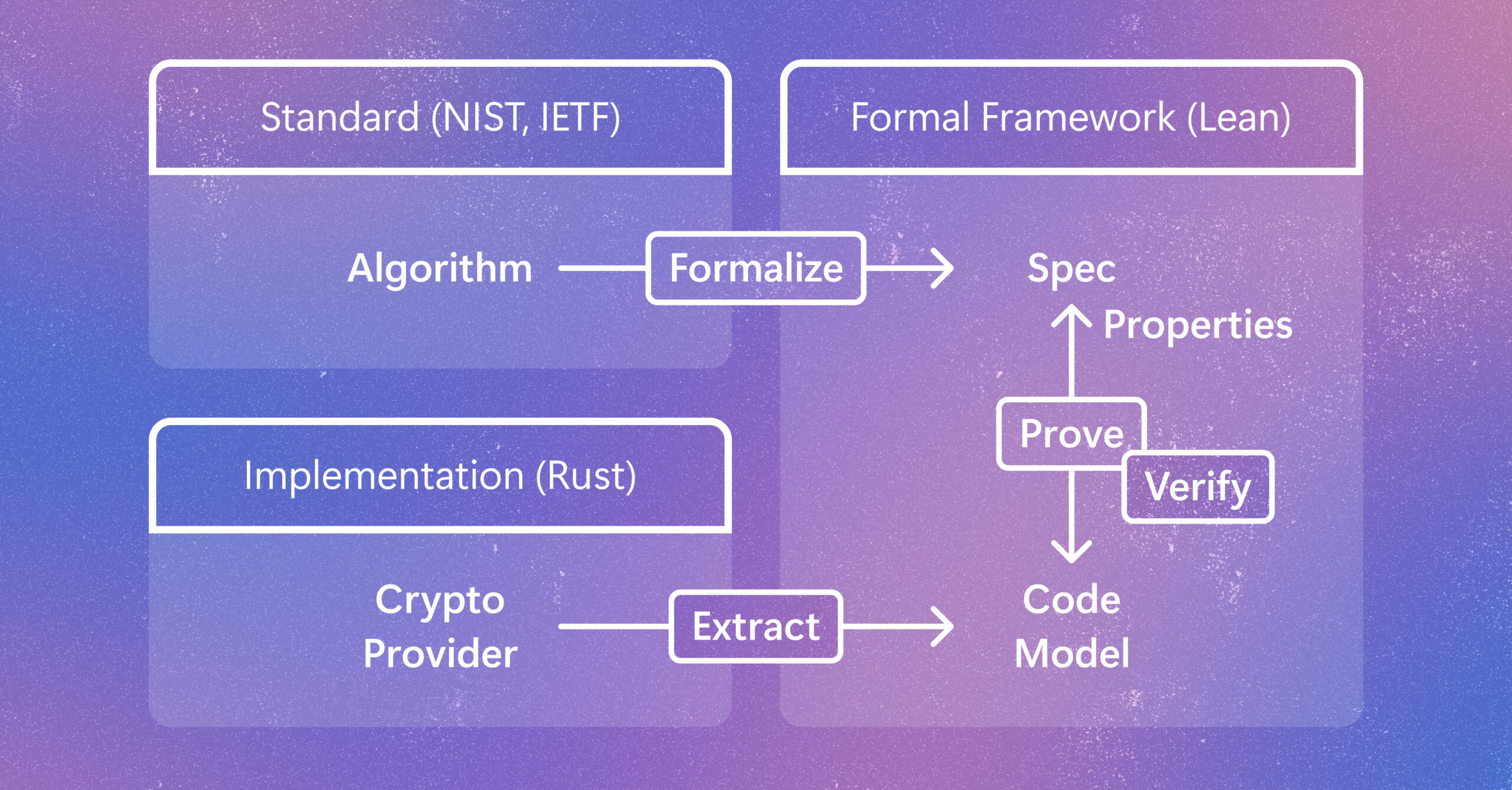
Cryptographic code supports vital protections in modern computing systems. Learn how a new method helps verify code as developers write it while preserving speed and adaptability as it gets implemented and evolves. The post Verifying Rust cryptography in SymCrypt, from standards to code appeared first on Microsoft Research.