Nov 2026· Proceedings of the 35th ACM International Conference on Information and Knowledge Management· 0 citations
Algorithms and Data Compression
Abstract
The year 1948 gave birth to two transformative pillars of modern computing: Claude Shannon's information theory, which gave rise to data compression, and Alan Turing's writings on intelligent machinery, which ignited the field of artificial intelligence. Today, nearly eight decades later, we are witnessing a profound hybridization of these once-distinct fields. As we push to efficiently store, process, and retrieve massive datasets across diverse data types, users, devices, and systems — from vector and graph databases to cutting-edge agentic memories — AI and compression can no longer operate in silos. In this talk, we investigate how Learning is fundamentally reshaping the fields of Indexing and Compression. We will focus on two challenging research directions: designing Learned Data Structures that fuse classical indexing with machine learning to achieve unprecedented efficiency, and developing next-generation Data Compressors driven by powerful autoregressive and diffusion neural models to reach new frontiers of efficacy. We will also examine the reverse direction — how Compression can reshape Learning through model compaction and comprehension. By unpacking the distinct computational advantages and current practical pitfalls of these lines of investigation, we will outline a roadmap for these research frontiers and hopefully inspire new cross-disciplinary collaborations.

This publication proposes a definition and a classification of agile software development approaches and analyses ten software development methods that can be characterized as being "agile" against the defined criterion.
P. Abrahamsson, O. Salo, Jussi Ronkainen et al.· arXiv.org· 727 citations· ⚡54
The study shows that agile practices improve both informal and formal communication, but indicates that, in larger development situations involving multiple external stakeholders, a mismatch of adequate communication mechanisms can sometimes even hinder the communication.
M. Pikkarainen, Jukka Haikara, O. Salo et al.· Empirical Software Engineeri...· 401 citations· ⚡48
The results indicate that software engineering work practices are chosen opportunistically, adapted and configured to provide value under the constrains imposed by the startup context.
Nicolò Paternoster, Carmine Giardino, M. Unterkalmsteiner et al.· Information and Software Tec...· 394 citations· ⚡54
The perception of the impact of agile methods is predominantly positive, and several challenge areas were discovered, but based on this study, agile methods are here to stay.
M. Laanti, O. Salo, P. Abrahamsson· Information and Software Tec...· 260 citations· ⚡20
Related blog posts
MIT News · Artificial Intelligence· news.mit.eduOct 15, 2026
A new computational approach reveals how cells communicate to assemble into tissues. This could accelerate stem cell engineering, improve disease models, and inform therapies.
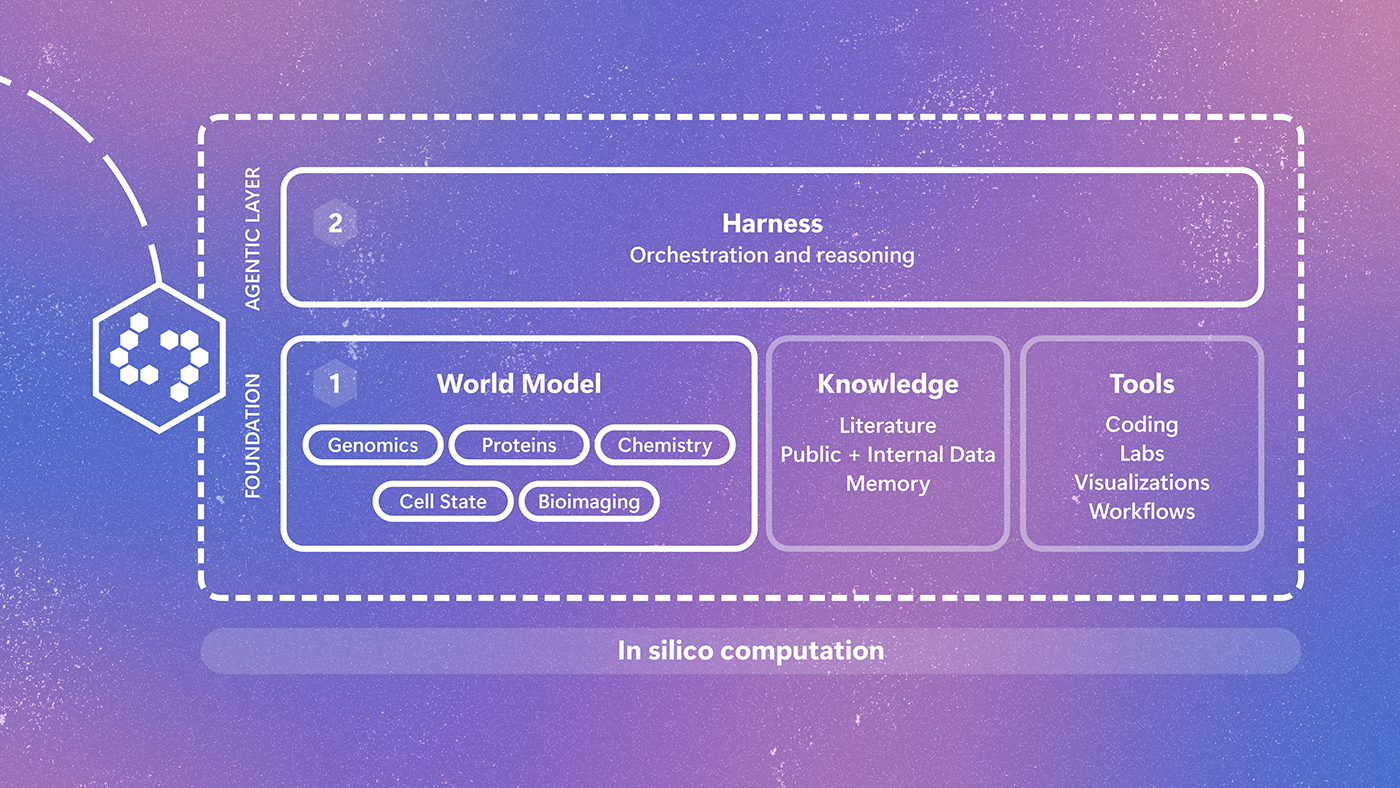
Biology doesn't operate in silos, and neither should the AI representation of it. Quine is an early-stage research effort to create a multimodal world model of biology. By connecting insights across biological scales and modalities, Quine helps scientists computationally search a space far larger than intuition allows and prioritize hypotheses before they reach the lab. Experimental results provide important feedback, helping researchers sharpen future research directions. The post Introducing Q…
We use cookies to run the site and, with your consent, for analytics and to show ads.
See our Cookie Policy.