Skip to content

Class-Balanced Softmax: A Bayes Theory-Based Method for Long-Tailed Recognition

Jul 2026 · arXiv.org · Vol abs/2607.22258 · 0 citations · 39 references
Computer Science

TL;DR

This work characterises a fundamental phenomenon in models trained on imbalanced data, termed the preference issue, wherein models exhibit higher training error and a larger generalisation gap for classes with limited data and demonstrates that CBS effectively mitigates the preference issue.

Abstract

Deep learning models using traditional softmax classifiers have achieved remarkable success in various classification tasks. However, their performance degrades significantly on imbalanced datasets. Although Balanced Softmax is widely adopted as a state-of-the-art rebalancing method, it possesses inherent limitations, such as yielding disproportionately lower testing accuracy for tail classes. To mitigate these shortcomings, we propose the Class-Balanced Softmax (CBS). Rooted in a theoretical Bayesian framework and a heuristic power-law assumption, the CBS is a simple logit adjustment that is computationally inexpensive and easily integrated into existing pipelines. Furthermore, we characterise a fundamental phenomenon in models trained on imbalanced data, termed the preference issue, wherein models exhibit higher training error and a larger generalisation gap for classes with limited data. To quantify this issue, we introduce a novel metric and demonstrate that CBS effectively mitigates the preference issue. Extensive experiments on large-scale benchmarks show that CBS is highly scalable and outperforms existing methods, including Balanced Softmax.

View source

Similar papers

Open access Aug 2026

ASWBoost: Classification algorithm for noisy and imbalanced data based on parametric exponential loss

AdaBoost, a classical boosting ensemble algorithm, is widely applied for its strong classification performance. However, its standard exponential loss is highly sensitive to outliers, prone to overfitting, and inherently biased toward the majority class under class-imbalanced settings, degrading overall performance. To...

Fei Meng, Mei Yan, Hang Liu et al. · 0 citations
Jul 2026

A Leakage-Free Stacked Ensemble Method for Multiclass Classification

LFS-FRAME is proposed, a Leakage-Free Stacked ensemble framework that integrates functional learning using Kolmogorov-Arnold Networks (KAN) and rule-based learning via XGBoost and rule-based learning via XGBoost for robust multiclass classification.

S. P. Sharmila, Aruna Tiwari · 0 citations
Open access Jul 2026

Beyond Size and Class Balance: Alpha as a New Dataset Quality Metric for Deep Learning

In deep-learning-based image classification, achieving high performance requires diverse training sets. However, the current best practice—maximizing dataset size and class balance—does not guarantee dataset diversity. We hypothesized that, for a given model architecture, performance improves by maximizing diversity mo...

Josiah D. Couch, Rima Arnaout, R. Arnaout · 1 citation
Preprint Aug 2026

CLEAR: Class-wise Expert Aggregation with Structured Sampling for Long-Tailed Classification

Long-tailed classification poses a reliability challenge because models trained on imbalanced data are unevenly reliable across frequent and underrepresented classes. While existing methods address imbalance through re-balancing, adjustment, representation learning, or multi-expert modeling, they rarely estimate which...

Gawon Lim · 0 citations
Open access Sep 2026

A stability aware meta adaptive framework for imbalance handling in machine learning and computer vision

Machine learning models are widely used in computer vision and classification tasks. However, imbalanced classification biases predictive models toward larger classes, reducing predictive performance for minority classes. To address this challenge, we propose meta-adaptive resampling selection plus plus (MARS + +), a s...

Noor Baha Aldin · 0 citations

Related blog posts

Microsoft Research Blog Aug 11, 2026

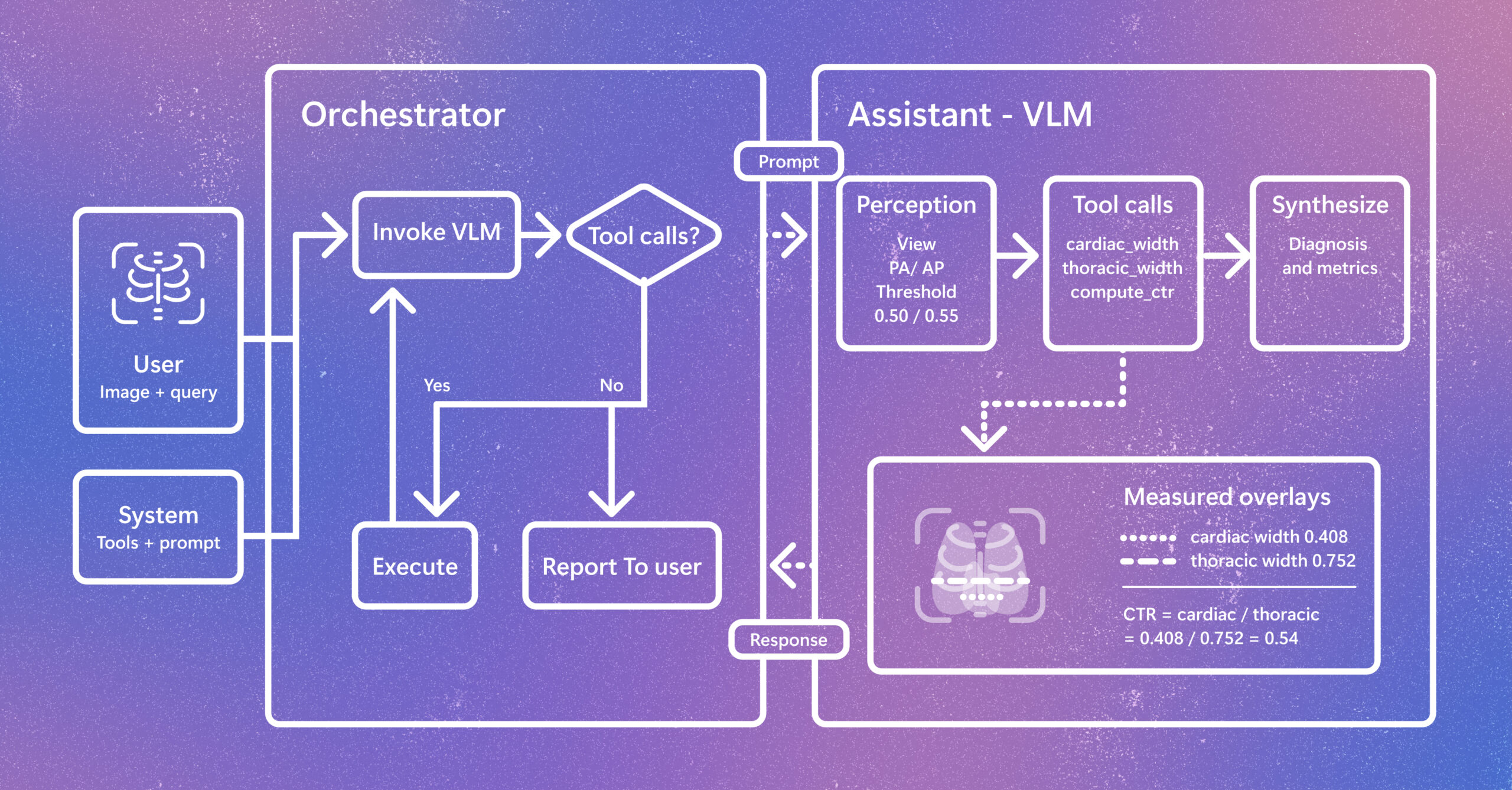
Introducing CARE-X: Towards Clinically Useful Radiology VLMs with Auxiliary Supervision, Reward-Aligned Learning, and Tool-Augmented Measurement

Radiology AI is evolving beyond report generation. CARE-X explores a unified approach that combines flexible reasoning, calibrated predictions, and measurement-based tools for chest X-ray interpretation. The post Introducing CARE-X: Towards Clinically Useful Radiology VLMs with Auxiliary Supervision, Reward-Aligned Learning, and Tool-Augmented Measurement appeared first on Microsoft Research.

We use cookies to run the site and, with your consent, for analytics and to show ads. See our Cookie Policy.