Towards fNIRS foundation models: A curated corpus of 67 public datasets with channel positions in MNI space
Santiago Posso-Murillo
Nov 2026
Human-computer Interaction
Abstract
Brain foundation models have transformed medical artificial intelligence and computational neuroscience by reducing the reliance on task-specific data through large-scale pretraining. While they have been successful with non-invasive neuroimaging data, their adoption in functional near-infrared spectroscopy (fNIRS) has lagged due to the limited size and heterogeneity of public datasets, which are collected under varying protocols, devices, and sensor configurations. In addition, no single fNIRS dataset is comparable in size to the largest datasets in functional magnetic resonance imaging (fMRI), electroencephalography (EEG), or magnetoencephalography (MEG). The fNIRS datasets are also spread across different platforms and often have insufficient information, or lack the protocols that would make them easier to use. Given the advances in EEG foundation models that enable flexible modeling across diverse EEG montages, we curated 1,955 hours of fNIRS data from 67 public datasets spanning 2,798 participants, representing the largest fNIRS curation effort to date. The curated data include oxygenated (HbO) and deoxygenated (HbR) hemoglobin signals along with the three-dimensional position of every channel in the standard space of the Montreal Neurological Institute (MNI), which makes positions comparable across datasets. We release dataloaders that handle each dataset automatically, along with the minimal preprocessing pipeline used to prepare the data, at https://github.com/sposso/fnirs-datasets. This work aims to facilitate the future development of foundation models for fNIRS.

This publication proposes a definition and a classification of agile software development approaches and analyses ten software development methods that can be characterized as being "agile" against the defined criterion.
P. Abrahamsson, O. Salo, Jussi Ronkainen et al.· arXiv.org· 727 citations· ⚡54
The study shows that agile practices improve both informal and formal communication, but indicates that, in larger development situations involving multiple external stakeholders, a mismatch of adequate communication mechanisms can sometimes even hinder the communication.
M. Pikkarainen, Jukka Haikara, O. Salo et al.· Empirical Software Engineeri...· 401 citations· ⚡48
The results indicate that software engineering work practices are chosen opportunistically, adapted and configured to provide value under the constrains imposed by the startup context.
Nicolò Paternoster, Carmine Giardino, M. Unterkalmsteiner et al.· Information and Software Tec...· 394 citations· ⚡54
The perception of the impact of agile methods is predominantly positive, and several challenge areas were discovered, but based on this study, agile methods are here to stay.
M. Laanti, O. Salo, P. Abrahamsson· Information and Software Tec...· 260 citations· ⚡20
AI agents can generate code at a scale that’s hard for humans to review line-by-line. PDD Kit helps ensure the code is doing what the developer intended by creating formal specifications and testing against them. It converts developer intent into a Verus specification, proves AI-generated code meets it for every input, and uses tests where proofs aren't practical. Developers review intent, not every line. The post Formally verifying agent-written full-stack web apps with PDD Kit appeared first o…
Professor Paris Smaragdis develops computers with superhuman hearing for applications like speech recognition, music understanding, and environmental monitoring.
MIT News · Artificial Intelligence· news.mit.eduOct 23, 2026
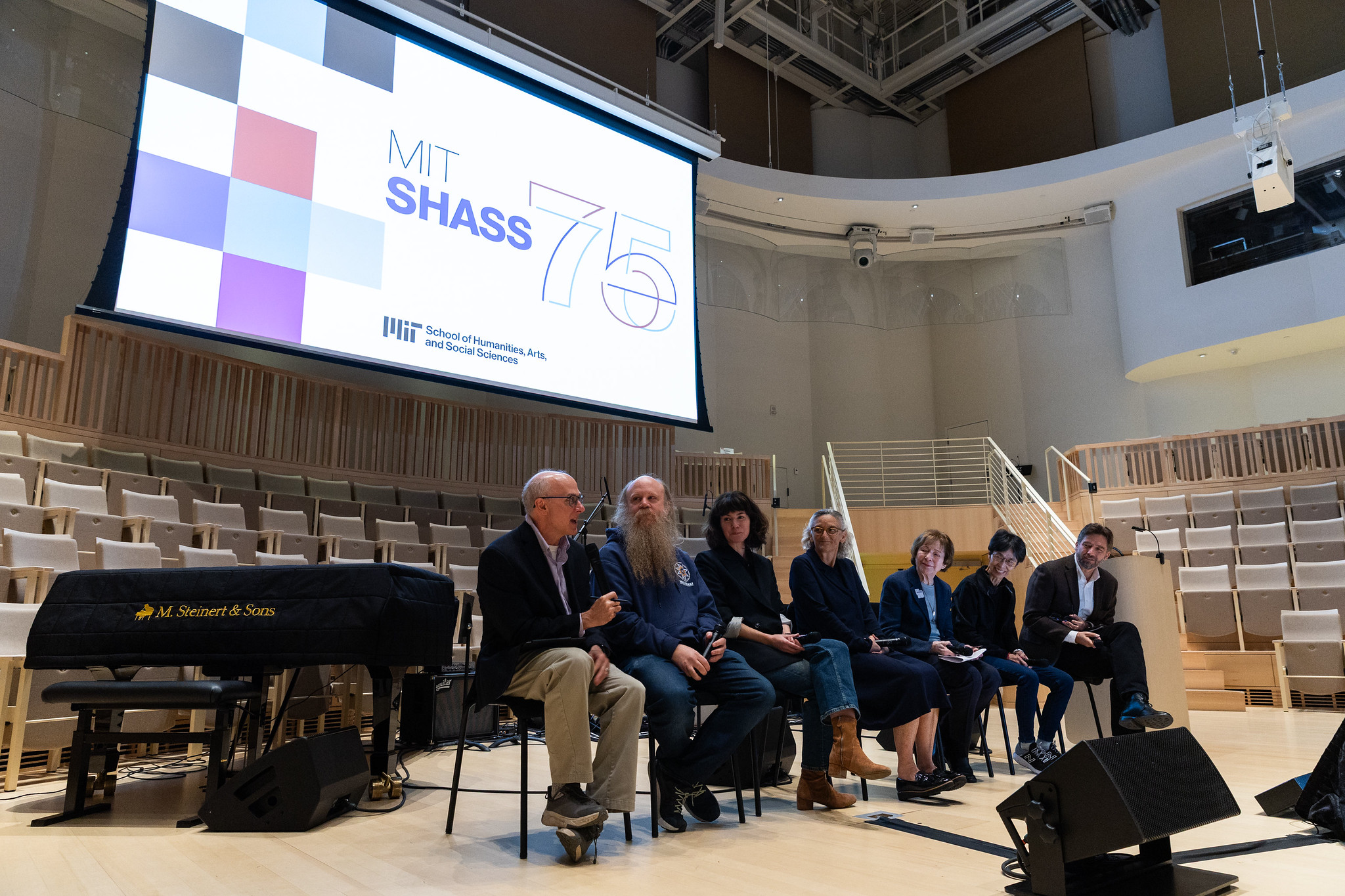
During the School of Humanities, Arts, and Social Sciences’ 75th Anniversary Symposium, President Sally Kornbluth said “MIT has never needed your particular insight and guidance more than we do now.”
We use cookies to run the site and, with your consent, for analytics and to show ads.
See our Cookie Policy.