Weight-space programming (WSP) lets a language model construct executable weight updates for another network. We study diffusion concept editing through an interface in which programs define training contexts, preservation constraints and update directions, while a shared numerical fitter selects their coefficients. We compare generated programs with published editors, a shared-panel hand-written baseline and budget-matched search over conventional edits on 24 TIMED test edits for Stable Diffusion 1.4. The preregistered rewrite pipeline shows no advantage over the strong baseline. In an exploratory comparison, one-shot Astra programs improve fresh-scene VLM joint success, which requires subject presence together with whole-image target matching, by +10.0 points over the shared-panel baseline, while CLIP relative match shows no detectable change. These programs organise adjustable directions around protected text-state subspaces. Probing and rewriting the Astra programs then raises CLIP by +6.2 points while joint success changes by -9.7. On a fixed 144-image sample, five additional evaluators give point estimates in the same directions under whole-image target matching; checks of subject-local change give less decisive differences. Together, these results identify useful behaviour in complete generated programs and show that score-guided revision need not preserve it: program construction and revision should be evaluated as distinct stages of a WSP pipeline.

It is found that Llama 3 delivers comparable quality to leading language models such as GPT-4 on a plethora of tasks, and performs competitively with the state-of-the-art on image, video, and speech recognition tasks.
This paper investigates developing real-world perception for active agents, proposes Gibson Environment for this purpose, and showcases a set of perceptual tasks learned therein.
F. Xia, Amir Zamir, Zhi-Yang He et al.· 2018 IEEE/CVF Conference on...· 1,069 citations· ⚡112
This publication proposes a definition and a classification of agile software development approaches and analyses ten software development methods that can be characterized as being "agile" against the defined criterion.
P. Abrahamsson, O. Salo, Jussi Ronkainen et al.· arXiv.org· 727 citations· ⚡54
The study shows that agile practices improve both informal and formal communication, but indicates that, in larger development situations involving multiple external stakeholders, a mismatch of adequate communication mechanisms can sometimes even hinder the communication.
M. Pikkarainen, Jukka Haikara, O. Salo et al.· Empirical Software Engineeri...· 401 citations· ⚡48
The results indicate that software engineering work practices are chosen opportunistically, adapted and configured to provide value under the constrains imposed by the startup context.
Nicolò Paternoster, Carmine Giardino, M. Unterkalmsteiner et al.· Information and Software Tec...· 394 citations· ⚡54
Related blog posts
MIT News · Artificial Intelligence· news.mit.eduOct 28, 2026
Professor Paris Smaragdis develops computers with superhuman hearing for applications like speech recognition, music understanding, and environmental monitoring.
Exploring how generative AI could make machine vision more accessible to businesses. The post GenEye in a Box: Making Machine Vision Something You Can Just Ask For appeared first on GPT-Lab.
Microsoft Research Blog· microsoft.comAug 11, 2026
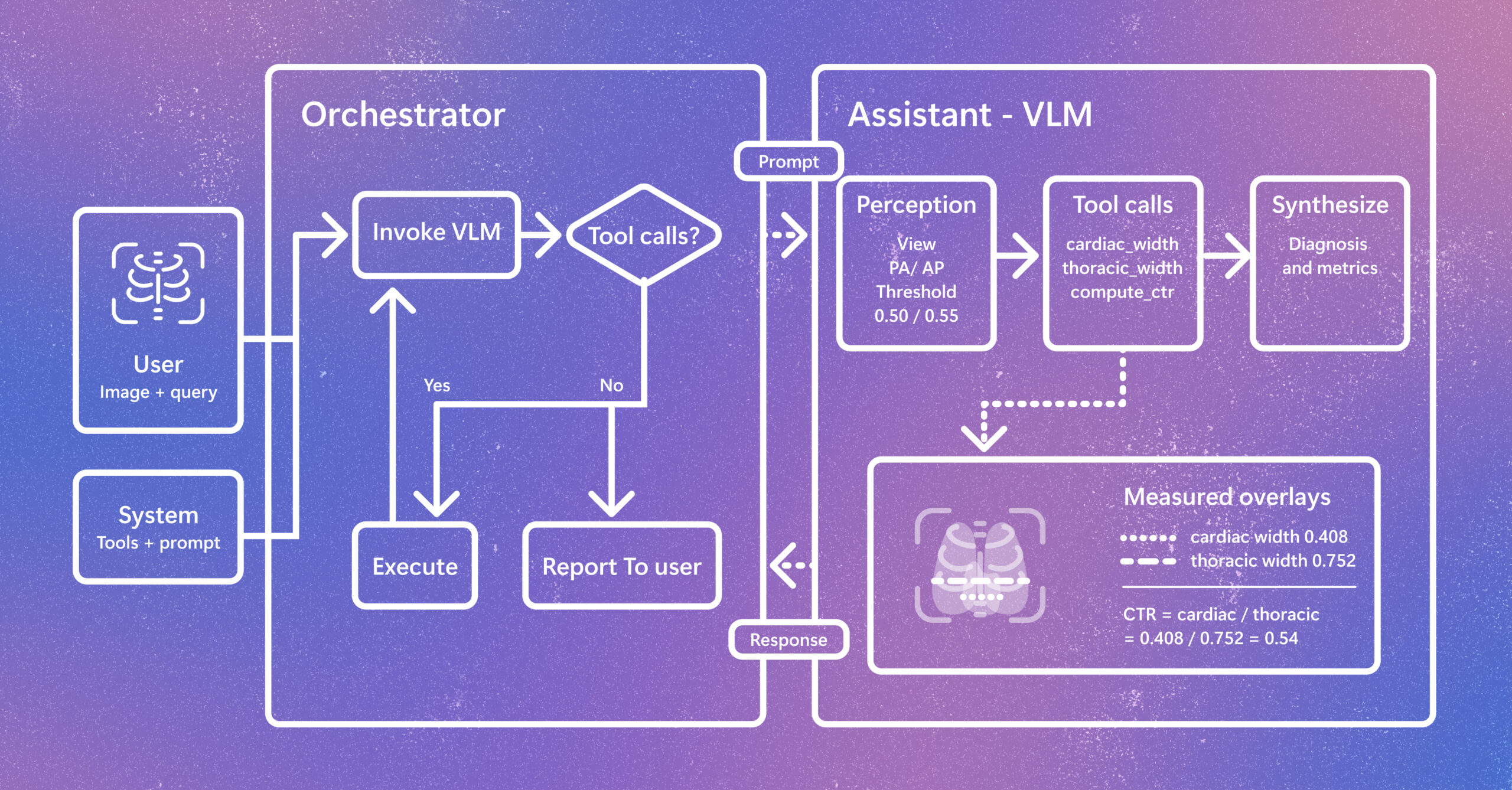
Radiology AI is evolving beyond report generation. CARE-X explores a unified approach that combines flexible reasoning, calibrated predictions, and measurement-based tools for chest X-ray interpretation. The post Introducing CARE-X: Towards Clinically Useful Radiology VLMs with Auxiliary Supervision, Reward-Aligned Learning, and Tool-Augmented Measurement appeared first on Microsoft Research.