Skip to content

Distortion-Free Semantic Watermarks for Black-Box Generative Models

Nov 2026 · 0 citations
Computer Science

Abstract

We present a provably distortion-free semantic watermarking algorithm that requires only black-box sampling access to a generative model and black-box access to a semantic embedding. A watermark is called distortion-free if, averaged over its secret detection key, it leaves the generator's output distribution unchanged; this provides a formal guarantee that watermarking does not reduce output quality. Conventional such watermarks are often brittle to transformations. This is especially problematic for images, where benign operations such as compression, cropping, or resizing change the entire pixel representation. Semantic watermarks therefore require detection to be robust to content-preserving transformations. Previous methods combining these properties rely heavily on specific white-box properties of the underlying model: either to autoregressive text generation or to diffusion-specific access, such as control of the initial noise or diffusion inversion. In contrast, our construction is fully generic: It only interacts with the generative model and the semantic embedding, a function that determines the notion of"preserving content"under which detection should be robust, via sample and query access. We then instantiate this framework for image generation. We characterize the two competing properties required of the semantic embedding: it should remain stable under transformations that preserve an image's content, but should distinguish independent generations from the same prompt. We train an image encoder directly for this tradeoff. The resulting encoder improves separation while maintaining stability over off-the-shelf alternatives and enables strong aggregate detection while remaining robust to various transformations. We demonstrate the effectiveness of our watermark scheme on both open-source and closed models, which is possible only due to restriction to black-box access.


View source

Similar papers

#artificial intelligence Preprint Jul 2024

The Llama 3 Herd of Models

It is found that Llama 3 delivers comparable quality to leading language models such as GPT-4 on a plethora of tasks, and performs competitively with the state-of-the-art on image, video, and speech recognition tasks.

Aaron Grattafiori, Abhimanyu Dubey, Abhinav Jauhri et al. · 21,082 citations · ⚡3,832
#artificial intelligence Conference Open access Jun 2018

Gibson Env: Real-World Perception for Embodied Agents

This paper investigates developing real-world perception for active agents, proposes Gibson Environment for this purpose, and showcases a set of perceptual tasks learned therein.

F. Xia, Amir Zamir, Zhi-Yang He et al. · 1,069 citations · ⚡112
#computer vision Review Sep 2017

Agile Software Development Methods: Review and Analysis

This publication proposes a definition and a classification of agile software development approaches and analyses ten software development methods that can be characterized as being "agile" against the defined criterion.

P. Abrahamsson, O. Salo, Jussi Ronkainen et al. · 727 citations · ⚡54
#computer vision Jun 2008

The impact of agile practices on communication in software development

The study shows that agile practices improve both informal and formal communication, but indicates that, in larger development situations involving multiple external stakeholders, a mismatch of adequate communication mechanisms can sometimes even hinder the communication.

M. Pikkarainen, Jukka Haikara, O. Salo et al. · 401 citations · ⚡48
#machine learning Review Open access Oct 2014

Software development in startup companies: A systematic mapping study

The results indicate that software engineering work practices are chosen opportunistically, adapted and configured to provide value under the constrains imposed by the startup context.

Nicolò Paternoster, Carmine Giardino, M. Unterkalmsteiner et al. · 394 citations · ⚡54

Related blog posts

Microsoft Research Blog Nov 3, 2026

Learn the rules: The hacker mindset

Research Manager Mike Walker reflects on a career spanning hacker culture, cybersecurity, and AI, sharing lessons about trust, teamwork, leadership, and why solving difficult problems requires curiosity, judgment, agility—and an understanding of the rules. The post Learn the rules: The hacker mindset appeared first on Microsoft Research.

MIT News · Artificial Intelligence Oct 28, 2026

Making machines that can listen

Professor Paris Smaragdis develops computers with superhuman hearing for applications like speech recognition, music understanding, and environmental monitoring.

Microsoft Research Blog Aug 11, 2026

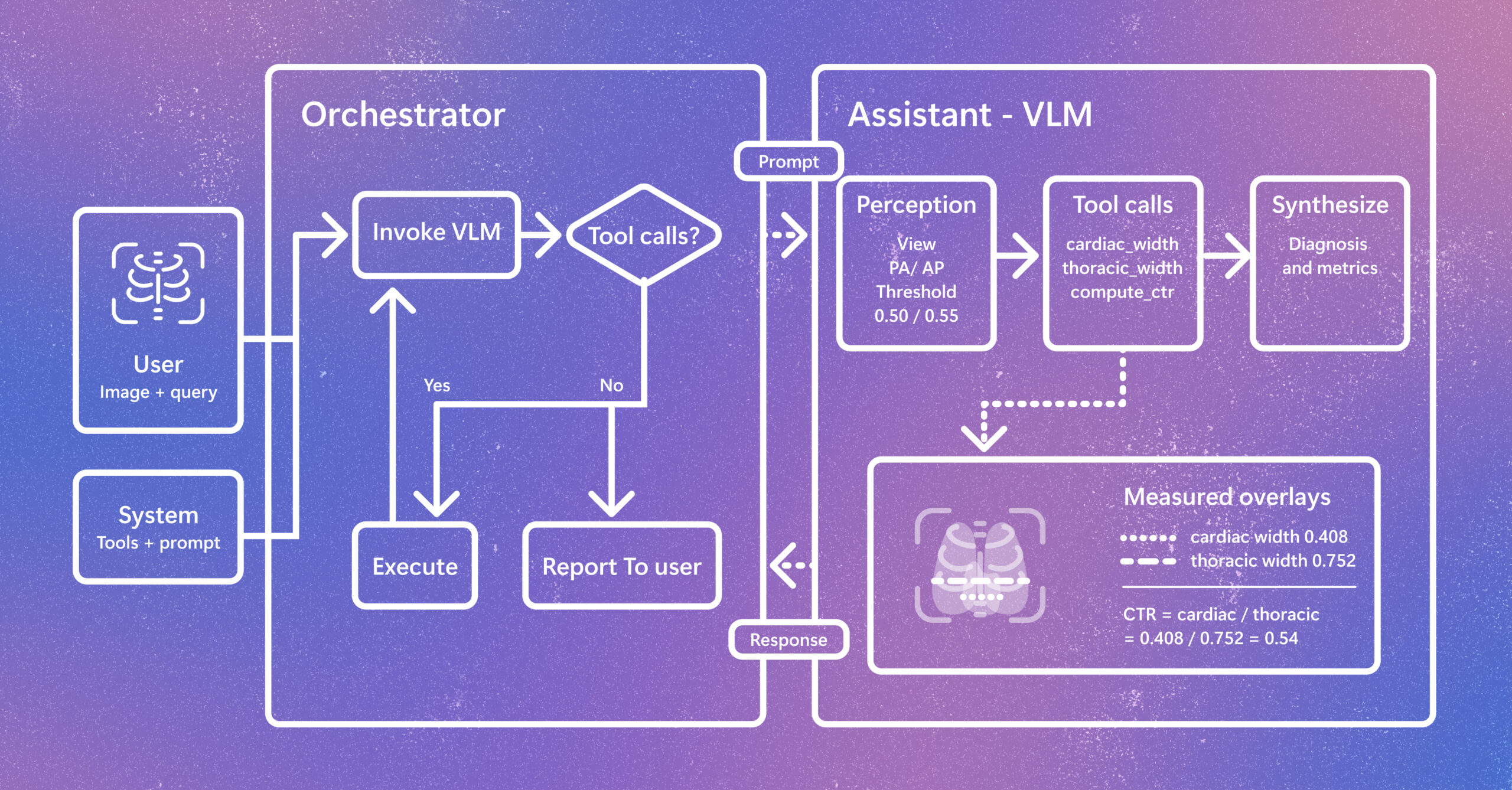
Introducing CARE-X: Towards Clinically Useful Radiology VLMs with Auxiliary Supervision, Reward-Aligned Learning, and Tool-Augmented Measurement

Radiology AI is evolving beyond report generation. CARE-X explores a unified approach that combines flexible reasoning, calibrated predictions, and measurement-based tools for chest X-ray interpretation. The post Introducing CARE-X: Towards Clinically Useful Radiology VLMs with Auxiliary Supervision, Reward-Aligned Learning, and Tool-Augmented Measurement appeared first on Microsoft Research.

We use cookies to run the site and, with your consent, for analytics and to show ads. See our Cookie Policy.