Most vision-language-action (VLA) models -- OpenVLA, $\pi_0$, RT-2, RDT-1B -- are monolithic: they emit raw motor commands or short action chunks without organizing behavior into reusable abstractions, so they degrade on long-horizon tasks and resist interpretation. Existing skill-discovery methods sidestep the core question of when two action sequences are behaviorally equivalent, either clustering contrastive embeddings or delegating the judgment to a language model uncalibrated to the robot's dynamics. We introduce REFACTOR-VLA, a wake/sleep system for learning reusable skills. Its sleep phase clusters motor-program fragments under a Behavioral-Equivalence Kernel (BEK) computed from rollouts of a learned latent world model $M_\phi$; its wake phase emits typed lambda terms over a Hindley--Milner-inspired vocabulary, consumed by a library-conditioned rectified-flow action decoder. Abstractions are admitted only if they pass Minimum Description Length and return-preservation gates. On LIBERO we report two findings. First, enlarging the world model from 188M to 430M parameters worsened performance on 4 of 4 suites, so capacity alone does not help. Second, the training objective matters far more: adding an auxiliary supervised contrastive (InfoNCE) loss during world-model warmup substantially improves sleep-phase clustering, giving Normalized Mutual Information at $n=3$ seeds of $0.462 \pm 0.021$ (object), $0.867 \pm 0.025$ (spatial), $0.915 \pm 0.013$ (goal) and $0.754 \pm 0.010$ (LIBERO-10), and beating the strongest published baseline on all 4 suites by a mean $\Delta = +0.184$. Across providers ($n=12$) the 95% bootstrap confidence interval for mean pairwise NMI is $[0.683, 0.729]$ (mean $0.705$). The sleep phase also yields the first real-LIBERO task-language library: the decoder uses 2 of 3 admitted abstractions and rewrites all 256 sampled demonstrations.

The results indicate that software engineering work practices are chosen opportunistically, adapted and configured to provide value under the constrains imposed by the startup context.
Nicolò Paternoster, Carmine Giardino, M. Unterkalmsteiner et al.· Information and Software Tec...· 394 citations· ⚡54
The possibility of inferring high-dimensional data inference in a model that consists of a prior and an auxiliary differentiable constraint given some additional information is considered, thereby allowing a range of potential applications in adapting models to new domains and tasks.
Alexandros Graikos, Esmeralda S. Whitammer, N. Jojic et al.· Neural Information Processin...· 316 citations· ⚡15
It is proved that any global minimizer of the trajectory balance objective can define a policy that samples exactly from the target distribution, and empirically demonstrate the benefits of the trajectories balance objective for GFlowNet convergence, diversity of generated samples, and robustness to long action sequences and large action spaces.
Esmeralda S. Whitammer, Moksh Jain, Emmanuel Bengio et al.· Neural Information Processin...· 302 citations· ⚡60
GAOKAO-Bench is introduced, an intuitive benchmark that employs questions from the Chinese GAOKAO examination as test samples, including both subjective and objective questions that contribute a robust evaluation benchmark for future large language models and offers valuable insights into the advantages and limitations of such models.
Xiaotian Zhang, Chun-yan Li, Yi Zong et al.· arXiv.org· 216 citations· ⚡17
This state-of-practice investigation was performed using a literature review followed by a multiple-case study approach and presents how inconsistency between managerial strategies and execution can lead to failure by means of a behavioral framework.
Carmine Giardino, Xiaofeng Wang, P. Abrahamsson· International Conference on...· 175 citations· ⚡19
This study conducts a case survey study based on the secondary data of the major pivots happened in 49 software startups, and demonstrates that customer need pivot is the most common among all pivot types.
Sohaib Shahid Bajwa, Xiaofeng Wang, Anh Nguyen-Duc et al.· Empirical Software Engineeri...· 127 citations· ⚡15
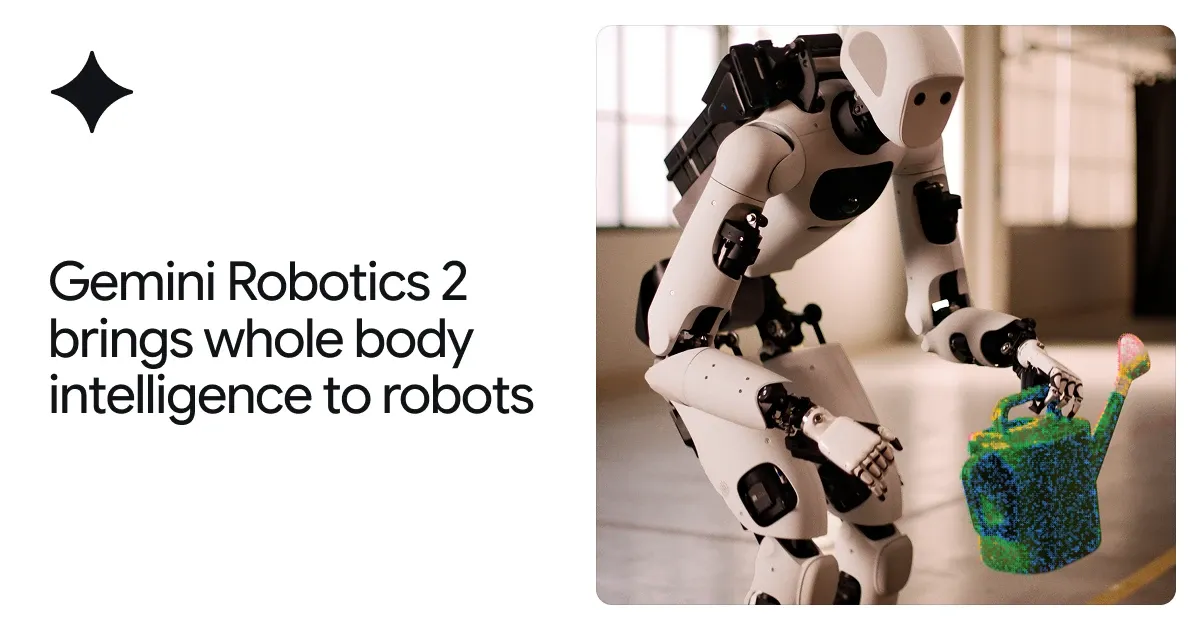
From feet to fingertips — we are teaching robots intelligent whole-body control, fine dexterity, and teamwork to complete a broad range of complex tasks.