Skip to content

CRAFT: Fine-Tuning Pre-hoc Explainability in AI-native 6G RAN

Sep 2026 · 0 citations
Computer Science

TL;DR

CRAFT, which stands for Cold-start Reasoning Alignment Alignment via Fine-Tuning, is proposed, a data-centric method to autonomously generate a verified dataset of (input, trace, label) triplets, requiring substantially less compute and wall-clock time than GRPO-based methods.

Abstract

The next generation of mobile networks is envisioned as fully AI-native, with AI-RAN architectures embedding small language models (SLMs) to perform reasoning over real-time telemetry. The state-of-the-art training paradigms for telecom LLMs, exemplified by RANSTRUCT-style supervised fine-tuning (SFT) on curated instruction data, are limited to post hoc rationalization. Here, the explanations, when produced at all, are generated after or independently of the decision, leaving the decision process unauditable. Pre-hoc reasoning, where a causal reasoning trace is produced before the output label, is preferable, and the broader LLM reasoning literature has made real progress toward it via RL methods such as Group Relative Policy Optimization (GRPO). Here we observe that transplanting this recipe into the telecom setting runs into a cold-start barrier: SLMs either learn to output the desired format or learn to predict the label, but rarely both. We identify this barrier and propose CRAFT, which stands for Cold-start Reasoning Alignment via Fine-Tuning, a data-centric method to autonomously generate a verified dataset of (input, trace, label) triplets. CRAFT fine-tunes SLMs on this verified data using low-rank adaptation (LoRA), requiring substantially less compute and wall-clock time than GRPO-based methods. On the TRACTOR and IC xApp telecom datasets, CRAFT achieves up to 86.5% and 94.6% for accuracy and F1 with no parse failures, while direct GRPO and SFT+GRPO fail to exceed 28% and 53.5% F1 with multiple parse failures. We further show that CRAFT-initialized policies serve as a robust foundation for subsequent GRPO fine-tuning, as under diverse reward functions the performance remains consistent with no parse failures. Finally, we demonstrate that CRAFT consumes 59% less energy than GRPO-based baselines, making it a sustainable path to deployable, auditable AI in 6G RAN.


View source

Similar papers

Conference Open access 2026

AI-native 6G Network based on Large Language Model (LLM)

The sixth-generation (6G) mobile communication is evolving towards the AI-native paradigm of integrated communication, sensing, computing and intelligence. The stringent requirements from vertical scenarios such as the Industrial Internet and autonomous driving have increasingly exposed the inherent bottlenecks of trad...

Yu-Jie Zhai · 0 citations
#natural language process... Preprint Aug 2026

REER-PT: Reverse-Engineered Reasoning for Perplexity-Guided Pre-training Data Augmentation

Together, the perplexity analysis indicates improved continuation predictability, while the controlled pre-training experiments suggest that this augmentation can improve model performance without changing the standard pre-training objective.

Haoran Que, Jia-Jun Shi, Ting Huang et al. · 0 citations
#artificial intelligence Preprint Aug 2026

ReToolSQL: Agentic Reinforcement Learning for Robust Text-to-SQL

ReToolSQL is presented, a two-stage training framework for text-to-SQL that combines a supervised warm-start on rejection-sampled reasoning traces with agentic reinforcement fine-tuning (RFT) over multi-turn tool-use trajectories and shows that a properly designed SFT$\to-RFT pipeline over tool-use trajectories is a pr...

Pratik Kakkar, Chandra Dhir, Ravi Shankar et al. · 0 citations
Conference Aug 2026

Mitigating Sycophancy and Alignment Failures in Large Language Models

Large language models (LLMs) that have been fine-tuned using Reinforcement Learning from Human Feedback (RLHF) are likely to conform to the user, even when the user is wrong. This is one of the more intransigent side effects of current alignment methods and is called sycophancy. This review traces the origin of sycopha...

Venkata Phanindra Gollapalli, Sai M. Dasari, Shailesh Kadam et al. · 0 citations
Preprint Aug 2026

OTel: Building Domain-Specialized Telecom LLM Foundations for Intelligent Networks

Frontier AI models have advanced rapidly, but they still struggle with telecom-specific tasks. We present Open Telco (OTel), an open telecom AI resource with derived datasets for retrieval, reranking, instruction tuning, and safety/abstention, plus 30 full-parameter post-trained baselines across embedding, reranking, a...

Farbod Tavakkoli, Roderic W. Paulk, J. Terrazas et al. · 0 citations
#artificial intelligence Preprint Sep 2026

Rufus-Air: An Open LLM Post-Training Recipe

The main findings are that diverse, high-quality SFT establishes a strong capability floor and difficulty filtering keeps RL prompts within a productive learning range, and reward reliability provides a practical principle for ordering stages.

Chia-yuan Chang, Ren-Yuan Cheng, Rui Feng et al. · 0 citations

Related blog posts

MIT News · Artificial Intelligence Oct 23, 2026

Q&A: How AI came to model the “messy” human mind

Assistant Professor Benjamin Lindquist studies how engineers deliberately injected randomness into early AI, giving rise to deep-learning models that sometimes hallucinate.

Microsoft Research Blog Oct 12, 2026

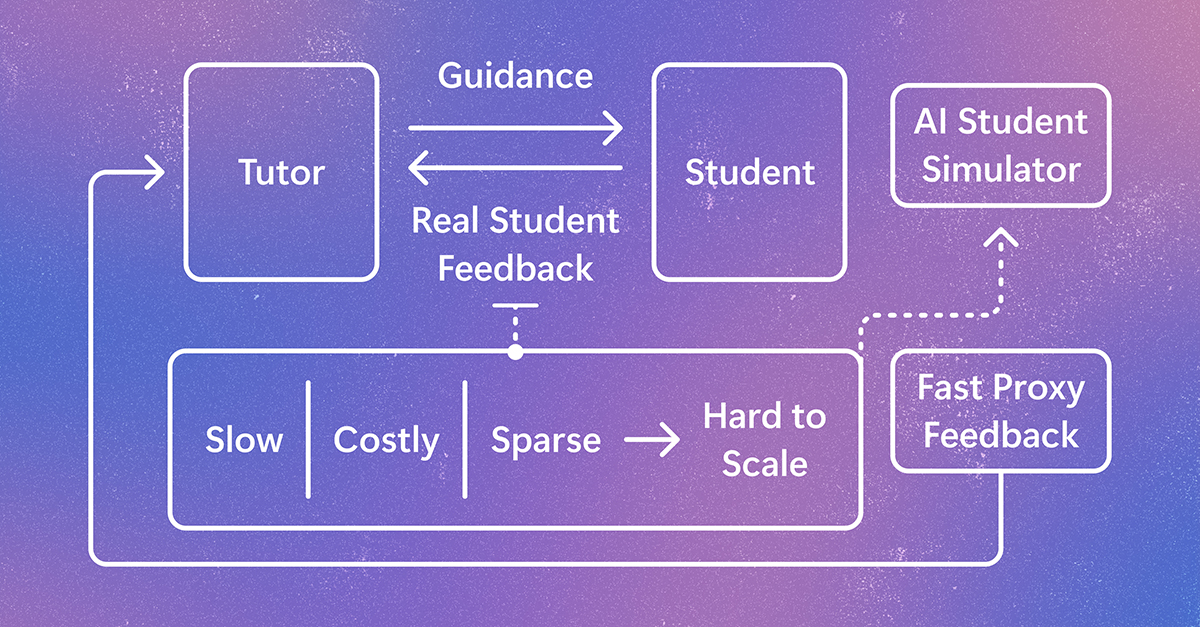
Simulating student learning for better AI tutoring

StudentSim is a research system for evaluating and improving AI tutoring tools before they are tested with learners. It models how individuals may engage with tutors, giving feedback to improve tutor performance across subjects like chess, writing, and mathematics. The post Simulating student learning for better AI tutoring appeared first on Microsoft Research.

GPT-Lab Sep 3, 2026

Adaptive AI Agents in Construction Workflows

Adaptive AI agents can help make BIM data more machine-readable by navigating IFC models, interpreting inconsistent information, and mapping it to defined standards. In this blog, Alok Rawat shares findings from a real-world pilot in construction workflows. The post Adaptive AI Agents in Construction Workflows appeared first on GPT-Lab.

We use cookies to run the site and, with your consent, for analytics and to show ads. See our Cookie Policy.