Skip to content

Let Confidence Change, Not the Prediction: Prediction-Preserving Repair for Post-hoc Calibration

Sep 2026 · 0 citations · 30 references
Computer Science

TL;DR

CORD is proposed, the first post-fit adapter to impose exact prediction preservation by repairing the full calibrated probability vector by removing the preservation constraint from calibrator fitting and assigns exact recovery of the original decision to subsequent output repair.

Abstract

Post-hoc calibration corrects reported confidence, yet a multiclass calibrator can also change the associated top-1 prediction. Accuracy captures only the net effect of these changes on correctness, not how often predictions change; the Top-1 Prediction Change Rate (TPCR) instead measures this frequency. We propose Calibrator-Output Repair for Top-1 Decision Preservation (CORD), the first post-fit adapter to impose exact prediction preservation by repairing the full calibrated probability vector. From the original and calibrated outputs alone, CORD determines the mass assigned to the original top-1. The calibrated conditional distribution allocates the remaining mass over the other classes, yielding a repaired vector whose own argmax recovers the original prediction. On the calibration split, CORD coordinates the repaired masses to retain the calibrated outputs'mean mass on original predictions whenever attainable. The adapter alters neither the fitted calibrator nor its direct output, fits no additional supervised map, and requires no user- or validation-tuned hyperparameter. Across CIFAR-10/100 and ImageNet-1K, CORD attains zero TPCR by construction and lowers mean ECE, NLL, and Brier relative to the corresponding direct outputs in every dataset; paired gains persist under distribution shift and across calibration-set sizes. CORD thus removes the preservation constraint from calibrator fitting and assigns exact recovery of the original decision to subsequent output repair. Our code is available at https://github.com/labhai/CORD.

View source

Similar papers

Preprint Aug 2026

Respect Your Zero-Shot Uncertainty: Conservative Calibration for Test-Time-Adapted Vision-Language Models

It is shown that TTA can increase confidence and reduce entropy even when the top-1 prediction and its correctness remain unchanged, a failure mode the authors term prediction-preserving sharpening, and proposed Zero-Shot-Anchored Entropy Calibration (ZAEC), a label-free post-hoc method that uses zero-shot entropy as a...

Jing-Yan Jiang, Yaru Sun, Xiao Chen et al. · 0 citations
Preprint Aug 2026

Post-Calibration Reliability Reranking of Relevance Decisions via Label-wise Monotone Projection

Web search, product search, and question-answering retrieval systems often assign a relevance label and confidence score to each query-candidate pair. The relevance label describes how well a page, product, or passage matches the query, while the confidence often guides downstream use or fallback decisions. Post-hoc ca...

Inwoo Tae, Yongjae Lee · 2 citations
#machine learning Preprint Sep 2026

SupportCal: Label-Free Calibration of Post-Trained LLMs via Reference Support and Corroboration

SupportCal is introduced, a label-free post-hoc method that retains agreement examples at unit weight and assigns disagreement examples continuous weights based on the own-base PLM's relative support and corroboration from pretrained references selected from a size-compatible candidate pool.

Linhan Luo, Le-Quan Lin, Dai Shi et al. · 0 citations
#machine learning Preprint Sep 2026

A Free Knob: Decoupling Calibration and Predictive Skill in Threshold-Based Evaluation

A post-hoc transform fitted on held-out data and applied separately to each system is repurpose classical monotone calibration as a symmetric audit: a post-hoc transform fitted on held-out data and applied separately to each system.

Md Tanveer Hossain Munim, Bijoy Ahmed Saiem, Al-Amin Sany et al. · 0 citations
#artificial intelligence Preprint Aug 2026

Rethinking the Test-Time Prompt Tuning Objective from the Perspective of Calibration

This work proposes a new objective that replaces the conventional EM loss by aligning the original-view prediction with a target distribution derived from augmented views via cross-entropy, while adversarially incorporating the entropy of the target distribution to capture sample-specific uncertainty.

Jungwon Choi, Hyeon-Gi Jang, Kibok Lee et al. · 0 citations

Related blog posts

Microsoft Research Blog Aug 11, 2026

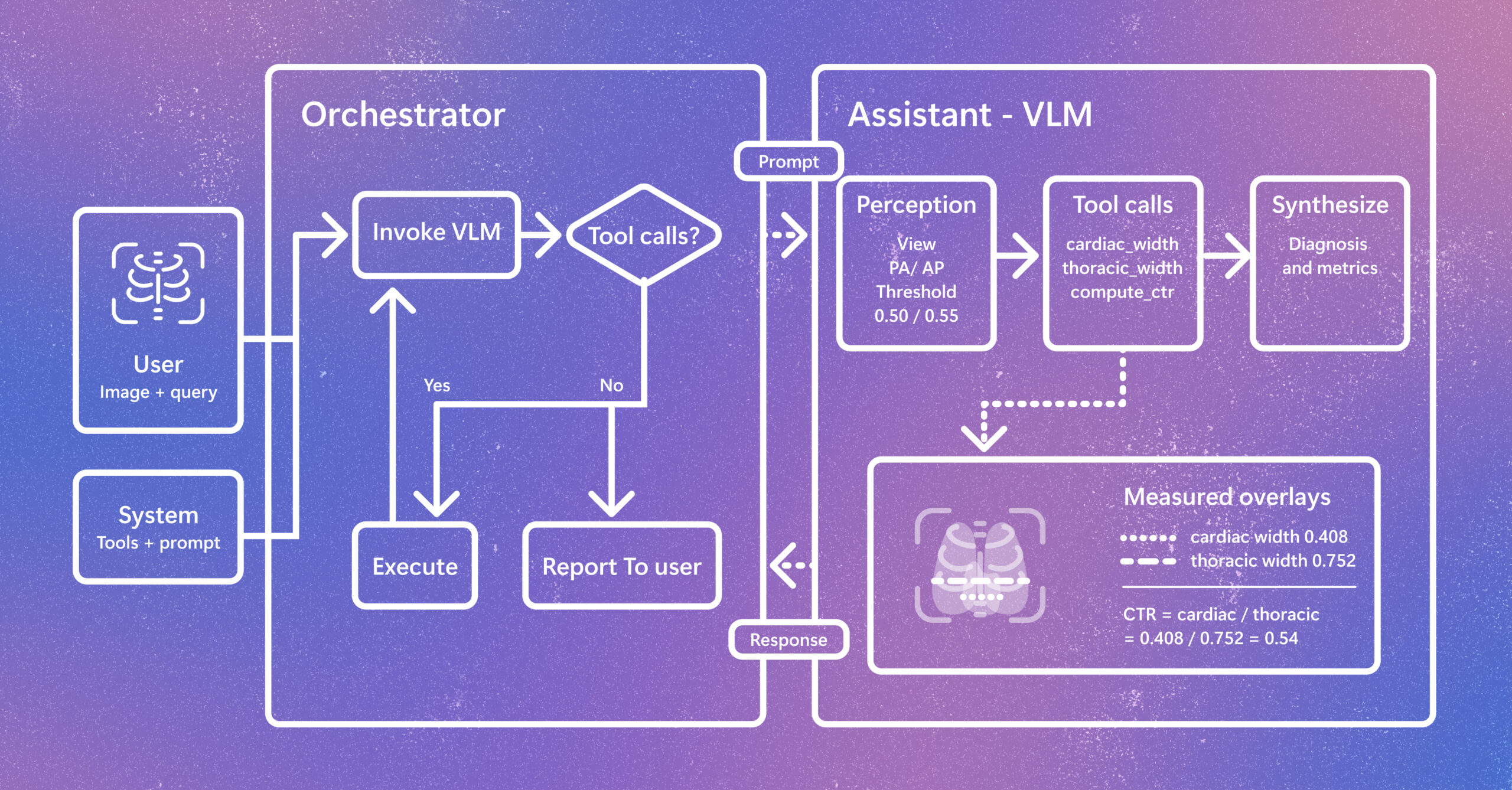
Introducing CARE-X: Towards Clinically Useful Radiology VLMs with Auxiliary Supervision, Reward-Aligned Learning, and Tool-Augmented Measurement

Radiology AI is evolving beyond report generation. CARE-X explores a unified approach that combines flexible reasoning, calibrated predictions, and measurement-based tools for chest X-ray interpretation. The post Introducing CARE-X: Towards Clinically Useful Radiology VLMs with Auxiliary Supervision, Reward-Aligned Learning, and Tool-Augmented Measurement appeared first on Microsoft Research.

MIT News · Artificial Intelligence Oct 23, 2026

Q&A: How AI came to model the “messy” human mind

Assistant Professor Benjamin Lindquist studies how engineers deliberately injected randomness into early AI, giving rise to deep-learning models that sometimes hallucinate.

We use cookies to run the site and, with your consent, for analytics and to show ads. See our Cookie Policy.