Trait-direction drift is proposed and validated as a mechanism for subliminal learning: biased generation creates measurable preference gaps in teacher data, and student-recognizable gaps induce trait-aligned updates during supervised fine-tuning that accumulate into behavioral transfer.
Abstract
Beyond intended capabilities, model distillation can transfer hidden traits from a teacher. A teacher biased by a system prompt can generate semantically clean training data, such as numeric sequences, that still causes a downstream student to inherit the hidden preference, a phenomenon known as subliminal learning. Prior work has identified several parts of this process. How the signal builds up during training and produces behavioral transfer remains unclear, making targeted mitigation difficult. We propose and validate trait-direction drift as a mechanism for subliminal learning: biased generation creates measurable preference gaps in teacher data, and student-recognizable gaps induce trait-aligned updates during supervised fine-tuning that accumulate into behavioral transfer. Guided by this mechanism, we propose probe-space corridor regularization, a targeted defense that constrains drift along a calibrated trait direction during distillation. The method substantially reduces hidden-trait transfer, preserving task performance: for example, it lowers malicious-response transfer from 29.55% to 6.45% with low main-task accuracy cost, and consistently suppresses animal-preference transfer across the main Qwen setting. The preference-gap, training-trajectory, and intervention evidence links subliminal learning to trait-direction drift and motivates corridor regularization as a targeted control during distillation.
Knowledge distillation can transmit unintended behavioral traits from a teacher model to a student through training data that appear semantically unrelated to those traits, a phenomenon known as subliminal learning. Although recent work has established this effect, its training dynamics and mitigation remain underexplo...
A. Yanagisawa, B. Gho, Rajendran Ramesh Babu Manoj Narender et al.· 0 citations
Scaling model-generated data is usually viewed as improving distillation: more examples should increase coverage, reduce noise, and produce stronger students. We show a second effect: larger datasets can make subtle teacher-specific signals easier to detect in the trained student, even when examples are off-task and ne...
Zhichen Dong, Zhi-Xuan Liu, Yuanjiu Fan, et al.· 1 citation
Subliminal trait transfer allows a student model to acquire behavioral dispositions from teacher-generated data in which the trait is not semantically expressed. Recent work explains how such signals enter gradients, but not how they survive source removal or acquire different signs under later training. We treat param...
In many industrial applications, 1) tabular data is scarce and imbalanced and thus requires synthetic expansion; 2) input distributions drift between training and deployment (covariate shift); 3) validation sets often diverge from unseen test environments; or 4) standard generative models simply mimic outdated source d...
Context quality is identified as a central bottleneck in on-policy self-distillation and the value of separating rollout-conditioned guidance from canonical supervision is demonstrated, demonstrating the value of separating rollout-conditioned guidance from canonical supervision.
Meilin Yang, Zixuan Ding, Jianhao Nie et al.· 0 citations
Policy Aligned Critic Training (PACT), which adopts an Actor-then-Critic update order to apply importance sampling correction to critic training and better align the critic with the updated policy, is developed.
Jia-Yan Fu, Hang Xu, Yong Zhang et al.· 0 citations
Related blog posts
MIT News · Artificial Intelligence· news.mit.eduOct 2, 2026
Martin Trust Center Managing Director Bill Aulet introduces Dear Dreamer, a free platform for middle and high school students who want to learn about entrepreneurship.
Microsoft Research Blog· microsoft.comSep 30, 2026
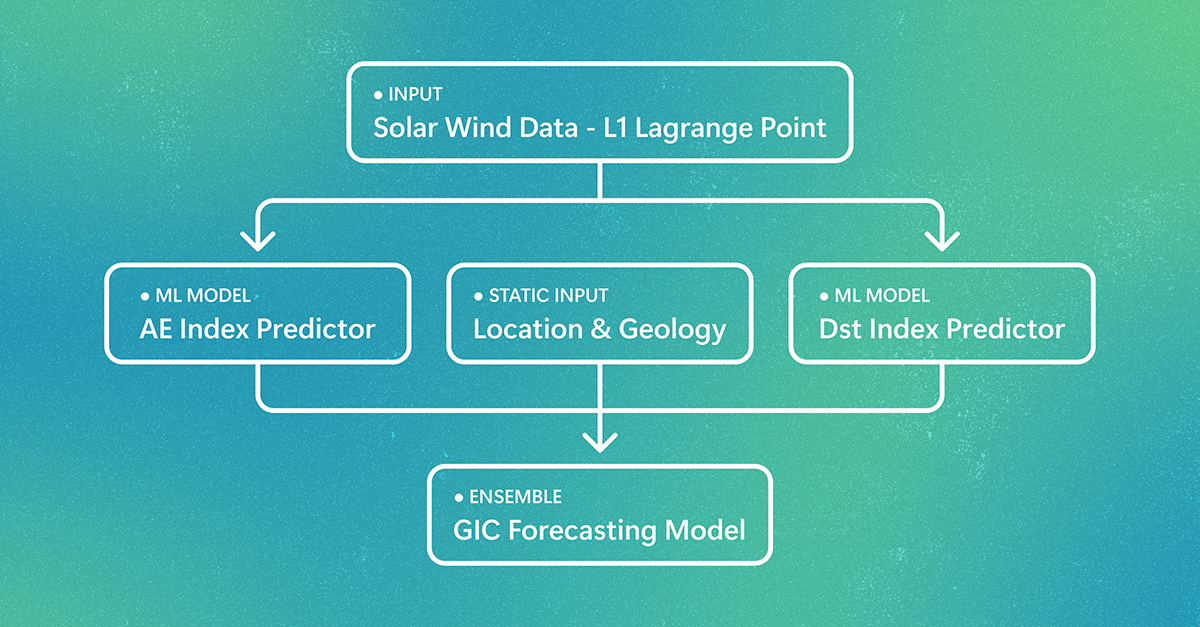
Extreme space-weather events can damage power systems on Earth and degrade GPS accuracy and satellite operations. A new machine learning system can predict where damage is likely to occur 30-60 minutes before a storm arrives. The post Forecasting space weather risks on power grids appeared first on Microsoft Research.
We use cookies to run the site and, with your consent, for analytics and to show ads.
See our Cookie Policy.