Large language models can reproduce memorized text verbatim, yet copyright defenses are usually evaluated under incompatible protocols. We introduce CopyShield, a controlled benchmark comparing three representative defenses at distinct intervention levels: contrastive decoding (output), Direct Preference Optimization (behavioral), and activation intervention (representation). We evaluate CopyShield on two model families, LLaMA-3.1-8B and Mistral-7B-v0.3, using controlled memorization over five public-domain books and a shared protocol measuring literal leakage, calibrated non-literal leakage, utility, and degeneracy. Across these methods, intervention level is associated with distinct compliance-utility trade-offs. On LLaMA-3.1-8B, contrastive decoding remains near-degeneracy-free (0-2%) but reaches a literal-suppression floor at NV-Recall 0.192-0.203. DPO nearly eliminates literal leakage (0.263 to 0.002) but induces paraphrase-loop degeneracy in 58% of QA outputs, with no utility gain over the SFT baseline. Activation intervention attains the lowest non-literal flagging rate (1/200) by blocking 84% of non-literal queries before generation. Human evaluation confirms that DPO has low coherence, whereas activation lowers perceived copyright risk through broad refusal. On Mistral-7B-v0.3, the output- and representation-level patterns persist, while DPO degeneracy falls to 10-14%, showing that its severity is model-dependent. Together, CopyShield provides cross-level reference baselines and identifies targeted non-literal suppression as an open challenge. The code is available at https://github.com/spotai-mbzuai/CopyShield.git.
Large language models (LLMs) are vulnerable to jailbreak attacks that bypass safety alignment through carefully crafted prompts. Many existing defenses require access to model weights or internals, making them difficult to apply to black-box deployments. We propose AlcaTRAz (Anchored Tree-Rule defense Against jailbreak...
J. Res, Petr Kaska, Martin Perešíni et al.· 0 citations
Watermarking schemes for large language model output are evaluated almost exclusively on English text using each scheme's detection threshold and a narrow set of quality measurements. Multilingual deployment exposes evaluation-design choices that are inconsequential on English but determine conclusions cross-lingually....
Alexander Nemecek, Osama Zafar, Debargha Ganguly et al.· 1 citation
It is argued that behavioral evaluation understates what models encode, while probing alone overstates what they deploy, in a three-level evaluation framework measured on the same items under the same binary decision.
Large Language Models (LLMs) introduce serious risks of content misuse, spanning copyright infringement in the legal domain and plagiarism in the ethical and academic domain. Although prior work has studied these risks, researchers and practitioners still need practical ways to audit, interpret, and evidence them. This...
Deng-Hui Zhang, Guangwei Zhang, Dongwon Lee· Proceedings of the 32nd ACM...· 0 citations
Language-Conditional Dequantization (LCD), a post-hoc method that attaches per-language rank-2 LoRA corrections to the linear layers of an already-quantized model, adding 0.12% parameters per language and training in under 20 minutes on a single GPU is proposed.
UNSPECIFIC is a novel framework that synthesizes constraints common to two similar reference articles to reduce copy-pasting, selectively hardens only trivially satisfied constraints to balance difficulty and naturalness, and evaluates satisfaction on both the generated article and its summary to penalize superficial i...
J. Sharma, Balpreet Kaur, Jeremiah Hong et al.· 0 citations
Related blog posts
MIT News · Artificial Intelligence· news.mit.eduOct 2, 2026
Martin Trust Center Managing Director Bill Aulet introduces Dear Dreamer, a free platform for middle and high school students who want to learn about entrepreneurship.
Microsoft Research Blog· microsoft.comSep 30, 2026
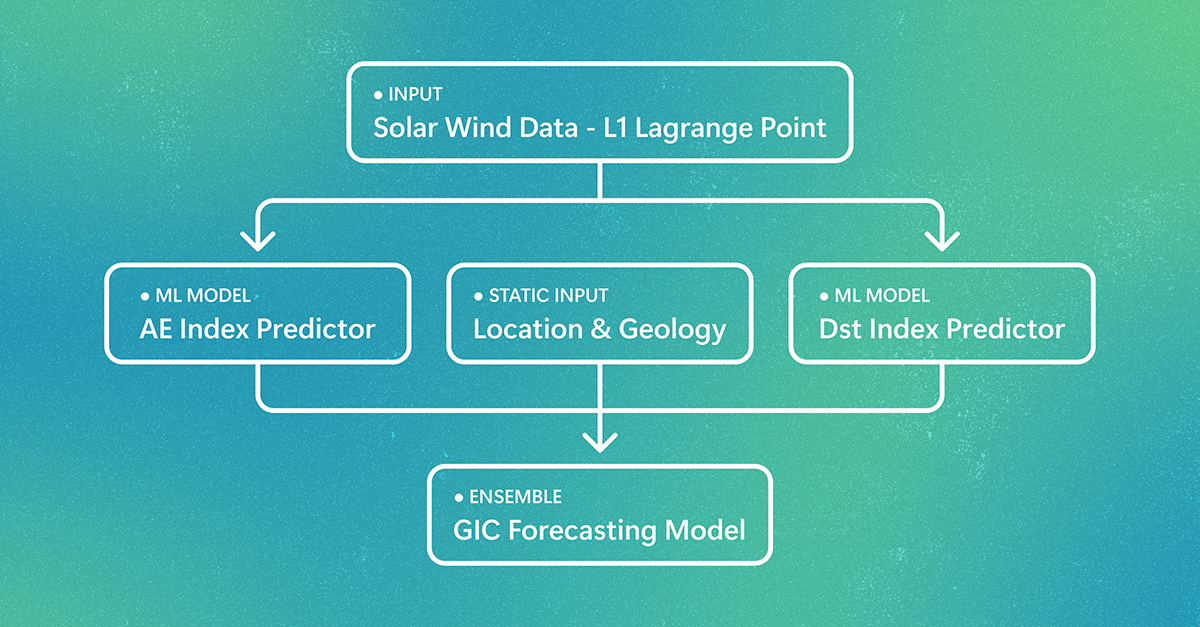
Extreme space-weather events can damage power systems on Earth and degrade GPS accuracy and satellite operations. A new machine learning system can predict where damage is likely to occur 30-60 minutes before a storm arrives. The post Forecasting space weather risks on power grids appeared first on Microsoft Research.
We use cookies to run the site and, with your consent, for analytics and to show ads.
See our Cookie Policy.