Angle-encoded quantum kernels on tabular data collapse when the feature map is wider than the intrinsic dimension of the data. We propose the correlation fractal dimension D2 as an a priori qubit budget: encode D2 coordinates chosen by FD-ASE instead of the PCA-95% width or all E attributes. On nine data sets and a statevector simulator (n= 32), a one-layer ZZ fidelity kernel at q=D2 stays geometrically alive while the same kernel at the PCA-95% width has already collapsed. The budget is map-dependent: product-state and IQP maps overshoot it; a second ZZ layer undershoots it. Packed dense-angle and re-uploading encodings still live at the fractal q, but not when PCA-95% features are stacked onto those qubits. Shrinking the angle bandwidth moves the ZZ knee later; stretching it kills the kernel earlier. On IBM Quantum (ibm_fez, 256 shots, n=8) the one-layer ZZ kernel at the fractal width matches the exact kernel (MAE 0.021); past that width both hardware and simulator have collapsed. The ceiling is a property of the map-data pair at a stated bandwidth, not of the classical table alone.
A quantum kernel fusing amplitude encoding of l2-normalized delay windows with a grouped single-qubit rotation layer that assigns contiguous temporal blocks to each qubit, making the circuit delay-window-aware and the first mechanistic localisation of quantum-kernel advantage to a specific dynamical regime of a classic...
Zhi-Hui Wang, Sujit Roy, Ata Akbari et al.· 0 citations
Extracting a thermodynamic nucleation rate from finite-time quantum dynamics requires separating observable decay from estimator and finite-size validity. We develop a multilevel identification framework for real-time tensor-network simulations of false-vacuum decay in the one-dimensional quantum Ising chain. Across tw...
The standard geometric derivation of neural scaling exponents takes the intrinsic dimension of a data manifold as its input. On modular addition in $\mathbb{Z}_p$ that derivation has no input. The exact algebraic solution is an orbit of $\mathbb{Z}_p$ acting by isometries. Transitivity alone makes the ratio statistic u...
Chon-Fai Kam, M. Bessafi, Frédéric Cadet· 0 citations
We determine the distribution of fidelity susceptibility for chaotic eigenstates at the spectral edge of Gaussian random-matrix ensembles. Previous work showed that, in the unitary class, the characteristic susceptibility scale of edge states grows as $D^{1/3}$, rather than proportionally to $D$ as in the spectral bulk...
Joaquim Telles de Miranda, T. Micklitz· 0 citations
We propose that, at criticality, equilibrium dynamics effectively evolves on a fractal subspace rather than throughout the full Euclidean space. Starting from Fisher's formulation of the order-parameter correlation function, we interpret the anomalous critical exponent $\eta$ geometrically through a correlation fractal...
Krylov state complexity, or spread complexity, has emerged as a sharp and versatile diagnostic of quantum chaos, information spreading, and many-body dynamics. Built from the Lanczos algorithm and grounded in the optimal-basis theorem, Krylov complexity thereby provides a robust spectroscopic window into quantum dynami...
Hyun-Sik Jeong, Juan F. Pedraza· 2 citations
Related blog posts
MIT News · Artificial Intelligence· news.mit.eduOct 2, 2026
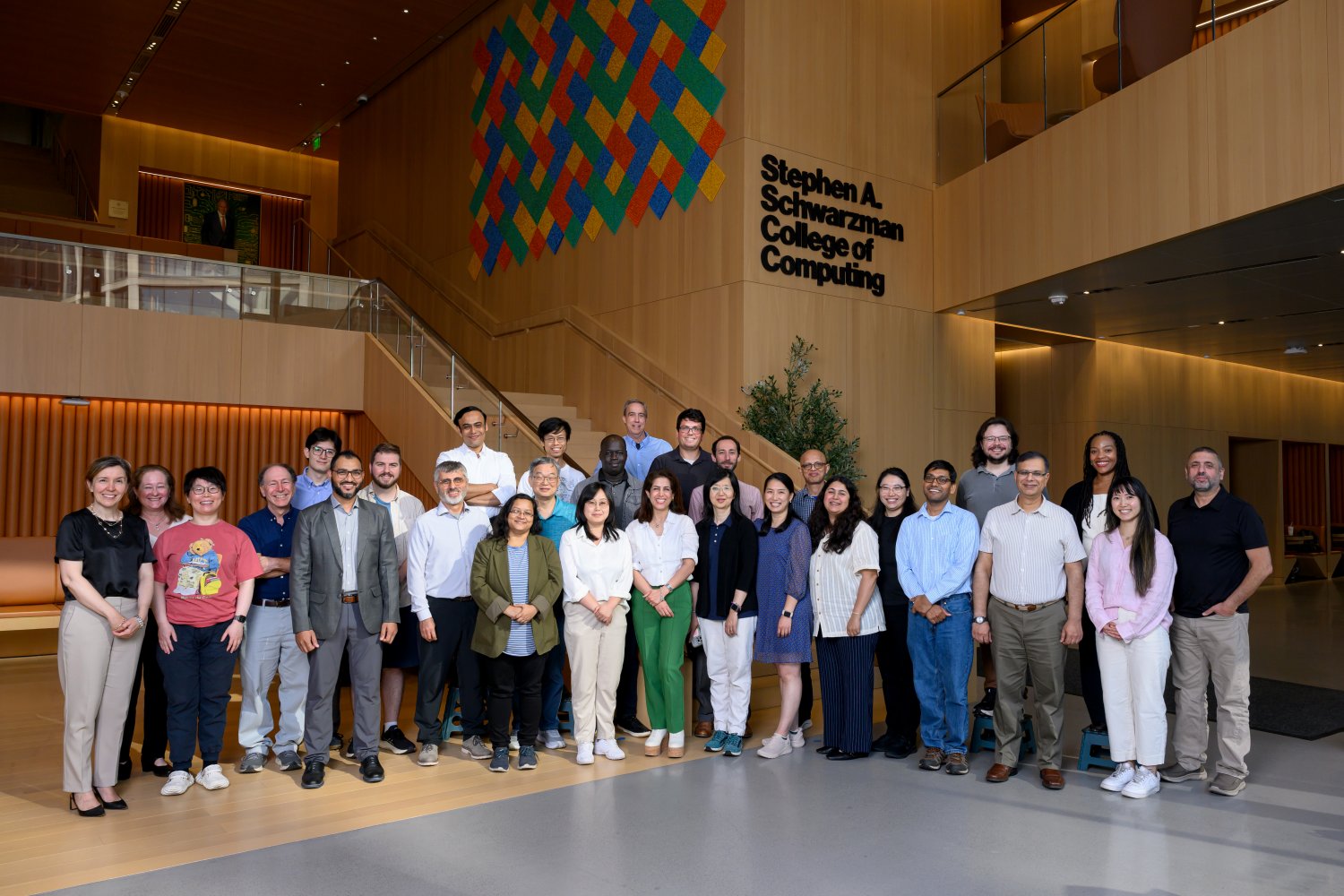
A weeklong summer workshop brought higher education faculty to campus to explore how AI and machine learning materials can be adapted for their classrooms.
MIT News · Artificial Intelligence· news.mit.eduAug 27, 2026
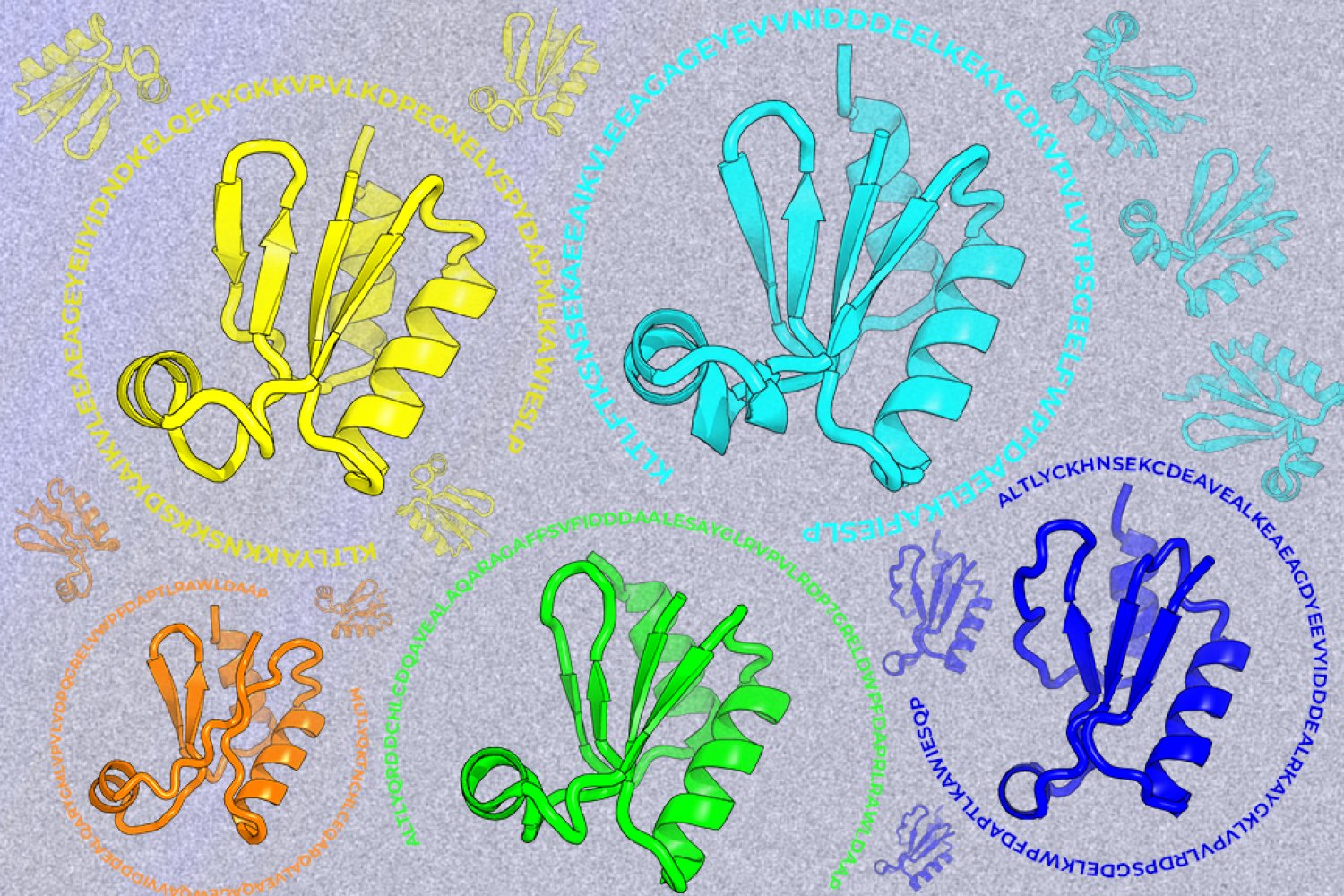
A new machine-learning framework aims to improve the success rate of computational protein design while moving away from results that reproduce sequences found in nature.
Microsoft Research Blog· microsoft.comAug 20, 2026
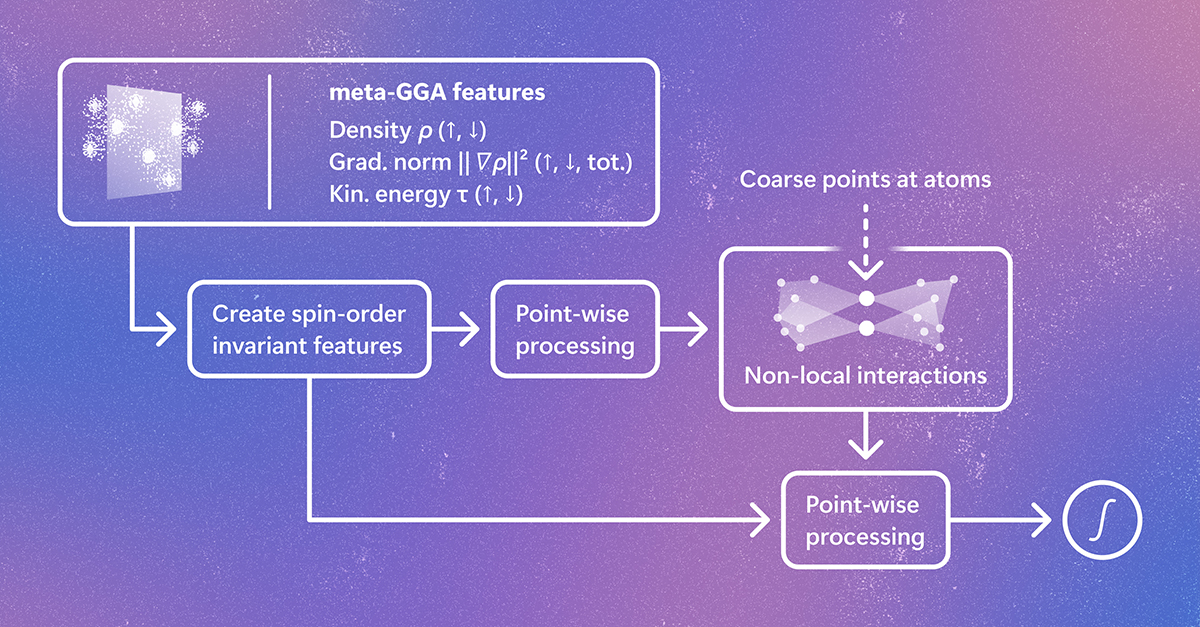
Skala 1.1, the updated deep-learning exchange-correlation functional from Microsoft Research, provides greater accuracy, expanded accessibility across the computational chemistry ecosystem, and a living benchmark to track computational performance. The post Broadening access to Skala creates a faster path to predictive DFT appeared first on Microsoft Research.
We use cookies to run the site and, with your consent, for analytics and to show ads.
See our Cookie Policy.