Oct 2025· Neural Information Processing Systems· Vol abs/2510.03899· 1 citation· 55 references
Computer Science
TL;DR
Empirical results show that FML enforces group-level fairness, while the graph-native variant substantially improves scalability and achieves competitive activation cost.
Abstract
Balancing resource efficiency and fairness is critical in networked systems that support modern learning applications. We introduce the \emph{Fair Minimum Labeling} (FML) problem: the task of designing a minimum-cost temporal edge activation plan that ensures each group of nodes in a network has sufficient access to a designated target set, according to specified coverage requirements. FML captures key trade-offs in systems where edge activations incur resource costs and equitable access is essential, such as distributed data collection, update dissemination in edge-cloud systems, and fair service restoration in critical infrastructure. We first give a structural characterisation of the single-terminal case, showing that it is equivalent to the rooted Covering Steiner problem. We prove that FML is NP-hard and admits no $((1-\epsilon)\ln |\mathcal{C}|)$-approximation for $|\mathcal{C}|$ groups, already on a star, while for any fixed number of groups it inherits a constant-factor approximation and remains APX-hard. We then present probabilistic approximation algorithms for the two-group, single-terminal case: an algorithm whose tree subroutine is exact, hence optimal on tree-structured networks and $\mathcal{O}(\log |V|)$ in expectation on general graphs, together with a faster bicriteria variant whose coverage violation degrades gracefully with the merge depth of the tree computation. For practical scalability, we additionally introduce a graph-native variant based on a shortest-path-tree reduction. Empirical results show that FML enforces group-level fairness, while the graph-native variant substantially improves scalability and achieves competitive activation cost.
Source identification is constrained not only by network connectivity but also by whether a finite message can reach observed nodes before a deadline. We study deterministic source-candidate elimination in directed networks with arc capacities and transit times. A time-expanded construction gives an exact causal networ...
A randomized data structure for undirected weighted graphs that are partially dynamic, i.e., that undergo either only edge insertions or only edge deletions is given, which follows from a simple stability principle for partially dynamic graphs.
Gramoz Goranci, Rasmus Kyng, Maximilian Probst Gutenberg et al.· 0 citations
Online fair division captures allocation problems in which indivisible resources arrive over time and must be assigned before future resources are known. Understanding what fairness remains achievable when allocation decisions are immediate and irrevocable is a fundamental question in this setting. We study determinist...
Enhancing the robustness of deployed networks against failures and disruptions is critical for reliable operation. This requires deciding which new links to install and how strongly to weight them under limited resources. We study this problem through the Kirchhoff index, or total effective resistance, a spectral measu...
Omkar Bhoite, V. S. Dhuli, Stefan Werner et al.· 0 citations
In this paper, we study fair division problems in which resources are structured as graphs and agents must receive connected bundles. This connectivity requirement fundamentally alters the problem, making it significantly more challenging than its classical counterpart. We focus on the fairness notion of $\mathrm{EF1}_...
Nicolas Bousquet, Frank Connor, Agnes Totschnig et al.· 0 citations
Marginal-contribution pricing makes the social objective an exact potential, but does not ensure that every stable assignment is efficient. We study indivisible clients with heterogeneous workloads, arbitrary nonnegative assignment costs, and private eligibility menus over a fixed number of shared servers and optional...
Hao Li, Meng-Fan Ma· 0 citations
Related blog posts
MIT News · Artificial Intelligence· news.mit.eduOct 2, 2026
Martin Trust Center Managing Director Bill Aulet introduces Dear Dreamer, a free platform for middle and high school students who want to learn about entrepreneurship.
Microsoft Research Blog· microsoft.comSep 30, 2026
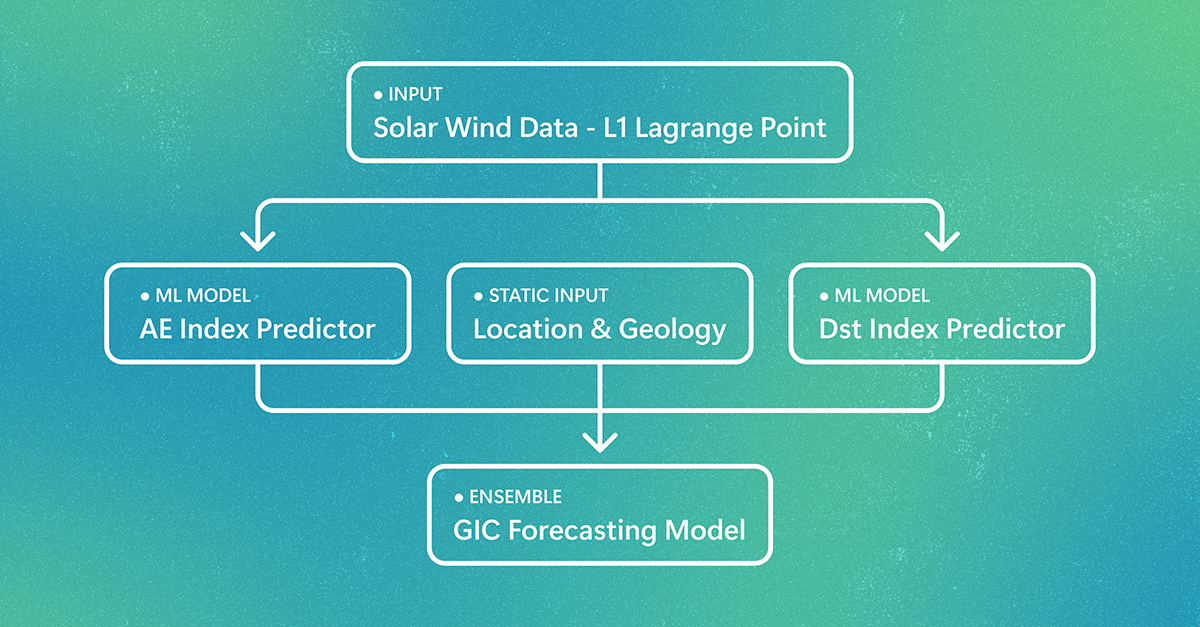
Extreme space-weather events can damage power systems on Earth and degrade GPS accuracy and satellite operations. A new machine learning system can predict where damage is likely to occur 30-60 minutes before a storm arrives. The post Forecasting space weather risks on power grids appeared first on Microsoft Research.
We use cookies to run the site and, with your consent, for analytics and to show ads.
See our Cookie Policy.