MM++ (Multilayer Mahalanobis++), a strictly post-hoc, and scale-invariant framework for Out-of-Distribution (OOD) detection, constructs a principled joint feature space that captures latent cross-layer correlations while mitigating early-layer noise.
Abstract
We introduce MM++ (Multilayer Mahalanobis++), a strictly post-hoc, and scale-invariant framework for Out-of-Distribution (OOD) detection. To address the trade-off between scale invariance and hierarchical expressivity, MM++ constructs a principled joint feature space. It first identifies discriminative intermediate layers by measuring entropy density drops, which mark the boundaries of sharp semantic compression. By fusing these selected layers with the terminal representation, the framework captures latent cross-layer correlations while mitigating early-layer noise. Crucially, a Ledoit-Wolf regularized tied covariance matrix stabilizes this unified space, enabling reliable distance estimation. Requiring no auxiliary OOD data, classifier fine-tuning, or architectural modifications, MM++ delivers robust performance across distinct architectures for both near- and far-OOD detection.
PRISM (Projected Representation with Intermediate-layer Subspace Modeling), a model-agnostic post-hoc OOD detection method that models a unified multi-layer feature representation rather than aggregating independently scored layers, achieves consistent state-of-the-art cross-domain OOD detection performance with a sing...
Gerhard Krumpl, Henning Avenhaus, Horst Possegger· 1 citation
ConCA is proposed, which pairs the mean with a shift-invariant negative-input entropy (NegEnt), computed via a softmax over the negated activations, forming a dual descriptor that jointly encodes magnitude and concentration.
LGF-Net is proposed, a unified framework that jointly models spatial semantics and adaptive spectral cues for deepfake detection and achieves competitive intra-dataset and cross-dataset performance compared with several state-of-the-art deepfake detection methods.
HiDD-Net is proposed, a hierarchical dual-domain distillation framework that combines a teacher network that integrates multi-granularity spatial views via a cross-attention mechanism to explicitly align fine-grained anomalies with global context, and a compact student model that achieves a competitive cross-dataset av...
The Channel-wise Token-balanced Output-Aware Clipping (CTOAC) method, which learns per-input-channel clipping bounds by minimizing a token-balanced reconstruction loss on the corresponding linear outputs, is proposed.
AMR-VMamba is proposed, a lightweight enhancement framework built on VMamba-Tiny that combines adaptive multi-level refinement with multi-query discriminative pooling to complementing high-level semantics with mid-level details inFine-grained visual classification.
Yi-Yan Huang, Lei Yang, Zi-Hao Li· Journal of Imaging· 0 citations
Related blog posts
MIT News · Artificial Intelligence· news.mit.eduOct 28, 2026
Professor Paris Smaragdis develops computers with superhuman hearing for applications like speech recognition, music understanding, and environmental monitoring.
Exploring how generative AI could make machine vision more accessible to businesses. The post GenEye in a Box: Making Machine Vision Something You Can Just Ask For appeared first on GPT-Lab.
Microsoft Research Blog· microsoft.comAug 11, 2026
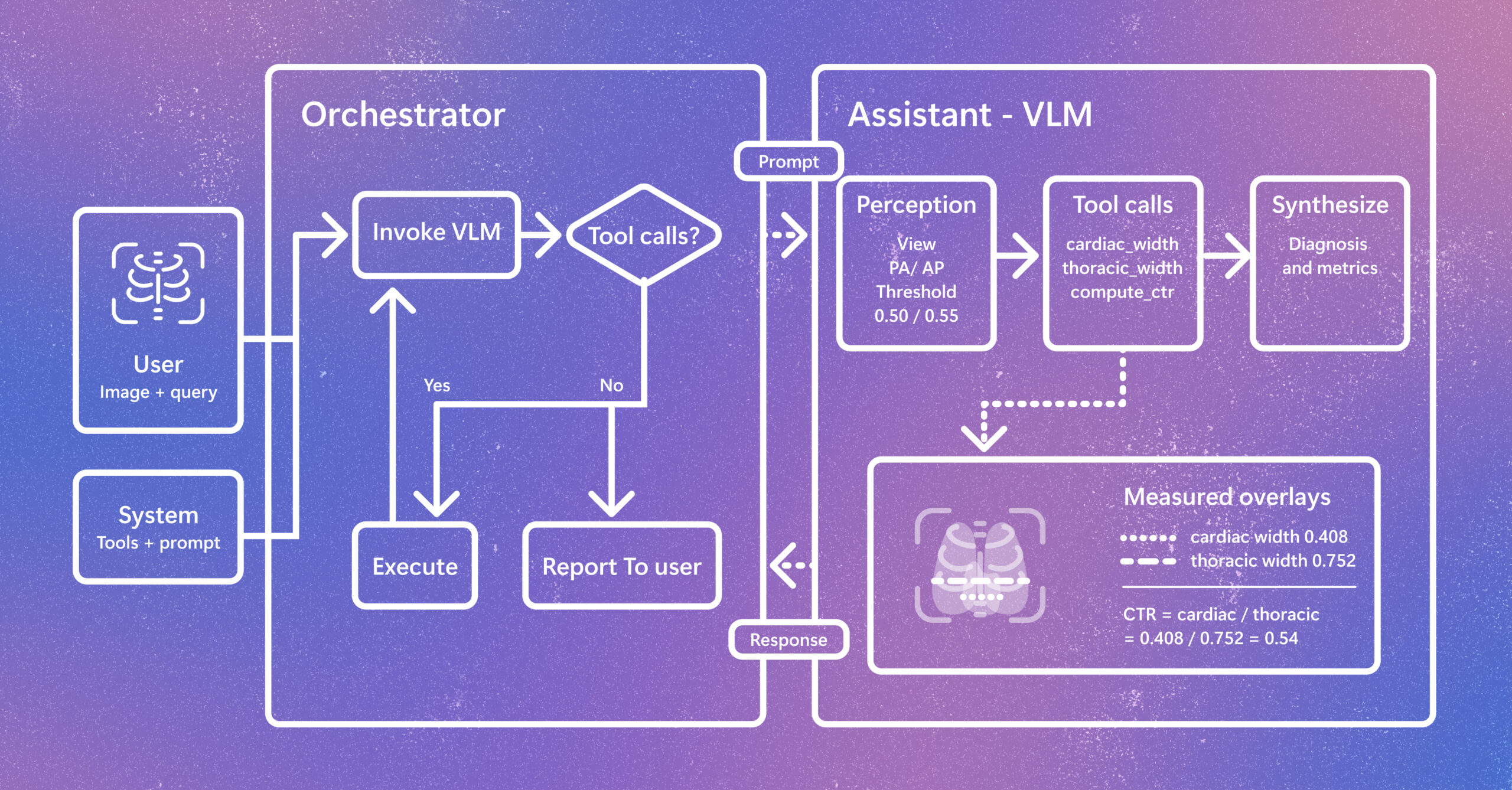
Radiology AI is evolving beyond report generation. CARE-X explores a unified approach that combines flexible reasoning, calibrated predictions, and measurement-based tools for chest X-ray interpretation. The post Introducing CARE-X: Towards Clinically Useful Radiology VLMs with Auxiliary Supervision, Reward-Aligned Learning, and Tool-Augmented Measurement appeared first on Microsoft Research.