Aug 2026· IEEE transactions on intelligent transportation systems (Print)· Vol 27, pp. 10207-10221· 0 citations· 71 references
Abstract
Bus passenger flow prediction is a crucial task in bus transportation management and optimization, characterized by strong spatiotemporal dependencies and influenced by external factors such as weather and holidays. However, existing methods face challenges in responding to sudden events, modeling dynamic changes in bus network topology, and improving model generalization. To address these issues, this paper proposes a graph transfer learning-based approach for bus passenger flow prediction. First, a dynamic graph neural network is used to construct the passenger flow network, and Framelet Transform along with Self-Expressiveness Regularization is applied for denoising, enhancing data quality. Second, an adaptive neighborhood-aware dynamic graph convolutional network is introduced, integrating random mask enhancement, hop count perception fusion, and multi-channel spatiotemporal feature extraction for accurate passenger flow modeling. Furthermore, a combination of source data and source free transfer learning is leveraged to optimize feature distribution alignment through pseudo-label generation, graph diffusion, and consistency loss. Finally, a GRU is used for passenger flow prediction, and extensive experiments on real-world datasets test the proposed method. Results demonstrate superior accuracy and generalization performance compared to existing state of the art (SOTA) models.

For the short-term passenger flow prediction task of urban rail transit, a deep learning model integrating temporal network, graph convolution, and attention mechanism is proposed that demonstrates higher accuracy and more stable generalization ability in the short-term passenger flow prediction task.
Yun-Feng Peng· International Conference on...· 0 citations
Accurate modeling of spatial dependencies is essential for short-term metro passenger-flow forecasting. However, relationships other than physical adjacency are difficult to represent in a graph and to incorporate into graph convolution. This paper therefore proposes BC-MGCN-DEGRU, a neural forecasting model that integ...
Yang Zhang, Dong-Rong Xin· Discover Computing· 0 citations
This paper designs a Dual-Branch Spatio-Temporal Graph Convolutional Network with Transformer with a robust loss function to suppress the effect of extreme outliers and proposes a feature-separation prediction method for bus arrival time.
Yuan-Yuan Zhi, Xu-Fei Zhuang, Ziheng Li et al.· Applied Sciences· 0 citations
The rapid growth in traffic volumes has increased the demand for traffic-flow forecasting models with stronger prediction capability. Traditional methods that rely on local feature extraction and static spatial graph construction can no longer fully meet these requirements. To address the short- and long-term fluctuati...
Hai Yan, Rui Jian, Cheng-Cheng Wang et al.· Algorithms· 0 citations
Reliable traffic flow forecasting is a core component of intelligent transportation systems; however, many current approaches are still unable to simultaneously model spatial interdependencies and long-term temporal correlations, particularly in cross-sea corridors that exhibit directional heterogeneity and pronounced...
Fan Jiang, Zhiyong Ma, Pumulo Mukozomba et al.· Applied Sciences· 0 citations
Experimental results on the public PEMS04 and PEMS08 datasets demonstrate that the proposed ESDG-ALSTM model significantly improves forecasting accuracy, confirming that ESDG-ALSTM is more sensitive to abrupt events and multimodal evolution patterns and can effectively enhance prediction performance in complex traffic...
Guozheng Li, Bai-Jing Wu, Ke Gao et al.· Frontiers of Computer Scienc...· 0 citations
Related blog posts
MIT News · Artificial Intelligence· news.mit.eduOct 13, 2026
Machine-learning networks can learn without detailed instructions from a designer. Those that do may offer insight into how the brain reorganizes itself during learning.
MIT News · Artificial Intelligence· news.mit.eduJul 15, 2026
Assistant Professor Pat Pataranutaporn describes a new interface that lets everyday users glimpse inside an AI's neural network before their chatbot ever says a word.
Microsoft Research Blog· microsoft.comJul 13, 2026
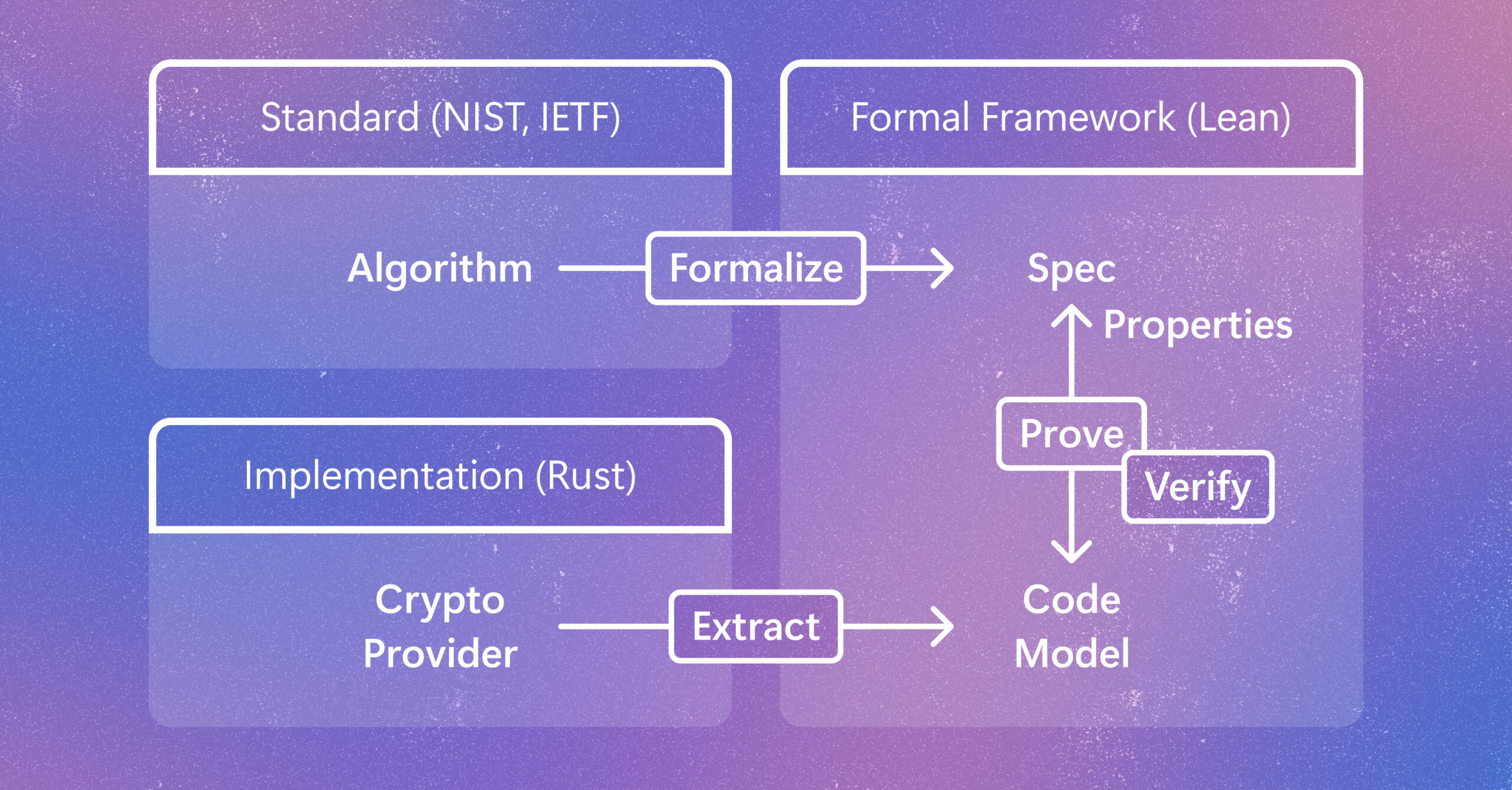
Cryptographic code supports vital protections in modern computing systems. Learn how a new method helps verify code as developers write it while preserving speed and adaptability as it gets implemented and evolves. The post Verifying Rust cryptography in SymCrypt, from standards to code appeared first on Microsoft Research.
MIT News · Artificial Intelligence· news.mit.eduJul 6, 2026
PhD student Rachel Sava, winner of the Envisioning the Future of Computing Prize, explores transformative improvements and dystopian risks of neural technology.
We use cookies to run the site and, with your consent, for analytics and to show ads.
See our Cookie Policy.