Restricted eigenvalue (RE) bounds govern stable recovery by norm-regularized estimators. For isotropic sub-Gaussian measurements, the benchmark sample size is $1+w(A)^2$, where $w(A)$ is the Gaussian width of the normalized descent cone. The COLT 2015 open-problem note (Banerjee et al., 2015) asked whether the same law follows for heavy-tailed designs from a uniform small-ball condition alone. We give an explicit and systematic negative answer to the general question as formulated there: the proposed law fails in its full dimension-free, arbitrary-set form, and the missing obstruction is simultaneous threshold occupancy. A constant-width polyhedral descent cone with fixed small-ball constants has zero empirical RE on every sample path up to half the ambient dimension. More generally, every finite range space admits exact threshold encoding in an arbitrarily narrow spherical cap and a lift to a full polyhedral descent-cone section. For every fixed threshold VC dimension $d$, as $\beta\downarrow0$, the sharp worst-case sample complexity is $\Theta(\beta^{-1}[d\log(1/\beta)+\log(1/\delta)])$. The separation persists under exact isotropy and all finite moments: on the same constant-width cone, Gaussian measurements succeed with $O(1+\log(1/\delta))$ samples, whereas an isotropic heavy-tailed design fails pathwise for $n\lesssim\sqrt{p/\log p}$. Gaussian smoothing yields an everywhere-positive $C^\infty$ density while retaining arbitrarily poor RE. Under isotropy, a distribution-free fallback governed by affine dimension times squared enclosing radius is sharp on this family.
This work studies subspace embeddings obtained by two normalized real Walsh transforms, two independent sign diagonals, and uniform coordinate sampling without replacement. The main result shows that the prescribed sample size $k=\min\{n,\lceil Cr/\varepsilon^2\rceil\}$, for a universal constant $C$, suffices to preser...
Banerjee, Chen, and Sivakumar asked at COLT 2015 whether a uniform small-ball condition on the rows of a random design matrix forces a restricted-eigenvalue lower bound whose sample complexity is governed by the ordinary Euclidean Gaussian width of an arbitrary spherical subset. We give a negative answer to the natural...
We establish an asymptotic theory for the Jones inverse-weighted kernel density estimator when length-biased observations form a strictly stationary short-range dependent sequence. The statistical difficulty is intrinsically composite: reciprocal weighting is singular at the origin, the normalizing mean is estimated fr...
We study high-dimensional random-matrix limits of Gaussian Kullback--Leibler unbalanced optimal transport (KL-UOT). Under equal marginal penalties, the covariance action admits an exact log-determinant representation in terms of a nonlinear ridge product, together with a positive-semidefinite extension that remains fin...
Exhaustive moment fitting in this constant-dimensional space produces a proper mixture and, together with the dimension-free moment characterization of Gaussian mixtures, achieves the optimal Hellinger rate in polynomial arithmetic time for every fixed $k$.
We study robust estimation of simple random tensors of arbitrary order $q\in\mathbb{N}$ under finite-moment assumptions and adversarial contamination. We propose the first robust estimator achieving near-optimal dimension-free statistical rates in this setting. The estimator attains the near-optimal corruption rate whe...
R. Oliveira, Zoraida F. Rico, Philip Thompson· 0 citations
Related blog posts
MIT News · Artificial Intelligence· news.mit.eduOct 2, 2026
Martin Trust Center Managing Director Bill Aulet introduces Dear Dreamer, a free platform for middle and high school students who want to learn about entrepreneurship.
Microsoft Research Blog· microsoft.comSep 30, 2026
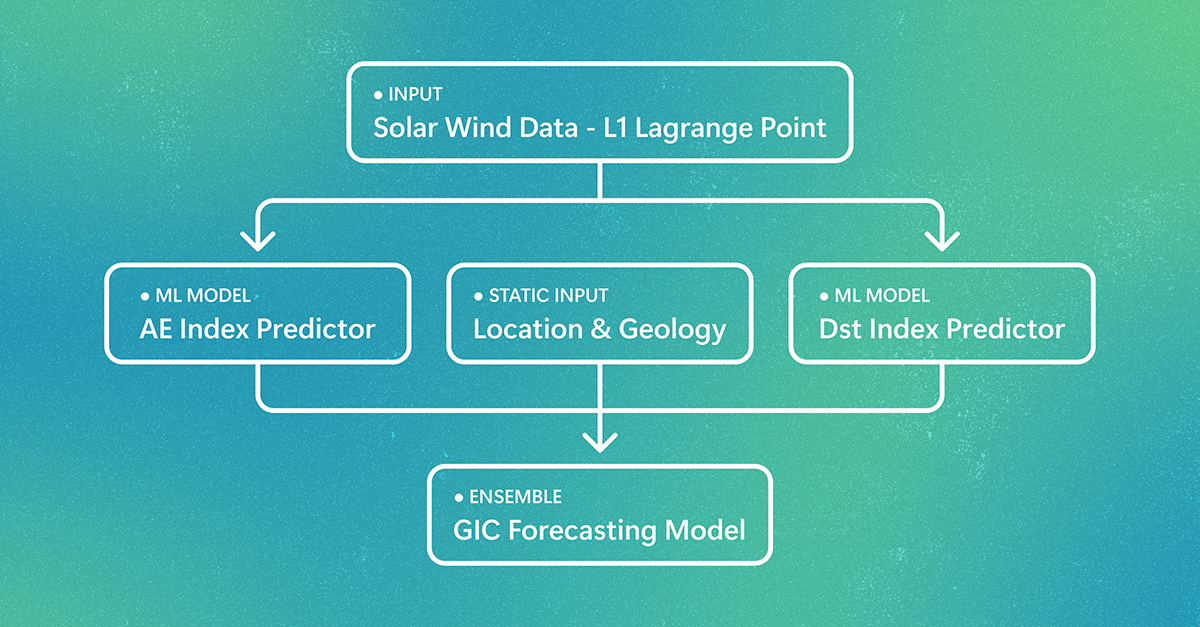
Extreme space-weather events can damage power systems on Earth and degrade GPS accuracy and satellite operations. A new machine learning system can predict where damage is likely to occur 30-60 minutes before a storm arrives. The post Forecasting space weather risks on power grids appeared first on Microsoft Research.
We use cookies to run the site and, with your consent, for analytics and to show ads.
See our Cookie Policy.