Skip to content

Pushing the (Decision) Boundaries: Dynamically Calibrating Differentially Private Noise to Explainability in Federated Learning

Sep 2026 · 0 citations · 49 references
Computer Science

TL;DR

XCal-FL is proposed, a closed-loop, explainability-driven local training algorithm for image classification in cross-silo FL that dynamically calibrates DP noise from three complementary signals, suggesting explainability is a distinct dimension of the privacy trade-off that cannot be inferred from utility alone, with implications for training and privacy-budget allocation in decision-critical applications.
Abstract

Federated Learning (FL) with Differential Privacy (DP) is increasingly adopted to preserve data confidentiality in distributed machine learning. However, DP noise distorts learned representations and degrades explanation fidelity, limiting differentially private FL where trustworthy explanations are required, such as assistive clinical diagnosis. Prior work adapted DP noise with static feature-importance signals, restricting explainability to post hoc analysis and precluding noise calibration to explanation quality during training. We propose XCal-FL, a closed-loop, explainability-driven local training algorithm for image classification in cross-silo FL that dynamically calibrates DP noise from three complementary signals: (1) prediction logit variations, measuring causal influence on model confidence, (2) counterfactual margins, capturing decision-boundary sensitivity, and (3) saliency concentration, quantifying spatial coherence of model attention, while enforcing formal DP guarantees via adaptive privacy accounting. Experiments on three medical imaging datasets across varying FL configurations show that XCal-FL yields more accurate and interpretable global models, improving predictive performance by over 10\% and explanation fidelity by up to 5$\times$ over static-noise FL, and outperforming state-of-the-art adaptive DP methods in fidelity. XCal-FL also achieves higher privacy-budget efficiency, turning each unit of cumulative privacy loss into larger gains in both accuracy and explanation fidelity. Our analysis further reveals that, unlike predictive performance, which scales roughly linearly with privacy loss, explanation fidelity exhibits non-linear dynamics. These findings suggest explainability is a distinct dimension of the privacy trade-off that cannot be inferred from utility alone, with implications for training and privacy-budget allocation in decision-critical applications.

View source

Similar papers

#federated learning Open access Sep 2026

Understanding Differential Privacy in Decentralized Federated Learning: A Controlled Privacy–Utility Comparison

Centralized Federated Learning (FL) enables collaborative model training without sharing raw data. Differential privacy (DP) is widely used to protect sensitive information in FL; however, its behavior in decentralized environments remains poorly understood. This study empirically compares centralized FL and sequential...

AlsharifHasan Mohamad Aburbeian, M. Fernández-Veiga, A. Fernández-Vilas et al. · 0 citations
#artificial intelligence Preprint Sep 2026

Efficient Active Auditing of Multi-Group Fairness with Bias Probes

Over the past decade, Machine Learning (ML) has been trained under dual objectives: minimizing prediction error via Empirical Risk Minimization (ERM) while controlling unfairness bias. In practice, however, fairness-aware training often yields limited improvements over standard ERM, making reliable post hoc auditing es...

Ayoub Ajarra, Debabrota Basu · 0 citations
Open access Sep 2026

Research on a Quantitative Evaluation Model for Privacy Computing Technology Selection

Data collaboration in finance and healthcare has become unavoidable, though seldom for lack of competing proposals. In practice, privacy-preserving technology selection remains a half-informed exercise—shaped as much by vendor narratives as by empirical evidence—with the boundaries between Federated Learning (FL) and S...

Cheng-Ming Li · 0 citations

Principled Bias Detection and Mitigation across the ML Data Lifecycle

This dissertation treats data bias as a first-class data management problem and develops principled frameworks for detecting and correcting it across the ML data lifecycle, introducing Uniform Bias (UB), an interpretable intersectional measure with formal guarantees, and an ILP-based mitigation framework that models co...

Unknown authors · 0 citations
2026

Decision Boundary Drift: A Security, Privacy, and Trust Risk of Continual Learning for Agentic AI in Edge Networks

Continual learning (CL) is a key paradigm that enables intelligent agents to operate autonomously in edge networks over the long term. However, continuous model updates can lead to catastrophic forgetting and representation instability in edge deployment scenarios, which may further induce Decision Boundary Drift (DBD)...

Kaixiang Yang, Yue-Bin Xu, Zhi-Hao Li et al. · 0 citations
Open access Aug 2026

Regulatory-Driven Federated Learning: A Multi-Objective Approach to Compliance and Ethical AI in Financial Systems

A regulatory-driven FL framework that treats compliance and fairness as first-class optimization objectives rather than as afterthoughts is proposed, and the results surface a known tension: enforcing demographic parity increases the equalized-odds gap, quantifying the price of fairness under differential privacy in fe...

J. Nalavade · 0 citations

Related blog posts

Microsoft Research Blog Sep 30, 2026

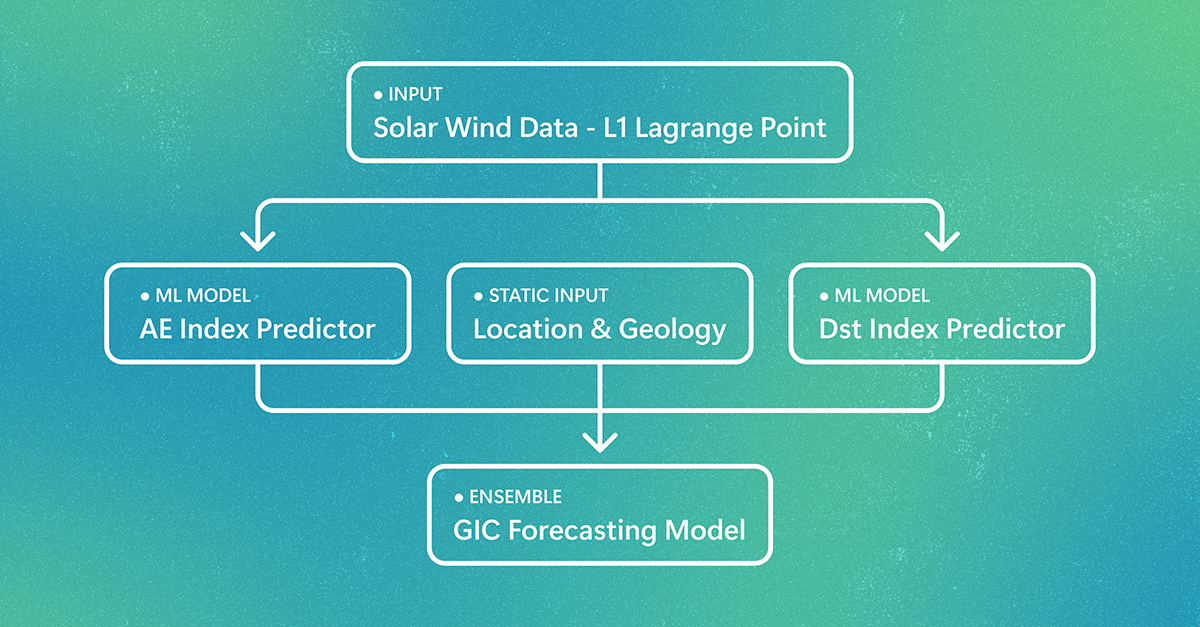
Forecasting space weather risks on power grids

Extreme space-weather events can damage power systems on Earth and degrade GPS accuracy and satellite operations. A new machine learning system can predict where damage is likely to occur 30-60 minutes before a storm arrives. The post Forecasting space weather risks on power grids appeared first on Microsoft Research.

We use cookies to run the site and, with your consent, for analytics and to show ads. See our Cookie Policy.