Skip to content

IDSPACE: A Novel Document Generator for Reliable Evaluation of Digital Identity Verification Systems [Extended Technical Report]

Sep 2026 · 0 citations · 44 references
Computer Science

TL;DR

This work introduces IDSpace, a new dataset consisting of high-quality synthetic documents across ten European ID types and proposes model-guided Bayesian optimization, which tunes generation parameters to maximize both visual similarity and prediction consistency with target-domain models given only a few samples from a target domain.

Abstract

As services move online, trust institutions such as banks, lenders, and governments must verify the identity of remote users. Fraud detection tools are widely available, but evaluating and fine-tuning them remains difficult because identity documents are sensitive and therefore scarce. Synthetic data generation offers a path forward, and demand is clear: our prior work in this area has been downloaded over $11{,}000$ times (aggregated from eight parts). We introduce IDSpace, extending this line of research in three directions. First, we propose model-guided Bayesian optimization, which tunes generation parameters to maximize both visual similarity and prediction consistency with target-domain models given only a few samples from a target domain. Second, we decouple user-specified metadata (demographics, fraud patterns, capture device) from automatically tuned control parameters (font styles, noise levels, image quality), allowing users to configure evaluations without low-level expertise. Third, we expand beyond template images to support scanned and mobile-captured documents. Experiments show IDSpace improves evaluation consistency by $15-45\%$ over baselines including CycleGAN, diffusion inpainting, and non-guided optimization, using only a few real samples, while improving training accuracy by up to $9\%$ and SSIM similarity with the target domain by $10\%$. We also released a new dataset consisting of $359{,}240$ high-quality synthetic documents across ten European ID types.

View source

Similar papers

Book Open access Oct 2026

Poster: Legal Imprints as an Identity Anchor for Web Measurement

Current measurements of Web infrastructure largely lack visibility into the commercial entities, or Digital Service Providers (DSPs), that operate individual domains. We present the first large-scale mapping of domains to their corresponding operating companies. Leveraging the imprint (Impressum) mandated by German and...

Gerrit Seifert, Ralph Holz · 0 citations
Open access 2026

Enhancing Phishing URL Detection Using a Two-Level Rule-Based Framework Combining Lexical and RDAP Registration Features

This study proposes and evaluates a lightweight, fully interpretable two-level rule-based framework that fuses lexical URL features with domain registration evidence retrieved through the Registration Data Access Protocol (RDAP), confirming that lexical and registration evidence fail independently.

Wan Afifie Aliff Bin Wan Abdullah, Zulkiflee Muslim, Haniza Nahar et al. · 0 citations
#artificial intelligence Preprint Oct 2026

AgentDoxx: Agentic Re-identification of Anonymized Text with Web Search

As Large Language Models (LLMs) gain tool use capabilities such as web search, they can retrieve and cross-reference public information, creating privacy risks beyond memorization. One manifestation is re-identification: linking an anonymized interview transcript to a named individual. Yet without ground-truth identiti...

Jia-Ning Wen, Tian-Shi Li · 0 citations
#artificial intelligence Review Sep 2026

Zero-Trust Authorization and Discovery for Enterprise MCP

LLM agents translate natural-language context, which may include attacker-controlled text, into privileged tool calls, so authorization must remain effective even when an agent is prompt-injected or adversarially steered. The Model Context Protocol (MCP) has become a widely adopted interface for this boundary, yet its...

Huang-Jian Li, Yu-Wei Wang, Srinivasan Manoharan · 1 citation
Book Open access Aug 2026

Sensitive Data Detection in Documents with LLMs

A systematic evaluation of several proprietary and open-source Large Language Models for sensitive entity extraction from documents and a form-filling pipeline that uses vision-capable LLMs to label form fields, generate realistic synthetic personas, and fill real blank forms, enabling reproducible evaluation across di...

Errita Xu, Stefan Larson, Kevin Leach · 0 citations
Review Open access Aug 2026

Recent Advances in Text Anonymization: A Systematic Review

This survey provides the first comprehensive and systematic review of text anonymization methods published between 2020 and 2025, covering 48 primary studies identified through a structured search and rigorous screening procedure and reveals a growing shift from identifier‐centric de‐identification toward context‐aware...

Marina Litvak, A. Jorge · 0 citations

Related blog posts

Microsoft Research Blog Aug 11, 2026

Introducing CARE-X: Towards Clinically Useful Radiology VLMs with Auxiliary Supervision, Reward-Aligned Learning, and Tool-Augmented Measurement

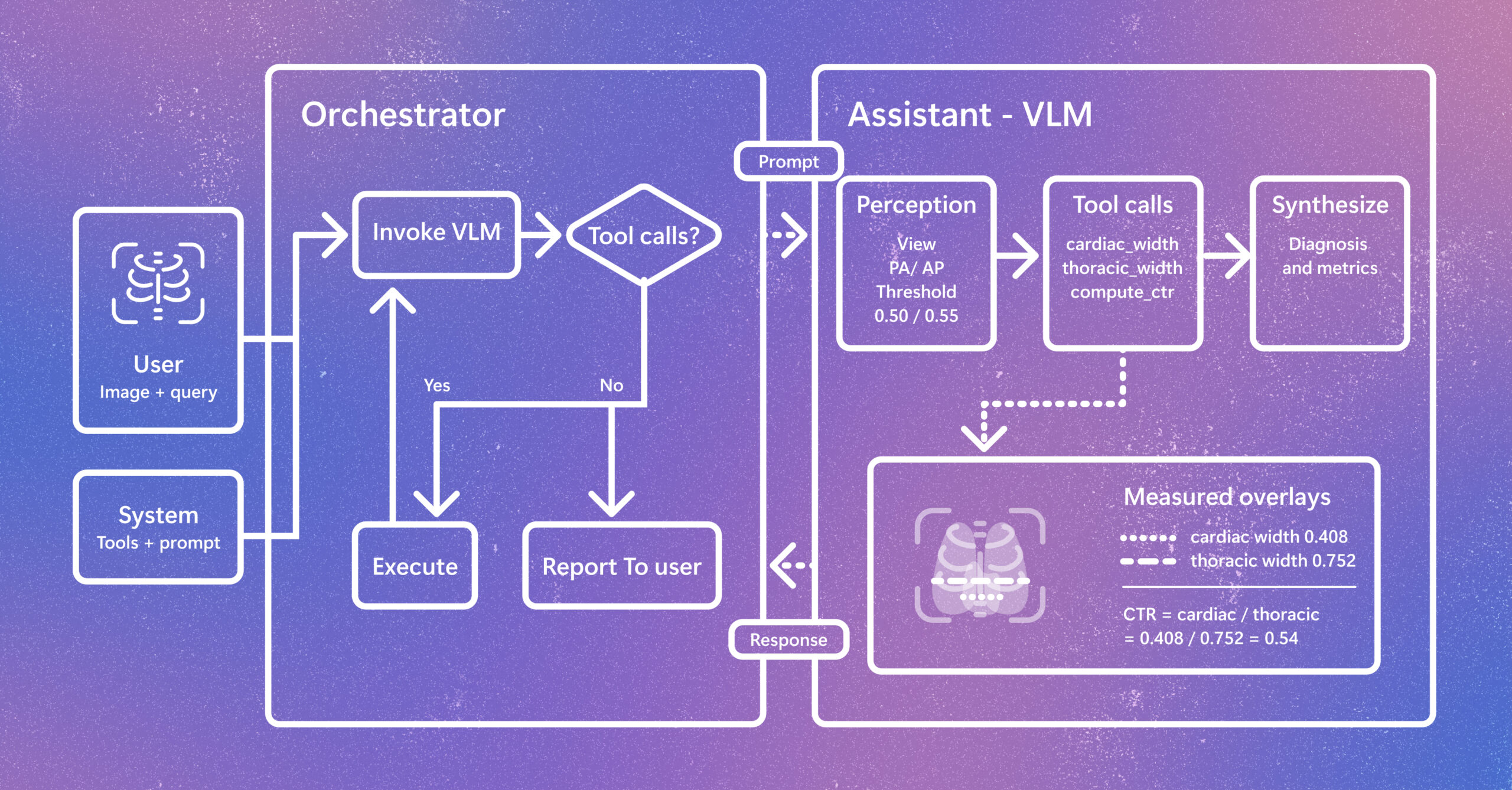
Radiology AI is evolving beyond report generation. CARE-X explores a unified approach that combines flexible reasoning, calibrated predictions, and measurement-based tools for chest X-ray interpretation. The post Introducing CARE-X: Towards Clinically Useful Radiology VLMs with Auxiliary Supervision, Reward-Aligned Learning, and Tool-Augmented Measurement appeared first on Microsoft Research.

We use cookies to run the site and, with your consent, for analytics and to show ads. See our Cookie Policy.
