Skip to content

Multi-Axis Max@K Reinforcement Learning for Representative Diversity in Text-to-Image Generation

Jul 2026 · arXiv.org · Vol abs/2607.14962 · 3 citations · 66 references
Computer Science

TL;DR

This work formalizes target-mode coverage as target-mode coverage, the coverage of a predefined set of semantically specified modes, and proposes multi-axis max@K, a group-based reinforcement learning objective for improving it in diffusion-based T2I models.

Abstract

Text-to-image (T2I) models can synthesize realistic, prompt-aligned images, yet samples generated for the same prompt often cover only a small subset of visually distinct modes. This limits diversity and, for person-centric prompts, can reflect or amplify demographic skew. We formalize this problem as target-mode coverage, the coverage of a predefined set of semantically specified modes, and propose multi-axis max@K, a group-based reinforcement learning objective for improving it in diffusion-based T2I models. Given a group of samples and one score per target mode, multi-axis max@K first takes the maximum score across samples for each mode and then sums these per-mode maxima. The resulting credit assignment gives a sample positive weight on a mode only when it raises that mode's group maximum, so different samples can contribute to different modes. We validate the credit-assignment mechanism on a synthetic mixture and on SD3.5-M with deterministic pixel-based color rewards, and then apply the same objective to perceived-appearance fairness. On held-out prompts, multi-axis max@K improves the Fairness Score by 0.23-0.36 over the base model under three automatic evaluators, while maintaining image quality and text alignment. Code is available at https://github.com/KuOnoda/multi-axis-maxk.

View source

Similar papers

Preprint Aug 2026

HPSD: Hybrid-Policy Self-Distillation for Text-Image-to-Video Diffusion Models

This work proposes Hybrid-Policy Self-Distillation (HPSD), a novel self-distillation framework where a single TI2V model acts as both teacher and student under different conditions: the teacher operates in TI2V mode with a high-quality first frame and an enhanced prompt, while the student runs in the base T2V mode with...

Jia-Zi Bu, Peng-Yang Ling, Yu-Jie Zhou et al. · 2 citations
Preprint Sep 2026

HyperErase: Scale-Calibrated Hypernetwork for Multi-Concept Erasure in Text-to-Image Models

This approach first reframes concept erasure as prompt-conditioned parameter amortization and trains a hypernetwork to map textual descriptions to prompt-specific LoRA updates, eliminating the need for per-prompt gradient optimization or manual LoRA merging.

Yi Sun, Xin-Hao Zhong, Zhi-Qi Zhang et al. · 0 citations
Open access Aug 2026

Structured Creative Evaluation for Text-to-Image Generative AI Models

A multi-dimensional image quality assessment framework for T2I tasks that can not only distinguish overall performance differences across models, but also provide interpretable results at the level of individual dimensions is proposed.

W.-C. Ma, Q. Zhang · 0 citations
Open access Oct 2026

MLCL: LVLM-guided multi-level contrastive learning for fake news detection

The widespread dissemination of multi-modal disinformation on social media platforms poses a serious threat to public safety and social stability, elevating the need for automated detection of such content. Although existing studies have started to incorporate multimodal data, effectively modeling cross-modal inter...

Jun Li, Ling-Hao Yan, Qing-Xu Liu et al. · 0 citations
Preprint Aug 2026

Concept Guidance: Precise, Training-Free Latent Control for Text-to-Image Generation

A novel notion of concept-wise mutual information is introduced and large, concept-dependent differences between individual layers are found, demonstrating that the generation of specific structures is localized in distinct parts of the network.

Nikolai Röhrich, Isabell Hans, F. Krause et al. · 0 citations
#machine learning Preprint Sep 2026

Unifying Distributional Training for One-Step Visual Generation

A unified theoretical framework is introduced that separates distribution modeling from matching discrepancy and connects global objectives to pointwise feature updates through Wasserstein gradient flow and motivates MGFlow, which models feature distributions with Gaussian mixtures at an adjustable granularity between...

Chi Zhang, Hao-Yan Shi, Yue-Yi Liu et al. · 2 citations

Related blog posts

Microsoft Research Blog Aug 11, 2026

Introducing CARE-X: Towards Clinically Useful Radiology VLMs with Auxiliary Supervision, Reward-Aligned Learning, and Tool-Augmented Measurement

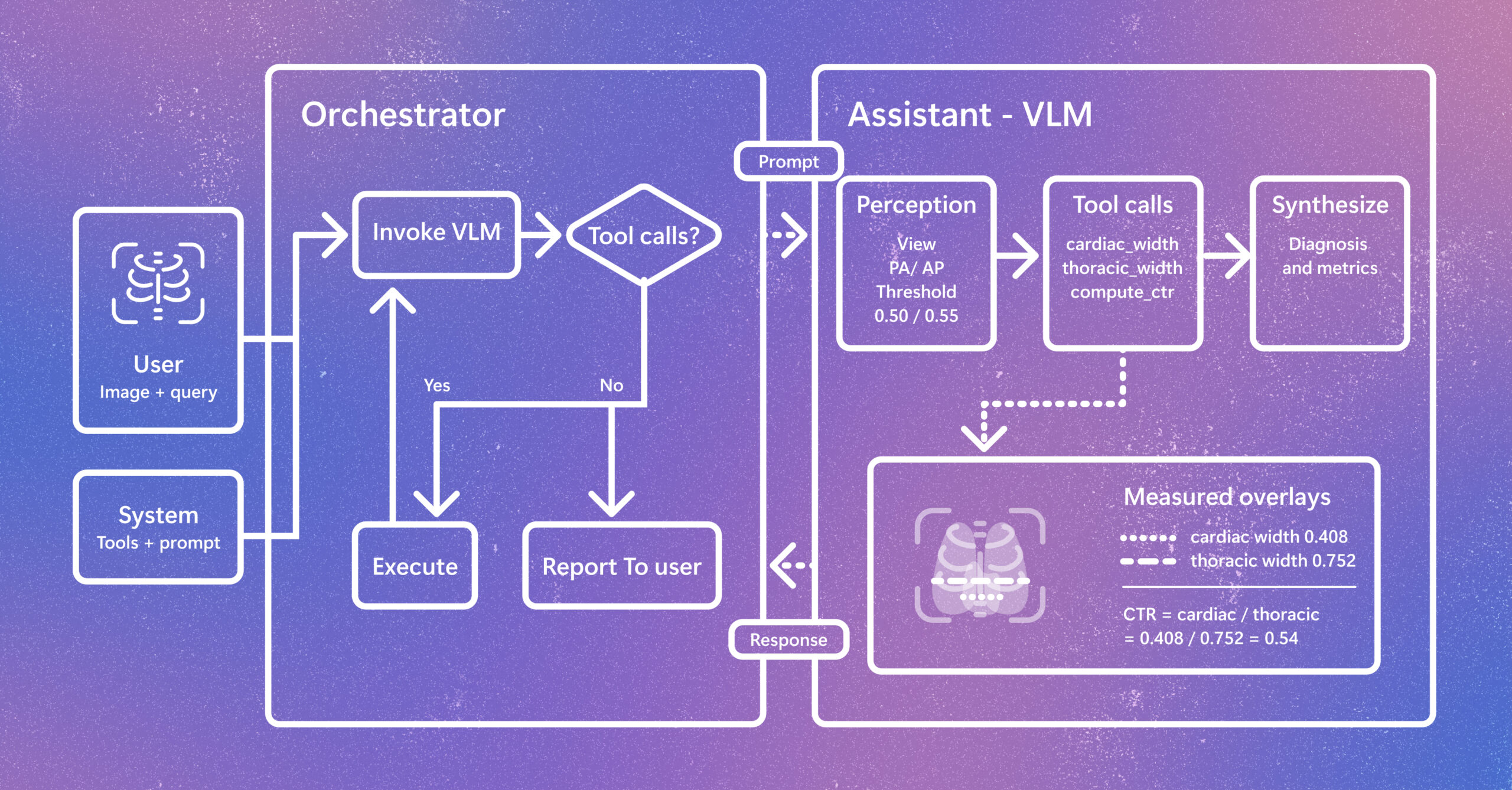
Radiology AI is evolving beyond report generation. CARE-X explores a unified approach that combines flexible reasoning, calibrated predictions, and measurement-based tools for chest X-ray interpretation. The post Introducing CARE-X: Towards Clinically Useful Radiology VLMs with Auxiliary Supervision, Reward-Aligned Learning, and Tool-Augmented Measurement appeared first on Microsoft Research.

We use cookies to run the site and, with your consent, for analytics and to show ads. See our Cookie Policy.
