Findings show that vulnerability is architecture-dependent rather than size-dependent, that individually neutral or beneficial constraints can combine to cause substantial degradation, and that compound-prompt testing should be standard in reliability assessment for LLM-assisted engineering pipelines.
Abstract
Large language models (LLMs) are increasingly used in software engineering pipelines for code generation, where production prompts often combine multiple constraints. This paper presents a full-factorial empirical study of how output formatting, persona assignment, and urgency framing jointly affect LLM code-generation reliability. We evaluate all 27 combinations in a controlled 3x3x3 design and decompose each compound condition into an additive prediction and a residual interaction term that captures super-additive degradation. The study uses all 164 HumanEval+ problems across five OpenAI models from the GPT-4o family, GPT-4.1 family, and o3-mini, yielding 22,140 greedy-decoding evaluations. A format-aware extraction pipeline separates formatting failures from reasoning failures, and significance is assessed with McNemar's test, odds ratios, and 95% confidence intervals. Results show that compound constraints can produce architecture-dependent degradation not predictable from single-factor experiments. The GPT-4o family exhibits consistent super-additive effects, with pass@1 reductions 3-12 percentage points beyond additive predictions; the largest interaction is -12.2 pp on GPT-4o-mini for JSON + expert persona + moderate urgency. JSON combinations generally produce larger interactions than XML. In contrast, the GPT-4.1 family is largely resistant, while o3-mini shows a qualitatively different pattern in which structured output constraints can improve performance. These findings show that vulnerability is architecture-dependent rather than size-dependent, that individually neutral or beneficial constraints can combine to cause substantial degradation, and that compound-prompt testing should be standard in reliability assessment for LLM-assisted engineering pipelines.

Large language models (LLMs) have shown promise in automated unit test generation, yet the effectiveness of prompt engineering for small, locally-deployed open-source models remains poorly understood. Following growing interest in local LLM deployment to mitigate data exposure risks, this paper presents a controlled em...
M. Tran, Khang Mai· International Conference on...· 0 citations
A systematic empirical study of multiple strategies for context enrichment and optimization in LLM‐based unit test generation, conducted on seven diverse projects (three open‐source and four proprietary industrial systems), encompassing 261 distinct methods establish this optimized context strategy as a cost‐effective...
Javier Ferrer, Francisco Chicano· Expert systems· 0 citations
It is shown that prompt engineering "ages" in a model-family-specific way: Newer GPT models exhibit diminishing or even negative marginal gains from structured prompting, suggesting that instruction-following and reasoning scaffolds are increasingly internalized, whereas Qwen models continue to benefit substantially fr...
A. Rudyk, Julian Oertel, Regina Hebig· 0 citations
Whether measurable linguistic properties of prompts can predict LLM performance before inference is investigated, enabling low-cost prompt selection and refinement, validated on binary requirements classification targeting F1, F2, precision, and recall.
Quim Motger, Alessio Miaschi, Xavier Franch et al.· 1 citation
An RL-guided repair loop is used as an instrumented diagnostic environment to separate correct-candidate availability from candidate selection and establish general superiority of RL, a selector, or an output representation to single-file Python algorithmic repair on QuixBugs.
ISO-grounded enrichment improves static quality proxies and reduces sensitivity to prompt wording, but does not reliably improve functional correctness; for error handling, extended-test pass rate decreases, suggesting tension between defensive coding patterns and exact-output benchmarks.
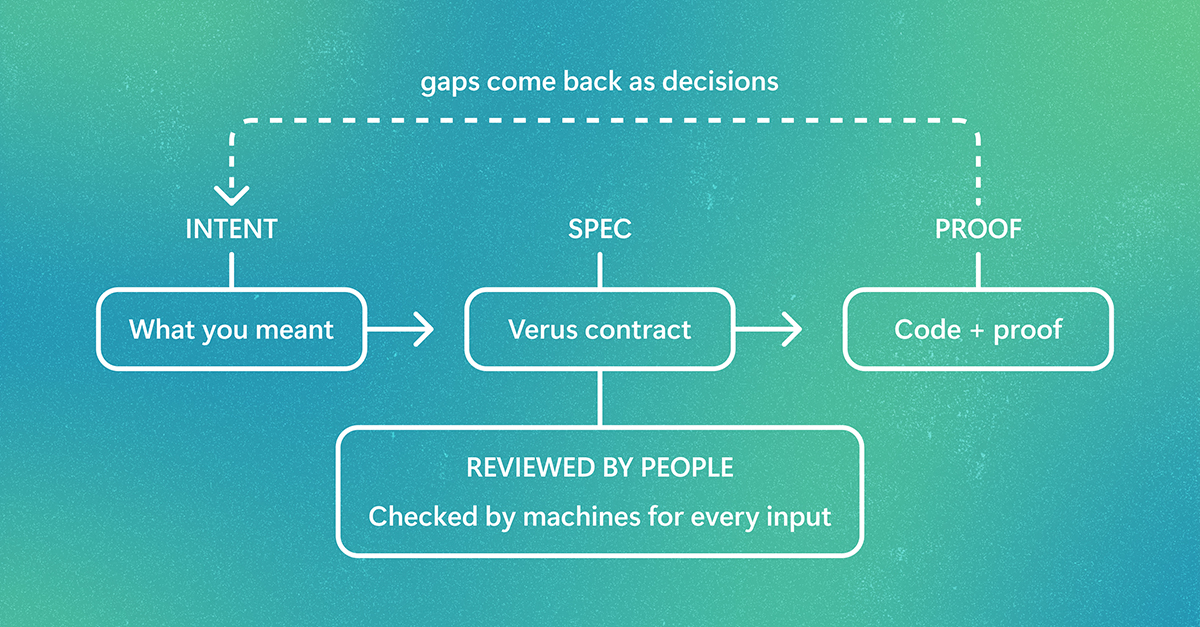
AI agents can generate code at a scale that’s hard for humans to review line-by-line. PDD Kit helps ensure the code is doing what the developer intended by creating formal specifications and testing against them. It converts developer intent into a Verus specification, proves AI-generated code meets it for every input, and uses tests where proofs aren't practical. Developers review intent, not every line. The post Formally verifying agent-written full-stack web apps with PDD Kit appeared first o…
Is your company’s AI sovereign? A practical guide for CIOs on AI vendor lock-in, EU Data Act switching, cloud sovereignty, and testing your exit plan before you need it. The post Sovereignty Is the Option to Leave appeared first on GPT-Lab.
Microsoft Research Blog· microsoft.comOct 30, 2026
Evaluating Microsoft Copilot at enterprise scale requires test data that captures the full complexity of real organizations, yet real enterprise data contains sensitive information that cannot be used for evaluation under any circumstances. The post From synthetic enterprise data evaluations to real Microsoft Copilot AI confidence appeared first on Microsoft Research.
We use cookies to run the site and, with your consent, for analytics and to show ads.
See our Cookie Policy.