The last-epoch rate is proved, matching the known quadratic lower bound in its $(n,K)$-dependence, and it is shown that the $\beta_\star^2/K^2$ splitting term is unavoidable and obtain a matching lower bound up to logarithms in the stated constant-stepsize regime.
Abstract
We study stochastic gradient descent with random reshuffling for finite sums \[ F(x)=\frac1n\sum_{i=1}^n f_i(x). \] For fresh reshuffling with a constant component stepsize, if each $f_i$ has an $L$-Lipschitz gradient and the average $F$ is $\mu$-strongly convex with a Lipschitz-continuous Hessian, we prove the last-epoch rate \[ \mathbb E[F(y_K)-F(x_\star)] =\widetilde O\!\left(T^{-2}+n^2T^{-3}\right), \qquad T=nK, \] matching the known quadratic lower bound in its $(n,K)$-dependence. The components may be nonconvex, and no componentwise Hessian continuity or separate bounded-iterate assumption is required. More generally, a $\nu$-H\"older-continuous average Hessian adds only $\widetilde O(n^{1+\nu}T^{-2-2\nu})$, so every $\nu\ge 1/2$ preserves the quadratic rate. Under convex components, a decreasing-stepsize result removes the large-epoch requirement and recovers the same two-term scale once $nK$ exceeds the condition-number scale. We also analyze epoch-wise ProxRR for $\mathcal P=F+\psi$. Writing $x^\dagger$ for the composite minimizer and $\beta_\star=\|\nabla F(x^\dagger)\|$, we prove \[ \mathbb E\|y_K-x^\dagger\|^2 =\widetilde O\!\left( \frac{\beta_\star^2}{K^2} +T^{-2}+n^2T^{-3} +n^{1+\nu}T^{-2-2\nu} \right). \] For $\nu\ge 1/2$, we show that the $\beta_\star^2/K^2$ splitting term is unavoidable and obtain a matching lower bound up to logarithms in the stated constant-stepsize regime.
We determine the exact worst-case value, at every horizon $N\geq7$, of the smallest queried gradient norm generated by Nesterov's fast gradient method on smooth convex functions. Let $t_0=1$ and $t_{k+1}=(1+\sqrt{1+4t_k^2})/2$, and let $x_0,\ldots,x_N$ denote the points at which the method evaluates gradients. For ever...
We study the time-uniform convergence of the raw iterate of standard stochastic gradient descent (SGD) for unconstrained smooth convex objectives. We prove that, under standard noise assumptions, the time-uniform convergence rate gets arbitrarily close to $\sqrt{\log n / n}$ but never reaches it. More specifically, we...
Let $\pi(\mathrm{d} x)\propto e^{-U(x)}\, \mathrm{d} x$ on $\mathbb{R}^d$, where $U$ is continuously differentiable and $m$-strongly convex with a globally $L$-Lipschitz gradient, $0<m\leq L<\infty$, and $\kappa=L/m$. Fixed-step Metropolis-adjusted Langevin algorithm (MALA) has known warm-start mixing-time upper bounds...
Fix a target accuracy $\varepsilon$, a gradient-noise level $s$, and a horizon $N$. We wish to design algorithms which minimize the probability of observing a suboptimality gap which exceeds the target accuracy, i.e., $\mathcal{E}_N = -\log \sup_{f,P} \mathbb{P}_P(f(x_A) - f_\star \ge \varepsilon)$, with the noise law...
We study a deterministic family of sharpness-aware minimization methods for smooth nonconvex functions. The perturbation is $$ y_k=x_k+\rho\, \frac{\nabla f(x_k)}{\norm{\nabla f(x_k)}^\alpha}, \qquad 0\leq\alpha\leq 1, $$ so that its effective radius is $\rho\norm{\nabla f(x_k)}^{1-\alpha}$. For $0<\alpha\leq1$, we giv...
It is proved the matching lower bound $\Omega(n+\sqrt n\,\Delta L_{\max}/\varepsilon^2)$ for randomized IFO algorithms, including those that choose component indices and query points from the full preceding history, and PAGE and SPIDER are minimax optimal up to universal constants under individual and mean-squared smoo...
Martin Trust Center Managing Director Bill Aulet introduces Dear Dreamer, a free platform for middle and high school students who want to learn about entrepreneurship.
Microsoft Research Blog· microsoft.comSep 30, 2026
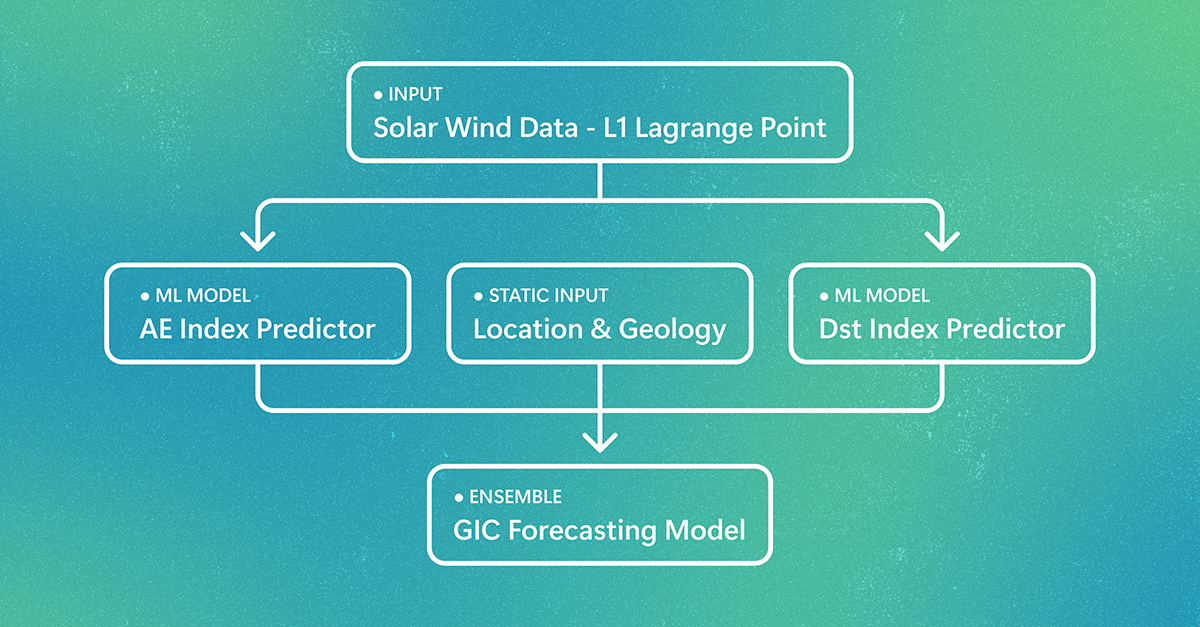
Extreme space-weather events can damage power systems on Earth and degrade GPS accuracy and satellite operations. A new machine learning system can predict where damage is likely to occur 30-60 minutes before a storm arrives. The post Forecasting space weather risks on power grids appeared first on Microsoft Research.
We use cookies to run the site and, with your consent, for analytics and to show ads.
See our Cookie Policy.