Explainability is increasingly seen as a crucial requirement in AI-based medical diagnosis, particularly in safety-critical clinical decision-making. Most existing explainability methods in healthcare operate in a post-hoc manner and are predominantly designed for unimodal data, which limits their applicability in increasingly prevalent multimodal diagnostic settings. This paper addresses the problem of self-explainable multimodal diagnosis by formulating it within the information bottleneck (IB) framework. We propose a unified learning paradigm that jointly optimizes predictive performance and modality-specific explainability by identifying the most informative elements inside each modality that contribute to diagnostic decisions. To enable tractable and stable optimization, we employ a matrix-based Renyi's $\alpha$-order entropy functional under the assumption of sufficiently expressive encoders. Extensive experiments on representative medical datasets spanning heterogeneous modalities demonstrate that the proposed method consistently achieves strong diagnostic performance, including an absolute accuracy improvement of 9.1 percentage points on the iCTCF dataset. Moreover, the learned explanations provide transparent and modality-aware insights into feature relevance, thereby improving both the explainability and generalization.
This publication proposes a definition and a classification of agile software development approaches and analyses ten software development methods that can be characterized as being "agile" against the defined criterion.
P. Abrahamsson, O. Salo, Jussi Ronkainen et al.· arXiv.org· 727 citations· ⚡54
The study shows that agile practices improve both informal and formal communication, but indicates that, in larger development situations involving multiple external stakeholders, a mismatch of adequate communication mechanisms can sometimes even hinder the communication.
M. Pikkarainen, Jukka Haikara, O. Salo et al.· Empirical Software Engineeri...· 401 citations· ⚡48
The results indicate that software engineering work practices are chosen opportunistically, adapted and configured to provide value under the constrains imposed by the startup context.
Nicolò Paternoster, Carmine Giardino, M. Unterkalmsteiner et al.· Information and Software Tec...· 394 citations· ⚡54
The possibility of inferring high-dimensional data inference in a model that consists of a prior and an auxiliary differentiable constraint given some additional information is considered, thereby allowing a range of potential applications in adapting models to new domains and tasks.
Alexandros Graikos, Esmeralda S. Whitammer, N. Jojic et al.· Neural Information Processin...· 316 citations· ⚡15
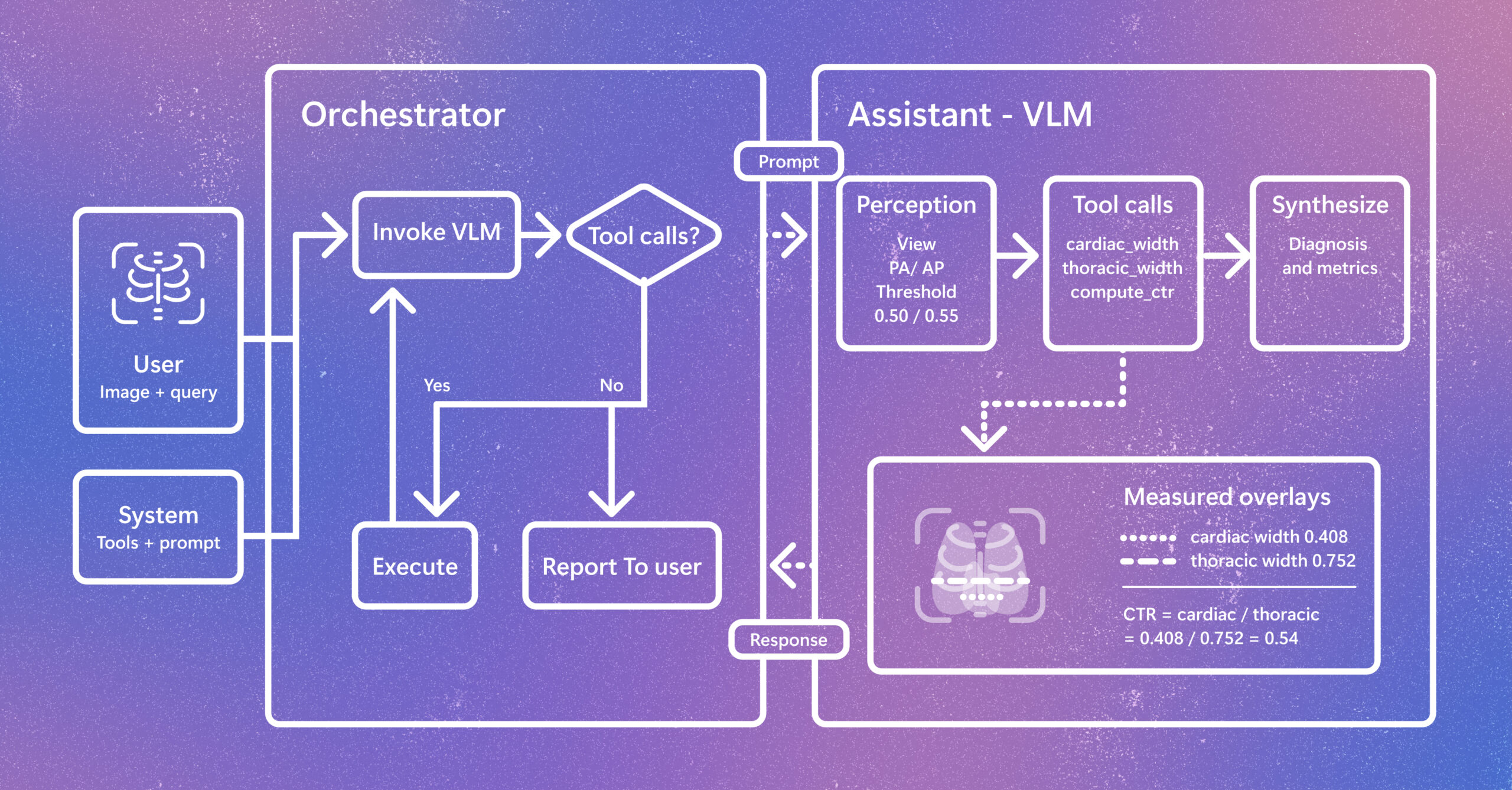
Radiology AI is evolving beyond report generation. CARE-X explores a unified approach that combines flexible reasoning, calibrated predictions, and measurement-based tools for chest X-ray interpretation. The post Introducing CARE-X: Towards Clinically Useful Radiology VLMs with Auxiliary Supervision, Reward-Aligned Learning, and Tool-Augmented Measurement appeared first on Microsoft Research.
Computer scientist, entrepreneur, and philanthropist will collaborate with the MIT Schwarzman College of Computing to advance AI and scientific discovery.
MIT News · Artificial Intelligence· news.mit.eduSep 9, 2026
A weeklong summer workshop brought higher education faculty to campus to explore how AI and machine learning materials can be adapted for their classrooms.
We use cookies to run the site and, with your consent, for analytics and to show ads.
See our Cookie Policy.