Skip to content

Uncertainty quantification using conformal prediction for mesh-based simulations.

Aug 2026 · Philosophical transactions. Series A, Mathematical, physical, and engineering sciences · Vol 384 2327 · 1 citation · 36 references
Medicine

TL;DR

A post hoc conformal prediction framework is developed that wraps any trained graph neural network (GNN) surrogate to produce prediction sets with coverage near-nominal levels, and componentwise adaptive (CW-Adaptive) method emerges as the robust universal choice.

Abstract

Machine learning surrogates for computational fluid dynamics (CFD) achieve substantial speedups but lack uncertainty quantification (UQ). We develop a post hoc conformal prediction (CP) framework that wraps any trained graph neural network (GNN) surrogate to produce prediction sets with coverage near-nominal levels. Using MeshGraphNet on two benchmark datasets-CylinderFlow (2D velocity) and Flag (3D position), we compare five prediction-set geometries. Our componentwise adaptive (CW-Adaptive) method emerges as the robust universal choice, achieving 28%-55% smaller prediction sets versus ℓ2 balls across both datasets at 95% confidence while maintaining near-nominal coverage. By learning per-component scales from domain-aware features, CW-Adaptive captures both spatial heterogeneity and anisotropic error structure-outperforming Mahalanobis ellipsoids that provide only modest gains (approx. 14%) when residuals are anisotropic and inflate sets otherwise. All methods achieve coverage within 2%-3% of nominal despite distribution drift in mesh-based simulations that violates exchangeability assumption. This article is part of the theme issue 'Advancing uncertainty quantification in AI systems'.
Read PDF

Similar papers

#artificial intelligence Preprint Sep 2026

Predictive Uncertainty for Neural CAE Surrogates

This work investigates how established uncertainty quantification approaches behave when adapted to geometry-conditioned neural surrogates and examines whether predicted uncertainties have credible magnitudes, identify locations with larger prediction errors, respond to unfamiliar inputs, and remain informative for der...

Kaustubh Tangsali, M. A. Nabian, Kelvin Lee et al. · 0 citations
#machine learning Preprint Sep 2026

ONE CYLinder: A Benchmark for Graph-Based Surrogate Modeling of Unsteady Bluff-Body Flows

Graph-based surrogate models offer a promising route to accelerate computational fluid dynamics (CFD) simulations on unstructured meshes. However, their development is limited by the scarcity of benchmark datasets spanning multiple flow regimes and standardized protocols for long-horizon autoregressive prediction. We i...

Théodore Michel, A. Campos, A. Dujardin et al. · 0 citations
#machine learning Preprint Sep 2026

Adaptive Conformal Prediction for Image Regression Models with Application to an Inertial Confinement Fusion Emulator

Uncertainty quantification is critical in scientific machine learning, where black-box, image-based models are increasingly deployed in high-stakes settings. In many such applications, model outputs inform costly decisions, yet most methods provide only point estimates without quantifying predictive uncertainty. This c...

Carrie J. Lei-Cramer, Michael S. Jones, Laura J. Wendelberger · 0 citations
Preprint Sep 2026

Multivariate conformal uncertainty propagation in multitask atomistic simulation: Successes and pitfalls

Machine learning has become the standard tool for the design of interatomic potentials which balance efficiency and accuracy, but uncertainty quantification remains an open problem. Multiscale simulations introduce an additional challenge: robust uncertainty quantification across scales. Even within one scale, computat...

Katharine Fisher, M. Herbst, J. Kermode et al. · 0 citations
Preprint Aug 2026

Dimension Bridging for 3D RANS with Neural Network Accelerated Gaussian Functional Regression

In many computational science and engineering problems, repeatedly solving fully resolved physics-based models to design for a quantity of interest (QoI) can quickly become intractable, requiring the use of low-fidelity models to predict the same QoI but introduce errors where some features are neglected or are otherwi...

Wesley Lao, Thomas Scott, T. Bui-Thanh et al. · 0 citations
#artificial intelligence Preprint Aug 2026

APPSolver: Adaptive Patch Partitioning for Point-Wise Ship Flow Prediction on Unstructured Meshes

APPSolver is introduced, a point-wise flow-prediction framework built around Adaptive Patch Partitioning (APP), a deterministic quadtree representation for fixed two-dimensional horizontal slices extracted from ship CFD simulations, characterized as a compact spatial representation with an explicit accuracy--efficiency...

Wen-Hua Huo, Feng-Lei Han, Wang-Yuan Zhao et al. · 0 citations

Related blog posts

Microsoft Research Blog Jul 13, 2026

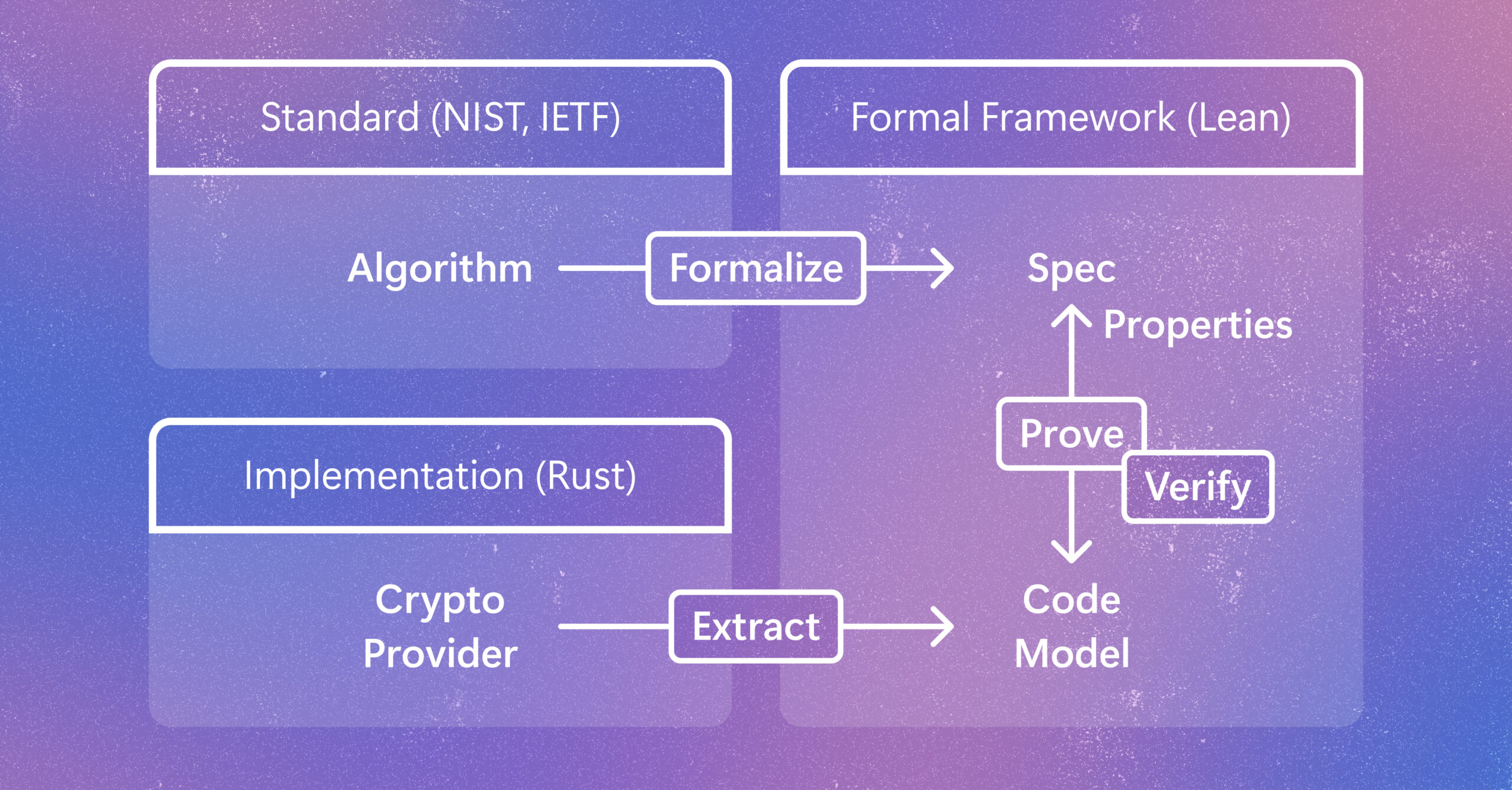
Verifying Rust cryptography in SymCrypt, from standards to code

Cryptographic code supports vital protections in modern computing systems. Learn how a new method helps verify code as developers write it while preserving speed and adaptability as it gets implemented and evolves. The post Verifying Rust cryptography in SymCrypt, from standards to code appeared first on Microsoft Research.

We use cookies to run the site and, with your consent, for analytics and to show ads. See our Cookie Policy.