Skip to content

High-dimensional dynamic coupled graph spectral physics-informed neural network for power system prediction

Aug 2026 · International Conference on Artificial Intelligence, Big Data and Electrical Automation · Vol 14319, pp. 143190P - 143190P-5 · 0 citations · 10 references
Engineering

TL;DR

A novel framework termed as High-Dimensional Dynamic coupled Graph Spectral Physics-Informed Neural Network (HDGSPINN), which introduces a Spatiotemporal Graph Spectral Attention (STGSA) mechanism to capture complex spatiotemporal dependencies.

Abstract

The reliable operation of power transmission and transformation systems faces unprecedented challenges due to the large-scale integration of renewable energy and increasingly complex power loads. While traditional data-driven models have shown potential, they often act as "black boxes" lacking physical interpretability. Physics-Informed Neural Networks (PINNs) offer a solution by embedding physical laws into the learning process, yet they struggle with the dynamic topologies and multi-physics coupling inherent in modern power grids. To address these challenges, we propose a novel framework termed as High-Dimensional Dynamic coupled Graph Spectral Physics-Informed Neural Network (HDGSPINN). The proposed method introduces a Spatiotemporal Graph Spectral Attention (STGSA) mechanism to capture complex spatiotemporal dependencies. Furthermore, a Hierarchical Multi-Physics Deep Coupling (HMPDC) module unifies electrical dynamics, 3D high-fidelity thermal fields, and physical aging models. To ensure training stability across diverse physical constraints, we design an advanced Gradient Dynamic Balance and Conflict Resolution (GDB-CR) loss strategy. Comprehensive experiments on the PowerGraph benchmark dataset demonstrate that HDGSPINN achieves state-of-the-art performance across both node-level and graph-level prediction tasks.
View source

Similar papers

Open access Sep 2026

Multi-graph interactive oil production prediction network integrating physics priors and data-driven approaches

In the digital transformation of smart oilfields, accurate oil production prediction is essential for optimizing production strategies. However, the production process is a complex nonlinear system involving coupled electrical, fluid, and thermodynamic domains where sensor data is high-dimensional and noisy. Traditiona...

Yan-Hong Wang, Fei Wang, Xiao-Ming Bao et al. · 0 citations
Sep 2026

Power system transient stability assessment via physics-informed graph convolutional networks

Transient Stability Assessment is the first line of defense for the safe and stable operation of power grids, which is decisive for ensuring the continuity of power supply and reducing system operational risks. Addressing the challenges that traditional time-domain simulation methods have low computational efficiency a...

Xiao-Xiao Lu, Bao-Hua Sun, Bin Zhang et al. · 0 citations
Open access Oct 2026

Physics-informed sparse deep neural networks for ultra-fast solar power forecasting and frequency response support in ancillary service markets

The rising penetration of solar photovoltaic (PV) systems into the current power grid leads to large variations and uncertainties, which are key challenges to frequency stability and reliable auxiliary services. In this research, a novel Physics-Informed Sparse Deep Neural Network (PI-SDNN) framework is proposed for...

Asit Mohanty, A. Ramasamy, S. Mohanty et al. · 0 citations
Open access Aug 2026

Graph-Structured Physics-Informed Deep Operator Network for Simulating Hydrodynamics of Tidal River Networks

This study proposes a surrogate model, Graph-Structured Physics-Informed Deep Operator Network (GS-PI-DeepONet), to simulate two-dimensional hydrodynamics in a tidal river network. The model was coupled with Graph Convolutional Networks (GCNs) for spatial feature extraction and Long Short-Term Memory (LSTM) network for...

Lei Fang, Yuan-Hao Xiao, Jiao Yuan et al. · 0 citations
Open access Aug 2026

Long Short-Term Memory Network and Graph Embedding to Analyze Distributed Photovoltaic Output Characteristics

A hybrid spatiotemporal prediction framework integrating an improved Long Short-Term Memory (LSTM) network with dynamic graph embedding for deep feature mining and coordinated forecasting and offers methodological support for intelligent electromagnetic energy management and resilient smart power systems is proposed.

S. Wan, J. Tan, Teng Luo et al. · 0 citations
Open access Sep 2026

Physics-Informed Machine Learning Framework for Robust Renewable Energy Forecasting in High-Altitude Isolated Power Systems

High-altitude isolated power systems characterized by hybrid run-of-river hydropower and distributed solar photovoltaic installations face severe operational instability due to localized microclimatic volatility. Managing this instability is fundamentally hindered because standard data-driven forecasting methods optimi...

S. Tavarov · 0 citations

Related blog posts

Microsoft Research Blog Jul 13, 2026

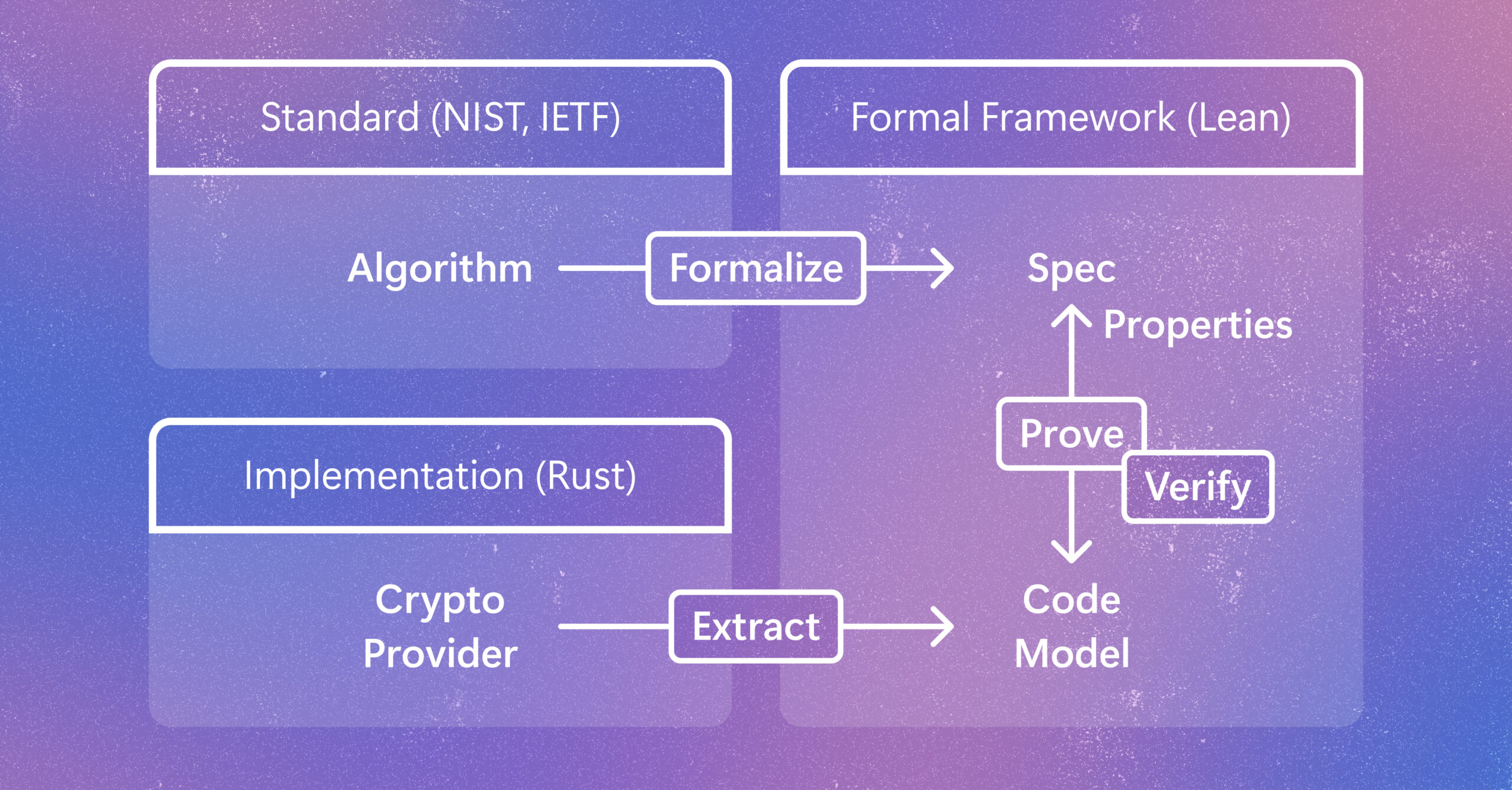
Verifying Rust cryptography in SymCrypt, from standards to code

Cryptographic code supports vital protections in modern computing systems. Learn how a new method helps verify code as developers write it while preserving speed and adaptability as it gets implemented and evolves. The post Verifying Rust cryptography in SymCrypt, from standards to code appeared first on Microsoft Research.

We use cookies to run the site and, with your consent, for analytics and to show ads. See our Cookie Policy.