Skip to content
#graph neural networks Review Open access

Multi-Source Heterogeneous Data Fusion in Smart Industrial Systems: Intelligent Monitoring, Predictive Quality Assessment, and Fault Diagnosis for Safer Operations

Aug 2026 · Journal of Intelligent Decision Making and Information Science · 0 citations · 64 references

TL;DR

In this paper, it was concluded that MSHDF is a radical paradigm shift in operational intelligence that can be applied in manufacturing, energy, transportation, and infrastructure fields.
Abstract

The rapid growth of connected devices, intelligent sensors, and digital record-keeping systems has made modern industrial facilities simultaneously data-rich yet insight-poor. At the heart of solving this paradox is Multi-Source Heterogeneous Data Fusion (MSHDF) the systematic integration of streams of data, which are dissimilar in format, sampling rate, dimensionality, and physical meaning, into one, coherent, and practical layer of knowledge. The current review paper is an in-depth analysis of MSHDF in three high-impact application domains: (1) Intelligent Process Monitoring, which combines real-time structured sensor data with unstructured operator data records to detect operational anomalies earlier and more reliably than single-source methods; (2) Predictive Quality Assessment, which integrates spectroscopic measurement data with operational condition data record to predict final product or output quality without costly offline testing; and (3) Fault Diagnosis and Safety, which leverages uncertainty quantification and explainability approaches in data fusion pipelines to build trustworthy and human-interpretable safety monitoring systems. The review compares the data-level, feature-level and decision-level of fusion architectures and surveys core algorithms such as Bayesian networks, deep multimodal networks, graph neural networks and natural language processing models. Among the major issues, the heterogeneity of data, the interpretability of models, sensor drift, and limited fault-labelled data are discussed. Future opportunities such as digital twins, physics-informed neural networks, federated learning, and more are discussed. In this paper, it was concluded that MSHDF is a radical paradigm shift in operational intelligence that can be applied in manufacturing, energy, transportation, and infrastructure fields.

Read PDF

Similar papers

2026

Data-driven fault detection and diagnosis in automated manufacturing systems

Data-driven methods, in contrast to traditional reactive ones, make use of continuous sensor data streams to anticipate anomalies before they can result in critical failures using advanced analytics, thereby improving responsiveness and efficiency in the system.

V. K. Nassa · 0 citations
#explainable ai Open access Sep 2026

A Reliable Data Fusion and Predictive Maintenance Framework of Industrial Internet of Things Using Explainable Artificial Intelligence: Improving Resilience and Fast Recovery in Future Manufacturing Systems

INTRODUCTION: Due to the development of the Industrial Internet of Things (IIoT), it has been possible to make the predictive maintenance of the manufacturing industry using data. Nevertheless, recent developments in manufacturing systems are prone to higher levels of disruptions caused by sensor degradation, data anom...

Yi-Ting Bai · 0 citations
Open access Sep 2026

Digital twin-driven edge–cloud collaborative remote fault diagnosis and intelligent predictive maintenance for critical hydropower equipment

To address the problems of lagging remote monitoring, complex fault mechanisms, and inefficient maintenance decisions for key equipment in hydropower stations, this paper proposes a remote diagnosis and intelligent maintenance method based on edge-cloud collaboration and digital twin-driven approaches. A layered archit...

Dong Yang, Zhi-Le Jiang, Kai Zheng et al. · 0 citations
Conference Aug 2026

Multi-level data fusion and machine learning in intelligent risk control: an automated risk assessment framework

For scenarios such as industrial equipment monitoring and cybersecurity protection where risk events have high complexity and real-time requirements, a multi-level data fusion and machine learning-driven automated risk assessment framework is proposed. The framework integrates sensor time-series data, system logs, and...

Wen-Na Guo, Yong Yang · 0 citations

Related blog posts

Microsoft Research Blog Jul 13, 2026

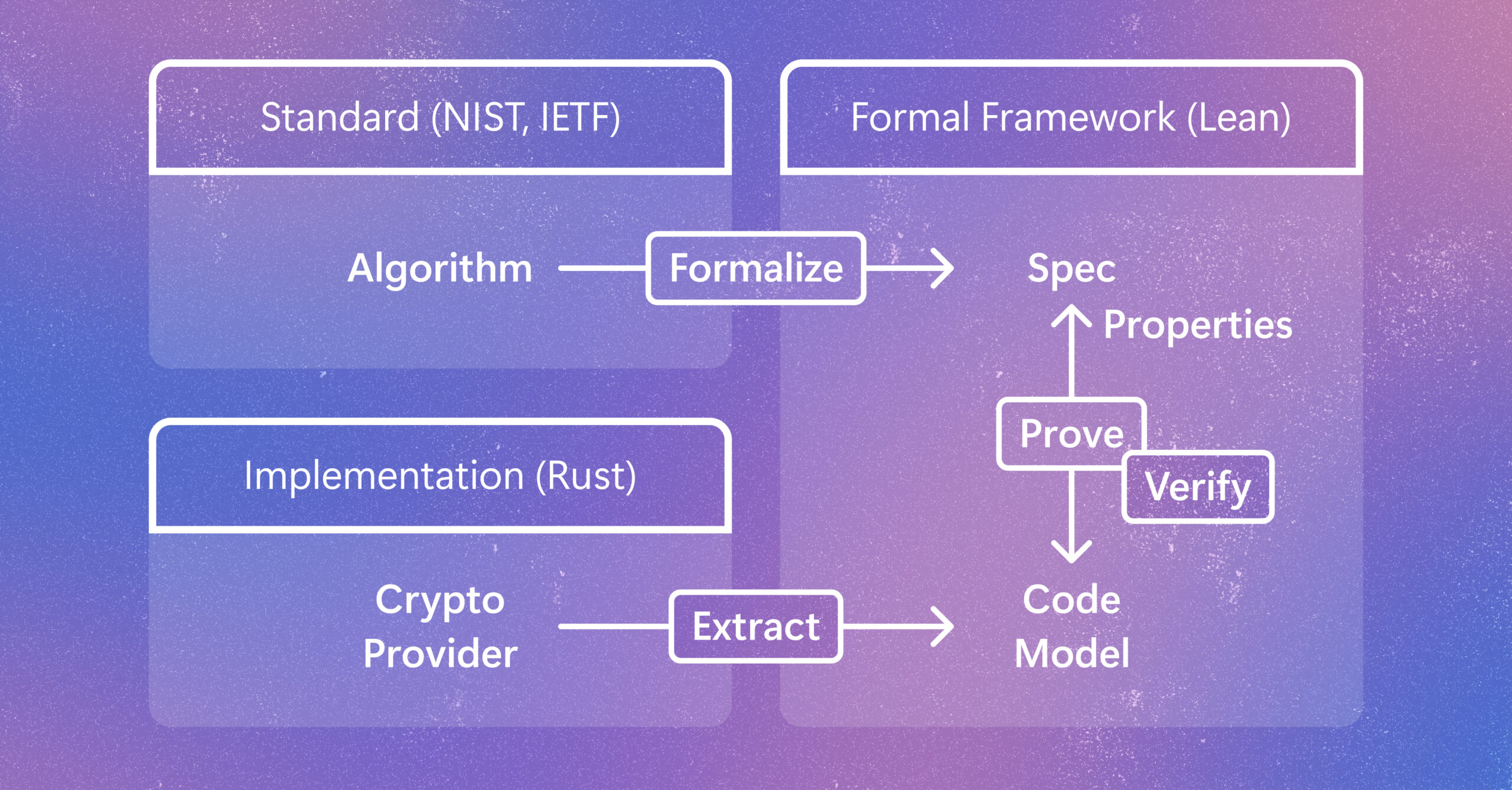
Verifying Rust cryptography in SymCrypt, from standards to code

Cryptographic code supports vital protections in modern computing systems. Learn how a new method helps verify code as developers write it while preserving speed and adaptability as it gets implemented and evolves. The post Verifying Rust cryptography in SymCrypt, from standards to code appeared first on Microsoft Research.

We use cookies to run the site and, with your consent, for analytics and to show ads. See our Cookie Policy.