Skip to content
#explainable ai #edge computing Review Open access

ARTIFICIAL INTELLIGENCE-DRIVEN QUALITY CONTROL IN MODERN MANUFACTURING SYSTEMS

Sep 2026 · International Journal of African Sustainable Development Research · 0 citations

Abstract

Quality control is a fundamental function of manufacturing because product conformity, process stability, customer satisfaction and operational efficiency depend on the ability of manufacturers to detect and prevent deviations from specified requirements. Conventional quality-control practices, although effective in many applications, frequently depend on manual inspection, statistical process control and rule-based decision-making, which may be inadequate for highly customised, high-speed and data-intensive production environments. The emergence of artificial intelligence (AI), machine learning (ML), deep learning (DL), computer vision, industrial Internet of Things (IIoT), edge computing and digital twins has created new opportunities for transforming quality control from a predominantly reactive activity into a predictive and autonomous manufacturing function. This paper examines the application of AI-driven quality control in modern manufacturing systems through a critical review of recent literature. The paper discusses AI-enabled visual inspection, predictive quality, process monitoring, anomaly detection, defect classification, intelligent metrology, predictive maintenance and closed-loop quality control. Particular attention is given to the integration of AI with Industry 4.0 technologies and the implications for production efficiency, waste reduction, process capability and decision-making. The paper also identifies major challenges, including data scarcity, model explainability, algorithmic generalisation, cybersecurity, computational requirements, system integration and workforce readiness. A conceptual framework for AI-driven quality control is proposed, linking data acquisition, intelligent analytics, quality prediction, decision support and corrective action. The paper concludes that AI should not be viewed simply as a replacement for human inspection but as an intelligent layer that augments engineering knowledge and enables manufacturing systems to anticipate, diagnose and correct quality problems. Future research should emphasise explainable, robust, resource-efficient and human-centred AI systems capable of operating reliably in real industrial environments.

Read PDF

Similar papers

#computer vision Review Sep 2017

Agile Software Development Methods: Review and Analysis

This publication proposes a definition and a classification of agile software development approaches and analyses ten software development methods that can be characterized as being "agile" against the defined criterion.

P. Abrahamsson, O. Salo, Jussi Ronkainen et al. · 727 citations · ⚡54
#computer vision Jun 2008

The impact of agile practices on communication in software development

The study shows that agile practices improve both informal and formal communication, but indicates that, in larger development situations involving multiple external stakeholders, a mismatch of adequate communication mechanisms can sometimes even hinder the communication.

M. Pikkarainen, Jukka Haikara, O. Salo et al. · 401 citations · ⚡48
#machine learning Review Open access Oct 2014

Software development in startup companies: A systematic mapping study

The results indicate that software engineering work practices are chosen opportunistically, adapted and configured to provide value under the constrains imposed by the startup context.

Nicolò Paternoster, Carmine Giardino, M. Unterkalmsteiner et al. · 394 citations · ⚡54

Related blog posts

Microsoft Research Blog Sep 29, 2026

Introducing Quine: An AI research system designed for the complexity of biology

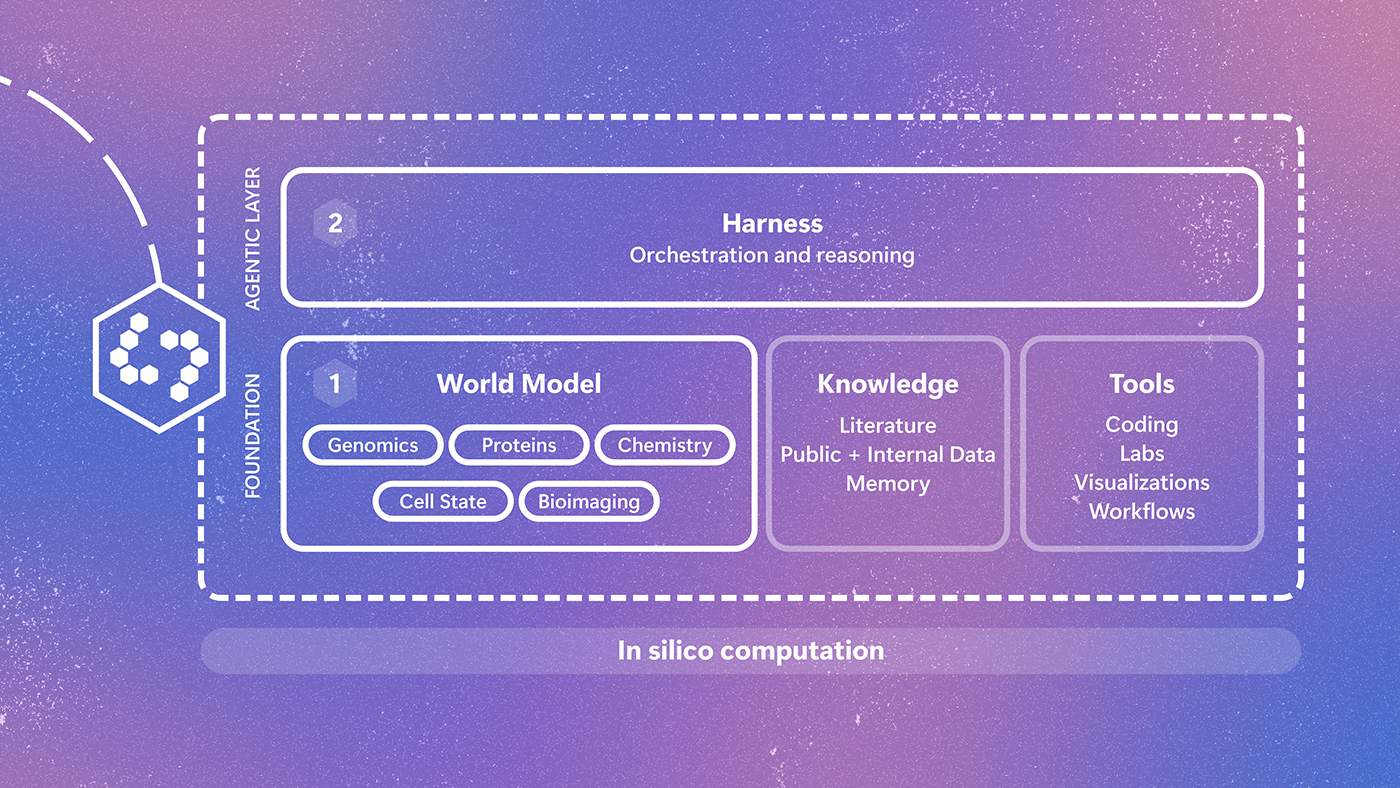
Biology doesn't operate in silos, and neither should the AI representation of it. Quine is an early-stage research effort to create a multimodal world model of biology. By connecting insights across biological scales and modalities, Quine helps scientists computationally search a space far larger than intuition allows and prioritize hypotheses before they reach the lab. Experimental results provide important feedback, helping researchers sharpen future research directions. The post Introducing Q…

GPT-Lab Sep 17, 2026

Beyond Prompt Engineering: The Role of Tacit Knowledge in Software Engineering

AI is making software generation faster, but speed does not remove the need for expertise. As more work is delegated to AI, tacit knowledge may become one of the most important human advantages in software engineering. The post Beyond Prompt Engineering: The Role of Tacit Knowledge in Software Engineering appeared first on GPT-Lab.

We use cookies to run the site and, with your consent, for analytics and to show ads. See our Cookie Policy.