Representing a 3D scene as multi-view images allows 2D VLMs to reason in 3D by reusing priors from pre-training, sidestepping the scarcity of annotated 3D data. However, it produces thousands of redundant visual tokens whose cost grows with every view. Existing visual token pruners fall into two families, each limited in the 3D multi-view setting. Learned importance methods rank tokens by attention or encoder features; because redundancy here is fundamentally spatial, they keep near-duplicate tokens from a few prominent regions and leave most of the scene unrepresented. Voxelization methods improve spatial coverage but cannot enforce an exact token budget and saturate as multi-view observations overlap in 3D, capping retention well below the target. We show that spatial coverage is associated with 3D reasoning performance and introduce CoVeR, a deterministic, training-free selector that uses only token coordinates, with no learned signals. CoVeR selects tokens that collectively cover every region of the scene, and solves the limitations of both families: it enforces an exact per-scene budget, breaks the voxelization saturation plateau, and avoids the near-duplicate selections of learned importance. Extensive experiments show CoVeR outperforms prior SOTAs on all three 3D reasoning benchmarks and generalizes as a plug-and-play module tested across four VLMs. Notably, with only $\approx$8% of visual tokens, it preserves 93.5% of full-token performance, surpassing SOTA by 3.9 percentage points on average across benchmarks.
This publication proposes a definition and a classification of agile software development approaches and analyses ten software development methods that can be characterized as being "agile" against the defined criterion.
P. Abrahamsson, O. Salo, Jussi Ronkainen et al.· arXiv.org· 727 citations· ⚡54
The study shows that agile practices improve both informal and formal communication, but indicates that, in larger development situations involving multiple external stakeholders, a mismatch of adequate communication mechanisms can sometimes even hinder the communication.
M. Pikkarainen, Jukka Haikara, O. Salo et al.· Empirical Software Engineeri...· 401 citations· ⚡48
The results indicate that software engineering work practices are chosen opportunistically, adapted and configured to provide value under the constrains imposed by the startup context.
Nicolò Paternoster, Carmine Giardino, M. Unterkalmsteiner et al.· Information and Software Tec...· 394 citations· ⚡54
The possibility of inferring high-dimensional data inference in a model that consists of a prior and an auxiliary differentiable constraint given some additional information is considered, thereby allowing a range of potential applications in adapting models to new domains and tasks.
Alexandros Graikos, Esmeralda S. Whitammer, N. Jojic et al.· Neural Information Processin...· 316 citations· ⚡15
It is proved that any global minimizer of the trajectory balance objective can define a policy that samples exactly from the target distribution, and empirically demonstrate the benefits of the trajectories balance objective for GFlowNet convergence, diversity of generated samples, and robustness to long action sequenc...
Esmeralda S. Whitammer, Moksh Jain, Emmanuel Bengio et al.· Neural Information Processin...· 302 citations· ⚡60
Related blog posts
Microsoft Research Blog· microsoft.comAug 11, 2026
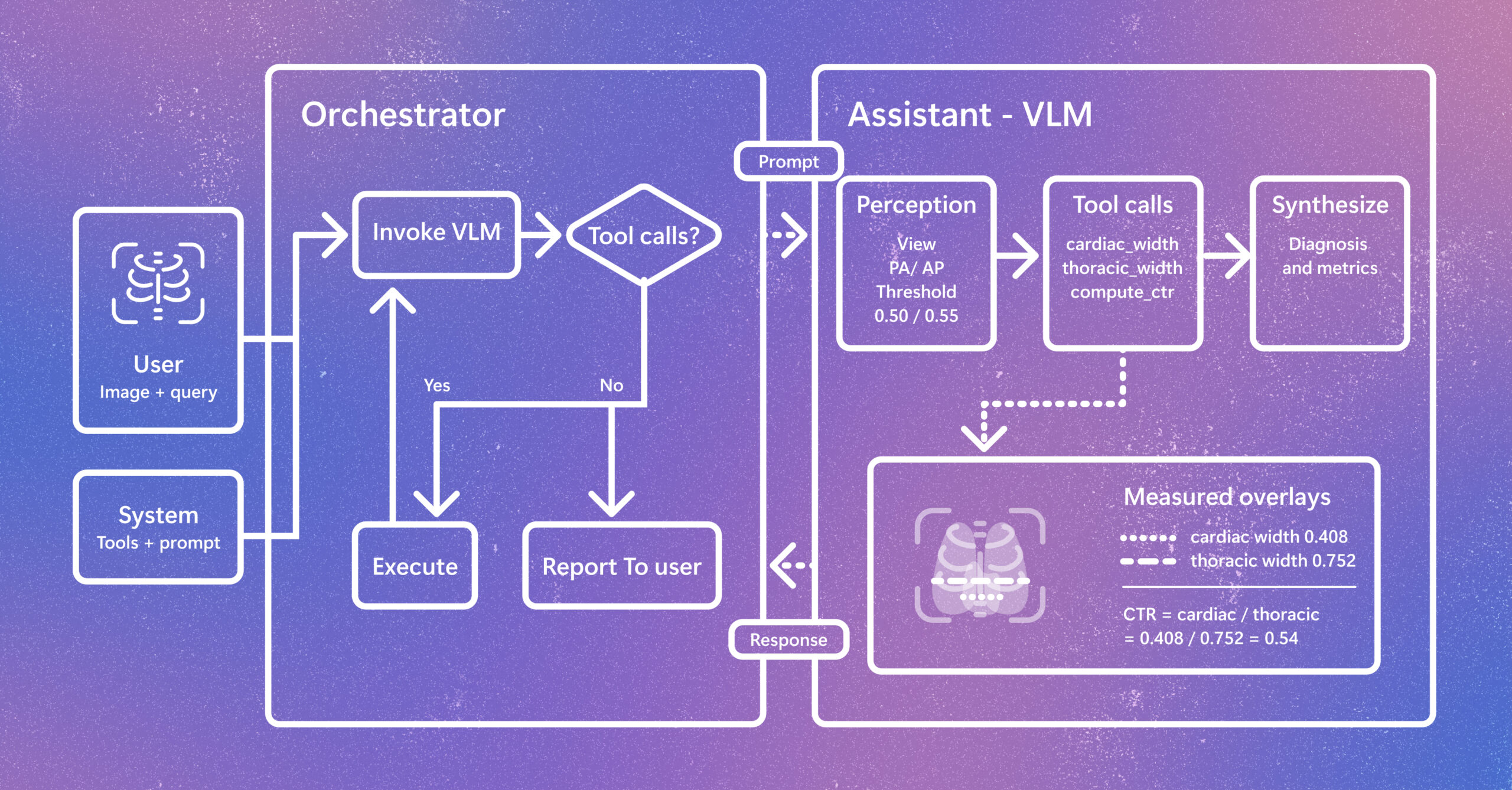
Radiology AI is evolving beyond report generation. CARE-X explores a unified approach that combines flexible reasoning, calibrated predictions, and measurement-based tools for chest X-ray interpretation. The post Introducing CARE-X: Towards Clinically Useful Radiology VLMs with Auxiliary Supervision, Reward-Aligned Learning, and Tool-Augmented Measurement appeared first on Microsoft Research.
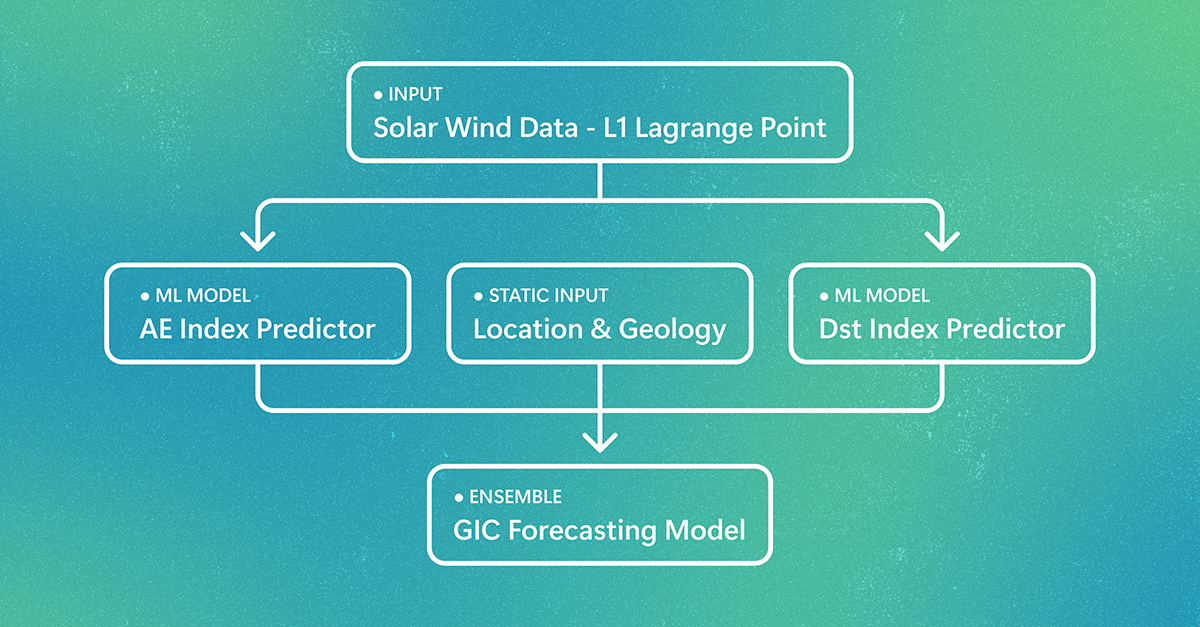
Extreme space-weather events can damage power systems on Earth and degrade GPS accuracy and satellite operations. A new machine learning system can predict where damage is likely to occur 30-60 minutes before a storm arrives. The post Forecasting space weather risks on power grids appeared first on Microsoft Research.
MIT News · Artificial Intelligence· news.mit.eduSep 29, 2026
Professor Sherry Turkle’s new book, “Artificial Intimacy,” offers a withering critique of chatbots and the antisocial dynamics she believes they encourage.
We use cookies to run the site and, with your consent, for analytics and to show ads.
See our Cookie Policy.