Skip to content

Formalising and Implementing Grassroots Social Contracts: From Legal Text to Grassroots Platforms (Full Version)

Sep 2026 · 1 citation · 65 references
Computer Science

Abstract

Two centuries ago Pierre-Joseph Proudhon envisioned a social contract that is (1) an agreement of man with man; (2) reciprocal; (3) imposing no obligation upon the parties except that which results from their personal promise; (4) subject to no external authority; (5) freely accepted and signed by all the participants; (6) of the nature of a contract of exchange. He also envisioned a property of social contracts, analogous to a property of digital platforms we term grassroots: that one could"make a contract with all, as ... with some"; digitally, that a grassroots platform can have multiple instances, which may coalesce by mutual consent. We define grassroots social contracts as social contracts meeting these conditions and that (7) people are free to deal with each other; and (8) there is no external register of people. We show that a grassroots social contract can be transformed into a working grassroots platform through an abstraction cascade, from the contract text to formal act schemas, verified syntactically to be grassroots, and then to volition-guarded multiagent atomic transactions. Act schemas are a formal language for the acts the contract describes, each naming the parties'roles, which of them must will the act, and its precondition and effect at each role. Any contract written in this language meets the eight conditions, provided it is syntactically grassroots, satisfying three decidable conditions, Introduction, Provenance and Volition. We prove that the protocol realising a syntactically grassroots contract is grassroots, and volitionally so. Clauses of a grassroots social contract are of three legal types: a breach of an enforced clause is impossible with a correct implementation; a breach of an attested or undertaken clause can be taken to court, with signed evidence for an attested clause. We illustrate them with a grassroots social graph and grassroots currencies.


View source

Similar papers

Review Open access Sep 2026

THE LEGALITY OF SOCIAL GATHERING: BETWEEN TRADITION, LAW, AND DISPUTES

Social Gathering is a socio-economic tradition deeply rooted in Indonesian society, serving as a form of mutual cooperation and a means of saving money. However, with the changing times, the practice has transformed into online formats involving increasingly large sums of money, thereby triggering various disputes such...

Bonita Izwany · 0 citations
Open access Oct 2026

Governance-by-signifier and the far-right politics of “woke” in the European Parliament

Far-right actors in the European Parliament increasingly use “woke” as a catch-all term for very different political conflicts. Debates over gender, migration and climate are often folded into a single story about ideological excess and unwanted interference from Brussels. This article develops the concept of governa...

Georgios Samaras, V. Tsagkroni · 0 citations
Open access Sep 2026

Ethical Foundations of Exchange: A Thematic Synthesis of Micro-Conduct of Market Participants in the Holy Quran

Markets depend on both informal institutions (norms and religious beliefs) and formal institutions. Historically, informal institutions have not been mapped onto modern institutional frameworks. The Holy Quran, although being a detailed source of such norms, has received little attention in this regard. This paper exte...

F. Hassan, N. Zafar · 0 citations
Sep 2026

Trust, good faith and contractual relations

Abstract There are three main ways in which good-faith obligations (which require sincerity and loyalty in contractual dealings) have been conceptualized in the past by contract lawyers and theorists. According to agreement-based accounts, these duties are a product of the agreement of the contracting parties. In contr...

P. Saprai · 0 citations

Related blog posts

Microsoft Research Blog Nov 5, 2026

Formally verifying agent-written full-stack web apps with PDD Kit

AI agents can generate code at a scale that’s hard for humans to review line-by-line. PDD Kit helps ensure the code is doing what the developer intended by creating formal specifications and testing against them. It converts developer intent into a Verus specification, proves AI-generated code meets it for every input, and uses tests where proofs aren't practical. Developers review intent, not every line. The post Formally verifying agent-written full-stack web apps with PDD Kit appeared first o…

MIT News · Artificial Intelligence Oct 28, 2026

Making machines that can listen

Professor Paris Smaragdis develops computers with superhuman hearing for applications like speech recognition, music understanding, and environmental monitoring.

MIT News · Artificial Intelligence Oct 23, 2026

Reinforcing the value of human understanding at MIT

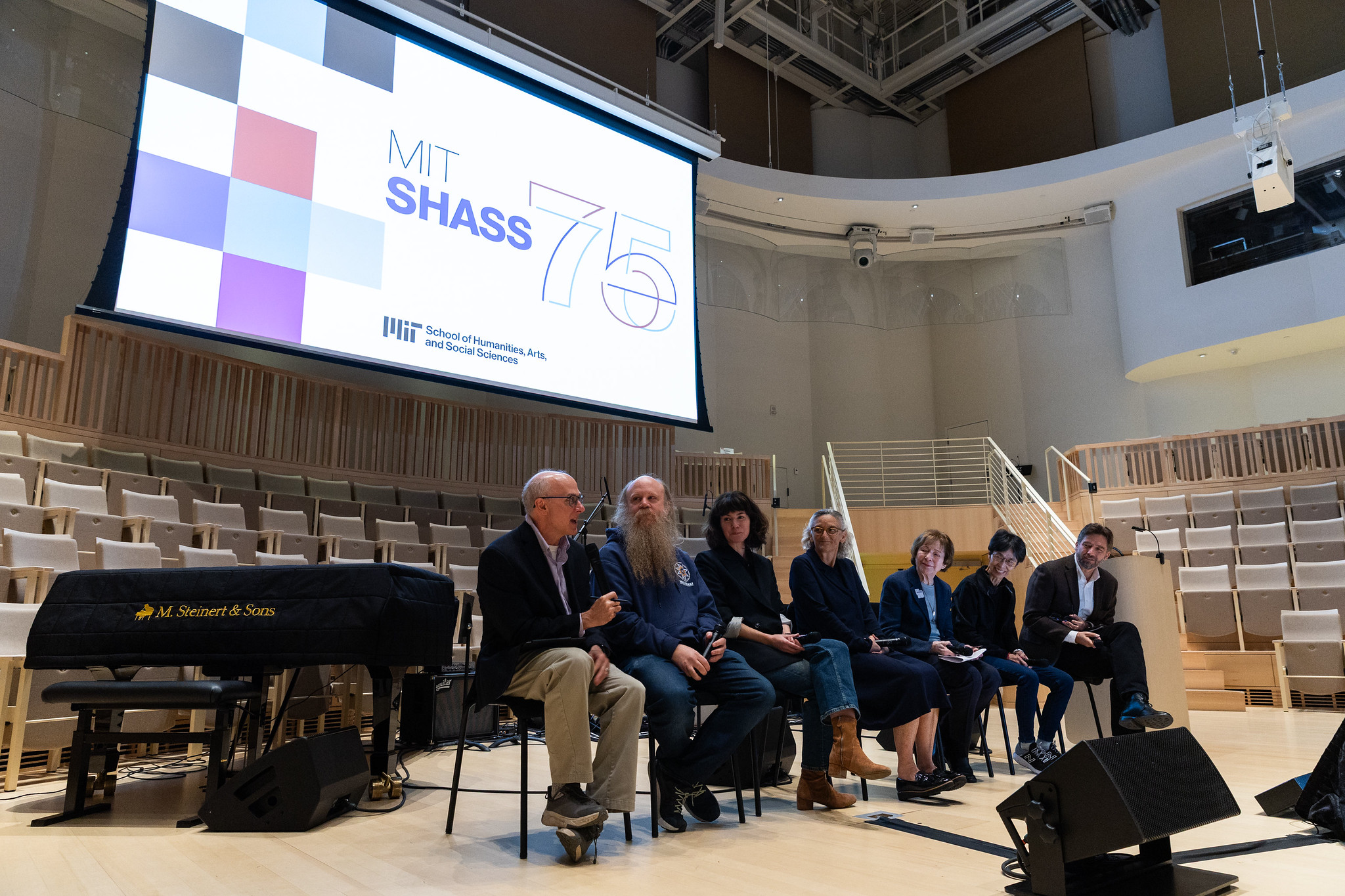
During the School of Humanities, Arts, and Social Sciences’ 75th Anniversary Symposium, President Sally Kornbluth said “MIT has never needed your particular insight and guidance more than we do now.”

We use cookies to run the site and, with your consent, for analytics and to show ads. See our Cookie Policy.