Goal-oriented chatbots often operate in sparse-reward settings, where meaningful feedback (task success or user satisfaction) arrives only after many dialogue turns. This makes exploration and policy learning challenging. We propose a novel hierarchical reinforcement learning (HRL) framework that performs automated skill discovery using curiosity-driven exploration and graph-based temporal clustering. Dialogue trajectories are represented as a dynamic graph with utterance embeddings as nodes and transition probabilities as edges. A Graph Neural Network (GNN) combined with curiosity-weighted clustering identifies reusable dialogue skills (options) such as greeting, intent clarification, information gathering, and confirmation. These options are integrated into a hierarchical policy where a high-level policy selects skills and a low-level policy generates utterances. Evaluated on MultiWOZ 2.2 and a custom customer service dataset, the proposed framework achieves up to 22% higher task success rate and 18% shorter dialogues compared to strong HRL and flat RL baselines. The discovered skills demonstrate strong cross-domain transferability, making the framework practical for scalable, adaptive goal-oriented dialogue systems.

The results indicate that software engineering work practices are chosen opportunistically, adapted and configured to provide value under the constrains imposed by the startup context.
Nicolò Paternoster, Carmine Giardino, M. Unterkalmsteiner et al.· Information and Software Tec...· 394 citations· ⚡54
This state-of-practice investigation was performed using a literature review followed by a multiple-case study approach and presents how inconsistency between managerial strategies and execution can lead to failure by means of a behavioral framework.
Carmine Giardino, Xiaofeng Wang, P. Abrahamsson· International Conference on...· 175 citations· ⚡19
This study conducts a case survey study based on the secondary data of the major pivots happened in 49 software startups, and demonstrates that customer need pivot is the most common among all pivot types.
Sohaib Shahid Bajwa, Xiaofeng Wang, Anh Nguyen-Duc et al.· Empirical Software Engineeri...· 127 citations· ⚡15
It is found that roles of MVPs in startups were not fully aware by entrepreneurs, and entrepreneurs should consider a systematic approach to fully explore the value of MVP, as a multiple facet product (MFP).
Anh Nguyen-Duc, P. Abrahamsson· International Conference on...· 93 citations· ⚡9
BackgroundThe prevalence of overweight and obesity is increasing in Bangladesh. It is higher among Bangladeshi women than among men. This study was conducted to assess a host of demographic and socioeconomic correlates of overweight and obesity, separately for the urban and rural women of Bangladesh.MethodsWe used data...
Haribondhu Sarma, N. Saquib, M. Hasan et al.· BMC Obesity· 75 citations· ⚡5
Purpose Overall health status indicators have improved significantly over the past three decades in Indonesia. However, the country’s maternal mortality ratio remains high with a stark inequality by region. Fewer studies have explored access inequity in maternal health care service over time using multiple inequality m...
Herfina Y. Nababan, M. Hasan, Tiara Marthias et al.· International Journal of Wom...· 64 citations· ⚡2
Related blog posts
MIT News · Artificial Intelligence· news.mit.eduOct 13, 2026
Machine-learning networks can learn without detailed instructions from a designer. Those that do may offer insight into how the brain reorganizes itself during learning.
Microsoft Research Blog· microsoft.comJul 13, 2026
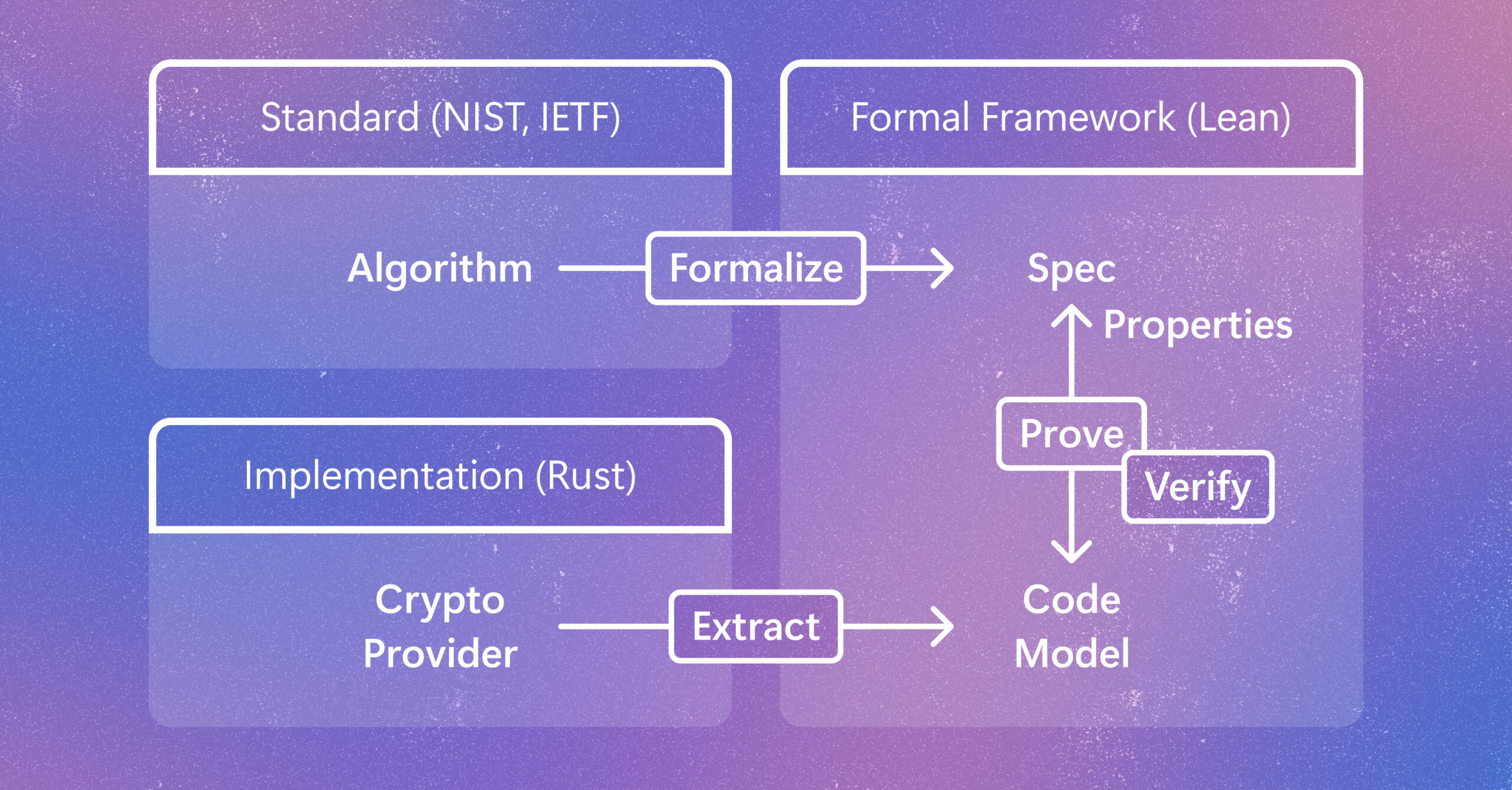
Cryptographic code supports vital protections in modern computing systems. Learn how a new method helps verify code as developers write it while preserving speed and adaptability as it gets implemented and evolves. The post Verifying Rust cryptography in SymCrypt, from standards to code appeared first on Microsoft Research.
Research Manager Mike Walker reflects on a career spanning hacker culture, cybersecurity, and AI, sharing lessons about trust, teamwork, leadership, and why solving difficult problems requires curiosity, judgment, agility—and an understanding of the rules. The post Learn the rules: The hacker mindset appeared first on Microsoft Research.
We use cookies to run the site and, with your consent, for analytics and to show ads.
See our Cookie Policy.