Skip to content

A graph-based reinforcement-learning framework for logical qubit allocation in fault-tolerant quantum architectures

Sep 2026 · Quantum Science and Technology · Vol 11, pp. 045049 · 0 citations · 39 references
Physics

TL;DR

A graph-based reinforcement-learning framework is proposed in which a graph neural network is first pretrained to predict the ancilla-qubit cost of circuit-allocation pairs from allocation-aware circuit graphs, and the resulting encoder is transferred to a reinforcement learning agent that assigns tiles one at a time.

Abstract

Logical-qubit allocation is a central compilation problem for fault-tolerant quantum architectures, where circuit qubits must be assigned to feasible chip tiles while minimizing the ancilla-qubit cost (the number of extra workspace qubits consumed by the routing corridors required to execute the circuit) and preserving efficient access to magic-state resources. This hard combinatorial problem has resisted full automation: existing allocators struggle to jointly capture global circuit interactions, tile-level routing feasibility, and generalization across circuit families. We propose a graph-based reinforcement-learning framework in which a graph neural network is first pretrained to predict the ancilla-qubit cost of circuit-allocation pairs from allocation-aware circuit graphs (graphs that combine circuit structure with the current placement of each qubit), and the resulting encoder is transferred to a reinforcement learning agent that assigns tiles one at a time. As a result, the agent learns to utilize past experience to produce higher-quality solutions to new instances of the allocation problem. Evaluated on MQTBench circuits compiled to lattice-surgery instructions under leave-one-family-out cross-validation, our allocator reduces average ancilla-qubit cost by 36.7% compared to the state-of-the-art ECMAS+ baseline and achieves lower cost in 57 out of 64 qubit-size bins. The method further exhibits family-dependent scale extrapolation and responsive few-shot adaptation, establishing learned logical-qubit allocation as a scalable and transferable paradigm that outperforms ECMAS+ under the evaluated fixed-chip setting.
Read PDF

Similar papers

2026

Handling Qubit Allocation and Topology Design at Scale for Distributed Quantum Computing

Distributed Quantum Computing (DQC) enables the execution of quantum circuits across multiple interconnected quantum processing units (QPUs) but requiring efficient qubit allocation and network topology design to optimize computational performance. Proper qubit allocation minimizes entanglement costs across QPUs, balan...

Ji-Yao Liu, Lei Fan, Yuan-Xiong Guo et al. · 0 citations
Preprint Oct 2026

TATVA: A Reinforcement Learning Framework for Quantum Circuit Synthesis

One of the most important initial steps in quantum computing is high-fidelity quantum state preparation, because errors in it can affect the final computational result. Therefore, one of the major challenges is to design a quantum circuit that can achieve the desired target state accurately with a smaller number of gat...

Om Bhamare, Aryan Jadhav, Manas Shinde et al. · 0 citations
Preprint Sep 2026

QBX: A Compiler for 2-local Qubit Hamiltonian Simulation on Quantum Chiplets

2-local qubit Hamiltonian simulation, a fundamental task in quantum computing, is widely applied in various applications. This paper presents QBX, the first quantum compiler designed for 2-local qubit Hamiltonian simulation on quantum chiplet architectures. Existing general-purpose quantum compilers for chiplet archite...

Zi-Kun Li, Zhuo-Ming Chen, Zhi-Hao Jia · 0 citations
Preprint Aug 2026

Automating Variational Quantum Sensing through Reinforcement-Learned Circuit Structures

Numerical results show that the learned architectures recover known benchmark strategies, adapt to dephasing noise, and outperform fixed hardware-efficient ans\"atze while using fewer entangling gates, establishing AutoQSense as a resource-aware approach to adaptive and hardware-compatible quantum sensing.

Jie Liu, Xin Wang · 0 citations
Book Open access Aug 2026

Learning-Based Entanglement Generation for Quantum Routing

This study proposes a Reinforcement Learning (RL)-based model that determines which links to entangle in each time slot, replacing the slow ILP-based link-selection phase used in prior algorithms, providing a practical path toward scalable quantum routing.

Tasdiqul Islam, Rasman Mubtasim Swargo, Md. Arifuzzaman · 0 citations
Conference Sep 2026

Efficient Circuit Management and Scheduling in Multi-Node Quantum Systems with Dynamic Links

The realization of practical quantum advantage requires executing large-scale circuits that far exceed the qubit capacity of any single quantum processor. To address this, two primary scaling strategies have emerged: circuit cutting, which utilizes classical resources to decompose circuits into smaller fragments, and m...

Ze-Fan Du, Wen-Rui Zhang, Jake Gesseck et al. · 0 citations

Related blog posts

Microsoft Research Blog Jul 13, 2026

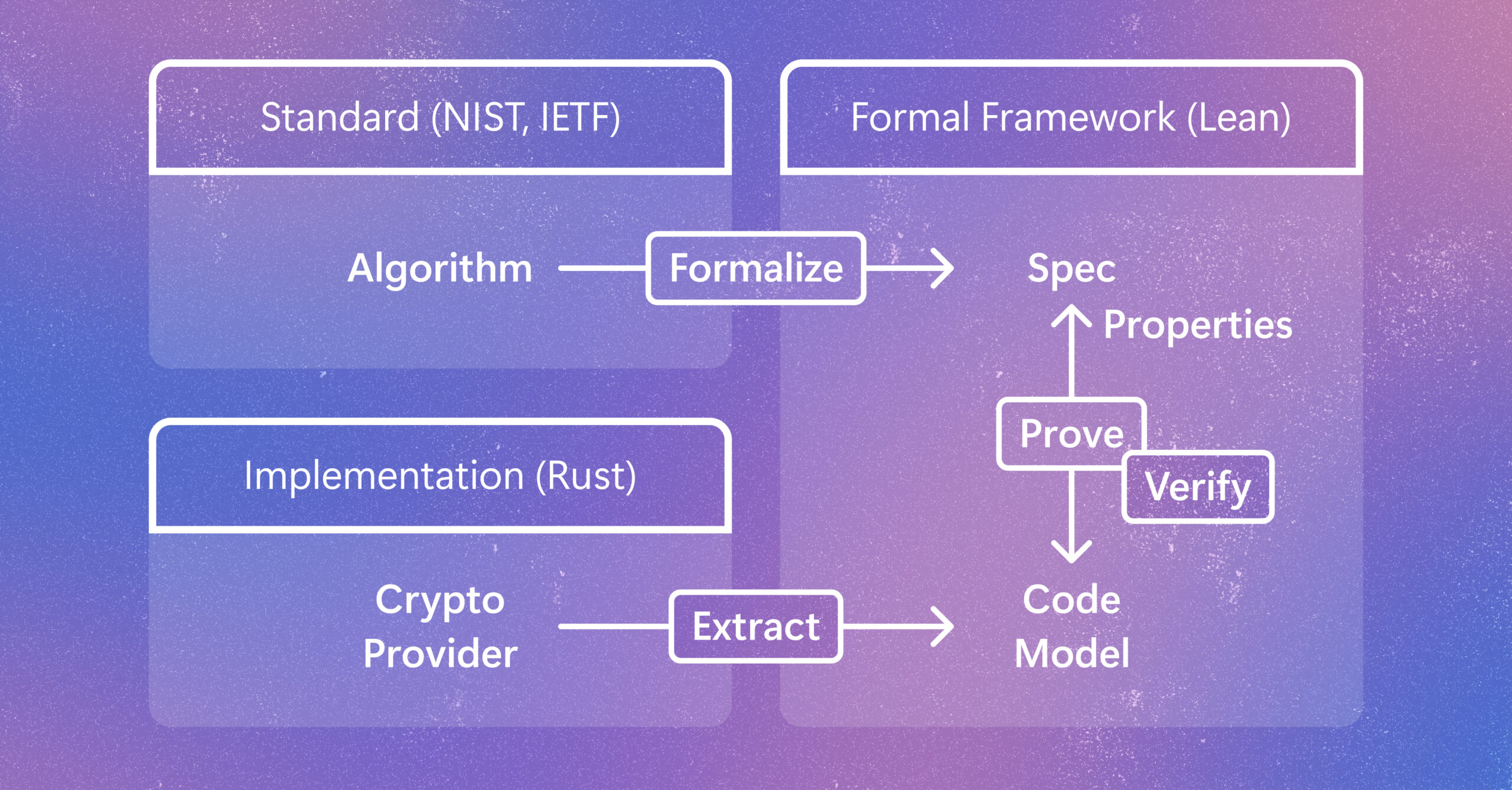
Verifying Rust cryptography in SymCrypt, from standards to code

Cryptographic code supports vital protections in modern computing systems. Learn how a new method helps verify code as developers write it while preserving speed and adaptability as it gets implemented and evolves. The post Verifying Rust cryptography in SymCrypt, from standards to code appeared first on Microsoft Research.

MIT News · Artificial Intelligence Oct 7, 2026

Discovering the value of humanistic inquiry

Students in MIT’s Concourse program delve deeply into the human condition, debate challenging questions, and learn to develop judgment about issues that can’t be quantified.

Microsoft Research Blog Oct 7, 2026

Agent Lightning v1.0: A 3,500-Line Lightweight Agentic RL Framework for Training Agents with Real Harnesses

Training AI agents with reinforcement learning can be challenging because their tools, context, and decision-making are managed by complex frameworks. Agent Lightning connects existing agents to RL training, making it easier to improve them without rebuilding them. The post Agent Lightning v1.0: A 3,500-Line Lightweight Agentic RL Framework for Training Agents with Real Harnesses appeared first on Microsoft Research.

We use cookies to run the site and, with your consent, for analytics and to show ads. See our Cookie Policy.