Sep 2026· International Conference on Optics, Electronics, and Communication Engineering· Vol 14349, pp. 143491K - 143491K-11· 0 citations· 10 references
Engineering
TL;DR
A Multi-Channel Decoupled Attention Graph Neural Network (MCDA-GNN) is proposed for the comprehensive evaluation of student social networks, providing a scientific basis for personalized educational interventions, campus community optimization, and mental health early warning.
Abstract
Accurate assessment of student social networks is a central issue in the fields of educational big data and social computing. Existing methods largely rely on traditional statistical metrics or shallow network models, making it difficult to effectively capture the heterogeneity, dynamism, and higher-order dependencies of these relationships. Furthermore, these methods suffer from limitations such as feature coupling, poor interpretability, and a narrow scope of evaluation. To address this, this paper proposes a Multi-Channel Decoupled Attention Graph Neural Network (MCDA-GNN) for the comprehensive evaluation of student social networks. First, we construct a heterogeneous graph that integrates multidimensional behavioral and psychological features, distinguishing between strong and weak relationships as well as bidirectional and unidirectional interactions; Second, we design a topology-attribute dual-branch decoupling module that decomposes node representations into structural sharing and attribute complementarity components, eliminating feature redundancy through orthogonal constraints and mutual information maximization; Furthermore, we propose a dynamic multi-scale attention aggregation mechanism to adaptively capture higher-order dependencies and time-varying weights across different social circles, thereby enhancing the modeling capability of core-periphery structures; Finally, we establish a multi-dimensional evaluation framework encompassing structural connectivity, relationship stability, influence diffusion, and group cohesion, and design a graph-level contrastive learning loss to optimize model generalization. Experimental results on real student social datasets from three universities demonstrate that MCDA-GNN achieves significant improvements over mainstream models such as GCN, GAT, and GraphSAGE in tasks including relationship strength prediction, community partitioning quality, and influence assessment (with an average F1-score increase of 9.2% and an 8.5% improvement in NDCG@10), while maintaining stable performance under sparse-data and dynamic evolution scenarios. Ablation experiments validate the effectiveness of each innovative module, and case studies further demonstrate that the model can accurately identify key student nodes and fragile social links, providing a scientific basis for personalized educational interventions, campus community optimization, and mental health early warning.
Graph neural networks have shown strong potential for learning structural representations of biological networks. However, repeated message passing may blur local structural signals that are relevant for motif- and graphlet-based analysis. This paper investigates multilabel graphlet classification in protein–protein in...
Lidija Kunst, Friedhelm Schwenker, H. Kestler· Entropy· 0 citations
The latent community structures in the social networks have now become a cornerstone problem in the scientific study of networks, and has extensive implications in recommendation systems, epidemiology, fraud detection, and social behavior studies. The conventional community detection algorithms, most of which are based...
M. Rekha, Aaquib Hussain Ganai· Discover Artificial Intellig...· 0 citations
Large language models (LLMs) are rapidly emerging as a new paradigm for modeling social networks by representing users and their relationships and interactions through natural language. Unlike classical network models or deep learning approaches, LLMs can simulate context-aware social behavior and language-driven inter...
Shikha Mallick, Alex Thomo, A. Saxena· 0 citations
Automated inference of Big Five personality traits from social media text is a growing research area with applications in personalized recommendation and human-computer interaction. Most existing approaches treat user posts as independent textual units, overlooking structural relationships between users and their conte...
R. Pradana, Maulin Nasari, A. Zakiyyah· International Conferences on...· 0 citations
Identifying influential nodes in complex networks is a fundamental challenge in network science. This problem involves measuring the influence of nodes and identifying those that exert the greatest impact on network dynamics and information dissemination. Existing approaches can be broadly divided into two categories:...
Amir Sheikhahmadi, L. Tafakori, M. Jalili· ACM Computing Surveys· 0 citations
A Heterogeneous Graph Network for Multimodal Student Performance Prediction (HGN‐MSP) model, which integrates the three modalities of grades, behavior, and resources to construct a campus knowledge graph and a meta‐path‐guided feature aggregation mechanism is designed to achieve cross‐modal semantic alignment.
Jun-Xin Fan, Bin Chen, Byung-Won Min et al.· Engineering Reports· 0 citations
Related blog posts
MIT News · Artificial Intelligence· news.mit.eduJul 15, 2026
Assistant Professor Pat Pataranutaporn describes a new interface that lets everyday users glimpse inside an AI's neural network before their chatbot ever says a word.
Microsoft Research Blog· microsoft.comJul 13, 2026
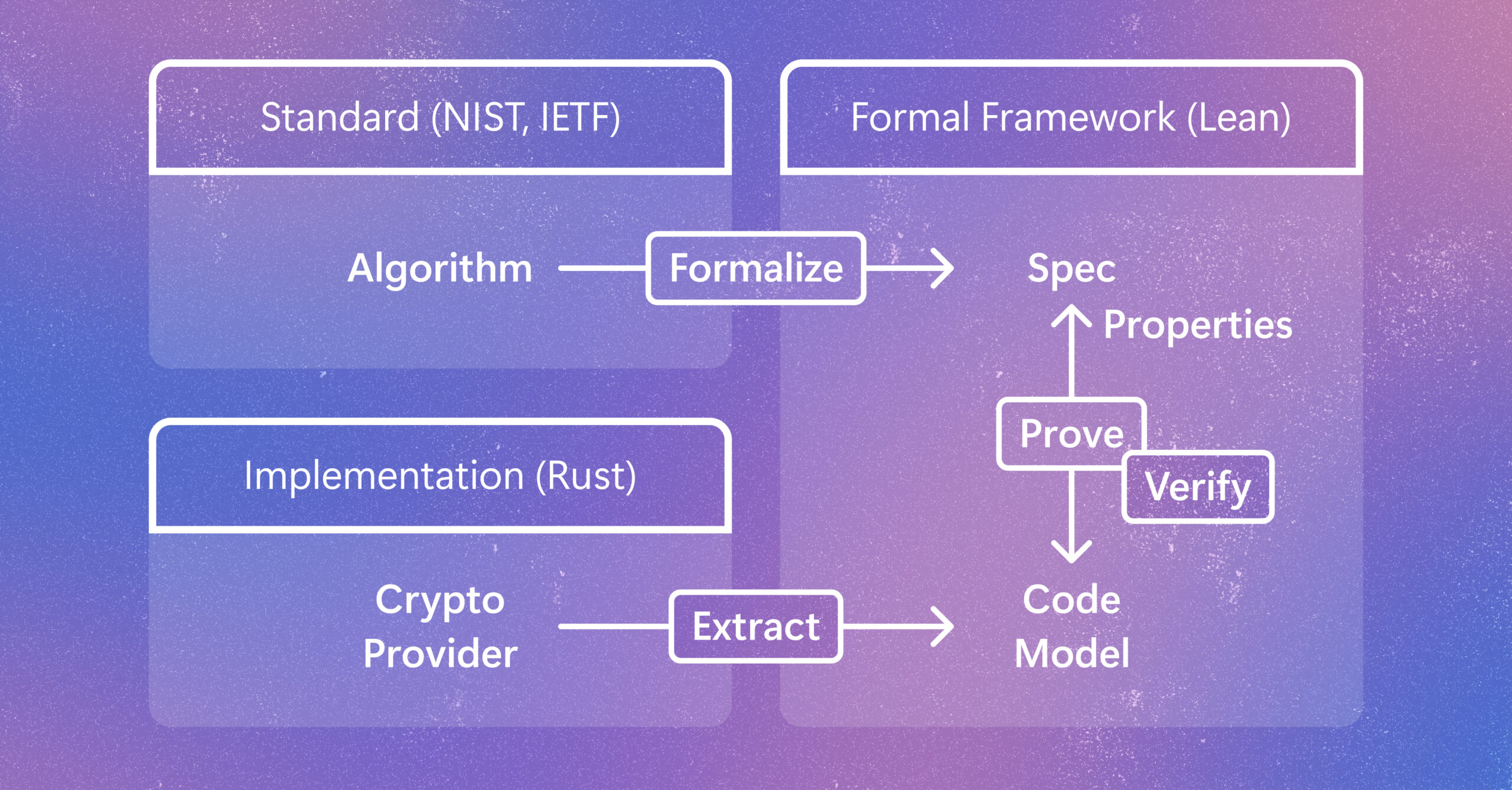
Cryptographic code supports vital protections in modern computing systems. Learn how a new method helps verify code as developers write it while preserving speed and adaptability as it gets implemented and evolves. The post Verifying Rust cryptography in SymCrypt, from standards to code appeared first on Microsoft Research.
MIT News · Artificial Intelligence· news.mit.eduJul 6, 2026
PhD student Rachel Sava, winner of the Envisioning the Future of Computing Prize, explores transformative improvements and dystopian risks of neural technology.