It is shown that how the 8 input features are chosen matters: Random Forest importance-guided selection reaches F1 = 0.523, while encoding maximally uncorrelated features drops it to 0.496, demonstrating that the circuit amplifies informative structure rather than creating it from scratch.

Abstract
Credit default prediction is a tabular classification problem in which modest gains in F1 translate directly into reduced financial exposure. We ask whether Instantaneous Quantum Polynomial-time (IQP) circuits can produce features that improve a classifier over both its raw classical baseline and Kernel PCA - the strongest unsupervised classical non-linear alternative - at an equal feature budget. The dataset provides 23 financial attributes per client; for an n-qubit circuit we select n of them, encode each as a rotation angle, and read 2n expectation values back out as new features. The motivation for using a quantum circuit is computational: an n-qubit IQP circuit runs in constant depth and encodes feature correlations in a 2^n-dimensional Hilbert space, whereas classical simulation of its exact output statistics scales exponentially in n. Using the UCI Default of Credit Card Clients dataset and five-fold cross-validation, we find that appending 16 IQP features (n = 8 qubits) to a Logistic Regression model raises F1 from 0.462 to 0.517 (+0.055, p<0.0001). Kernel PCA, the next-best method, reaches only 0.493 at the same feature count; the gap survives Benjamini-Hochberg correction across 12 tests (p = 0.00007). No other classifier - Random Forest, SVM, XGBoost, or k-NN - benefits, which points to a linear-expressivity mechanism rather than a generic improvement. We also show that how the 8 input features are chosen matters: Random Forest importance-guided selection reaches F1 = 0.523, while encoding maximally uncorrelated features drops it to 0.496, demonstrating that the circuit amplifies informative structure rather than creating it from scratch.
This work adds the missing non-linearity to UCI Default of Credit Card Clients data with a quantum-inspired feature map, specific to linear models: Random Forest, SVM, XGBoost, and k-NN, already non-linear, do not benefit.
Menachem Finkelstein, Diana Levy, Sarel Cohen et al.· Proceedings of the 19th ACM...· 0 citations
Selecting an effective encoding quantum circuit is a key challenge in quantum kernel methods because different feature maps can lead to different performance. Conventional methods require constructing and evaluating every circuit for each new dataset, making it computationally expensive. We present Qmes, an open-source...
D. Tung, Quoc Chuong Nguyen, Hai Tuan Vu et al.· 0 citations
Selecting a data encoding is a central and poorly tooled decision in quantum machine learning. The feature map fixes the geometry of the Hilbert space, the expressibility of quantum kernels, and whether the circuit can run on near-term hardware. This paper presents Quantum Encoding Agents, an open-source system that tu...
A key challenge in practical quantum machine learning (QML), particularly for discriminative tasks such as classification, is the limited capacity of near-term quantum devices to encode high-dimensional classical data into small quantum registers. In optimized basis-encoded (bit-bit) settings, this constraint leads to...
Reliable attribution of artificial intelligence (AI)-generated text to a specific large language model (LLM) matters increasingly as LLMs proliferate, yet where quantum machine learning actually stands on this task has, to our knowledge, never been measured systematically. We benchmark the quantum support vector machin...
Kalin Kopanov, Tatiana V. Atanasova· Information· 0 citations
The results demonstrate why controlled component attribution is necessary before crediting a hybrid model's performance to its quantum layer, and analyze bottleneck, simulation, finite-shot, and noise limitations.
Hao-Yuan Chen· 0 citations
Related blog posts
MIT News · Artificial Intelligence· news.mit.eduOct 2, 2026
A weeklong summer workshop brought higher education faculty to campus to explore how AI and machine learning materials can be adapted for their classrooms.
MIT News · Artificial Intelligence· news.mit.eduAug 27, 2026
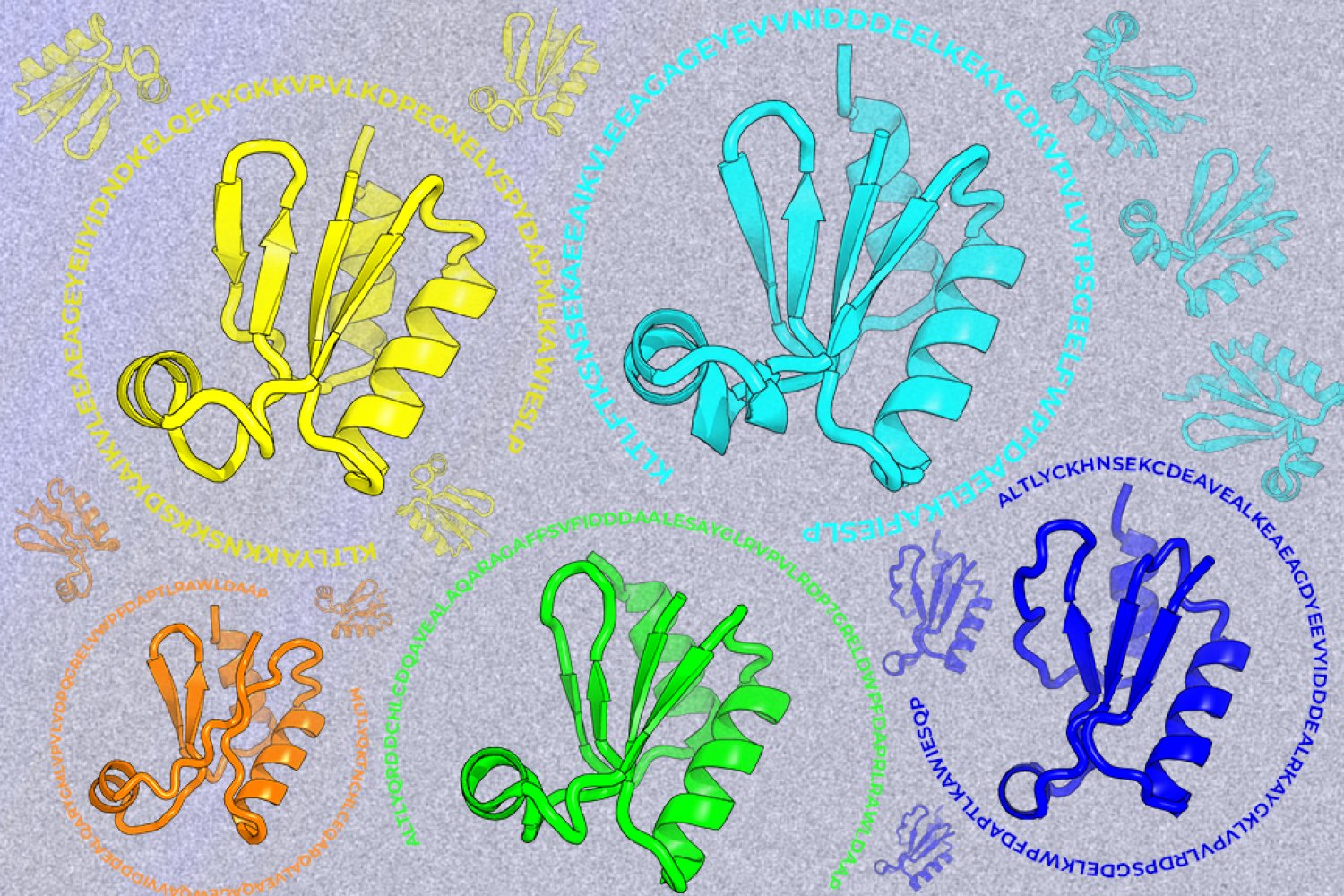
A new machine-learning framework aims to improve the success rate of computational protein design while moving away from results that reproduce sequences found in nature.
Microsoft Research Blog· microsoft.comAug 20, 2026
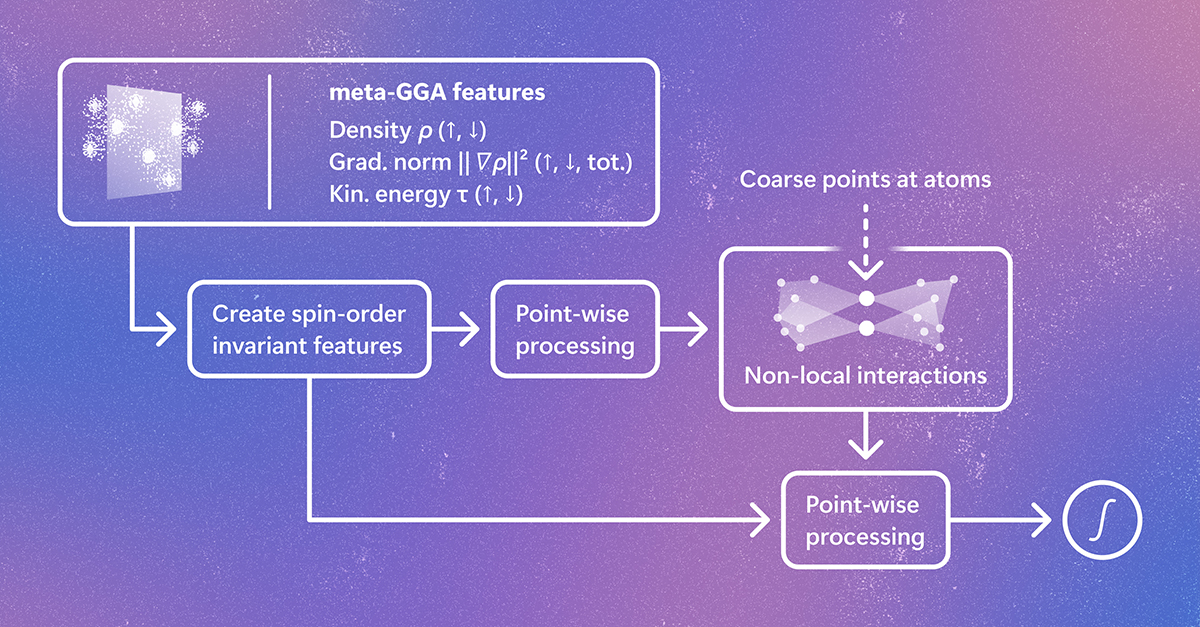
Skala 1.1, the updated deep-learning exchange-correlation functional from Microsoft Research, provides greater accuracy, expanded accessibility across the computational chemistry ecosystem, and a living benchmark to track computational performance. The post Broadening access to Skala creates a faster path to predictive DFT appeared first on Microsoft Research.
We use cookies to run the site and, with your consent, for analytics and to show ads.
See our Cookie Policy.